
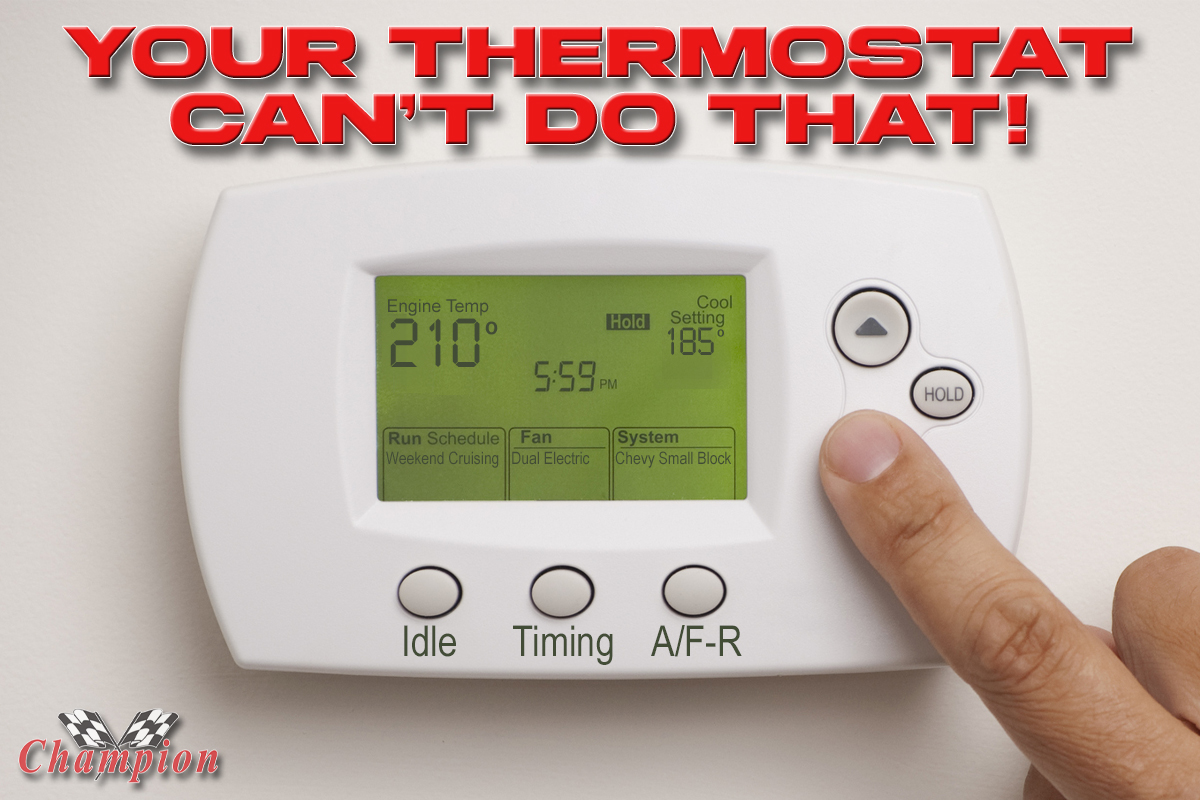
Many of us learned about thermostats as kids while watching the back and forth battles our parents had over who controlled that device on the wall. It was a never-ending battle of dominance over who got to determine what the perfect temperature was inside the home.
As we got older, we learned that the engine in our car has its own thermostat. However, the thermostat in your engine doesn’t actually control the temperature, so to speak. Rather, it regulates the temperature, and controls how long it takes your engine to get to its operating temperature.
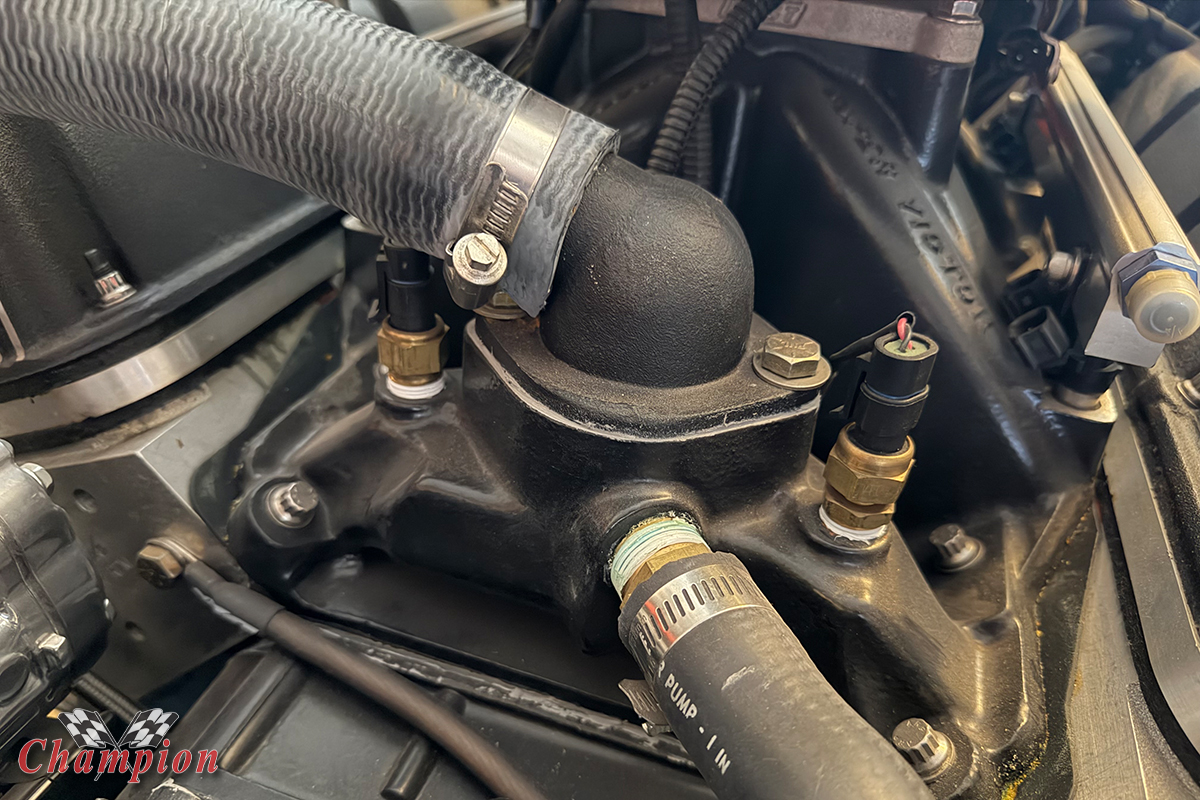
The caveat to that is if your thermostat is rated much higher than your engine’s operating temperature; then you’re effectively forcing your engine to run hotter. However, a thermostat with a lower temperature rating won’t necessarily have the opposite effect, it simply doesn’t work the way the thermostat on the wall works. We’ll explain that a little more.
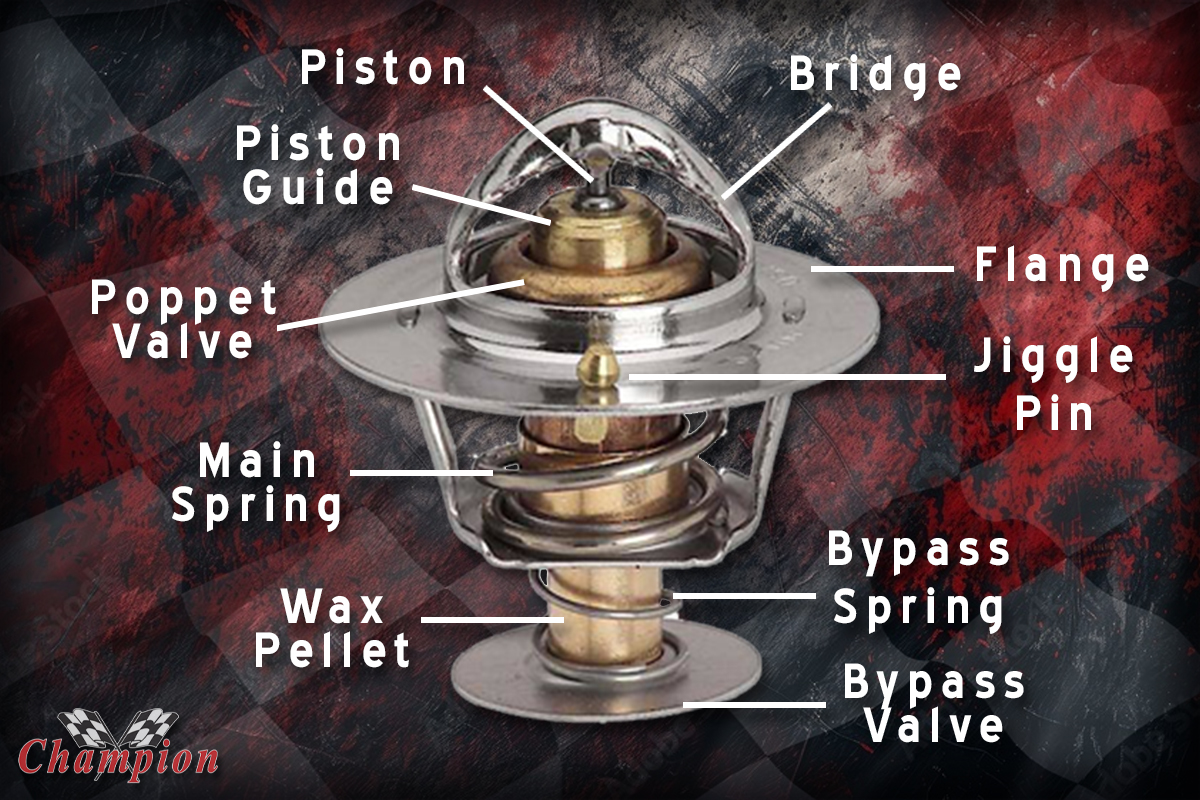
There are many components to a thermostat, it’s rather complex. There’s a bridge, a piston, a wax pellet, a piston guide, and sometimes even a bypass valve. The thermostat also makes sure the engine stays at its operating temperature by opening and closing as needed, and controlling coolant flow through the radiator. The bypass valve will regulate flow through a bypass system when pressures build, and works in conjunction with the main coolant passage through the thermostat.
A typical old-school engine might run at about 185º – 195º, with modern engines , like the LS, Hemi, and Coyote engines, operating closer to the 220º mark. Each of these have a thermostat rated at roughly those operating temperatures to maintain function of emissions equipment. However, if your small block Chevy runs at about 185º, and you install a thermostat rated at 195º, the thermostat will only open when your engine reaches above 195º, and coolant will begin to flow through the radiator, thus cooling it down to maintain 195º.
Therefore, a higher-rated thermostat may force your engine to run hotter than normal. While there may be reasons for running a little hotter, such as in colder climates during the winter months, in this example your thermostat is actually controlling your engine’s minimum operating temperature by forcing it to run hotter.
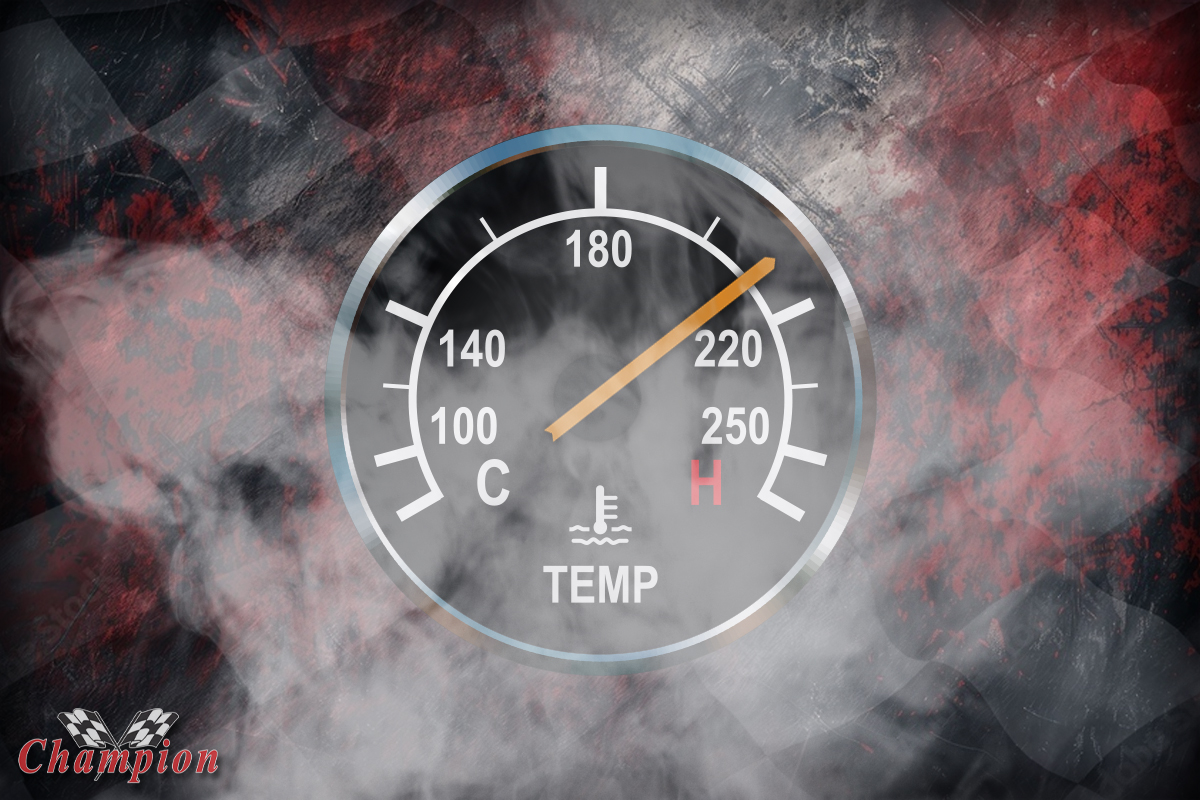
The opposite, however, will not necessarily cause your engine temperatures to drop. For instance, if your big block typically runs at about 210º, you can’t regulate that temperature down by installing a thermostat rated at 185º. Your engine will find its operating temperature, regardless. While there are things you can do to help drop the temperature a little, such as a larger capacity radiator or a stronger cooling fan, most engines are going to run at a certain temperature, based on several factors.
Basically, your thermostat doesn’t necessarily control the operating temperature; rather, it controls how long it takes for your engine to get to operating temperature. For instance, if you install a 160º thermostat, it doesn’t necessarily mean that your engine will now operate at 160º. A lower thermostat rating will actually slow the rise to the engine’s operating temperature, because it opens sooner and you’ll begin ‘super cooling’ the engine.
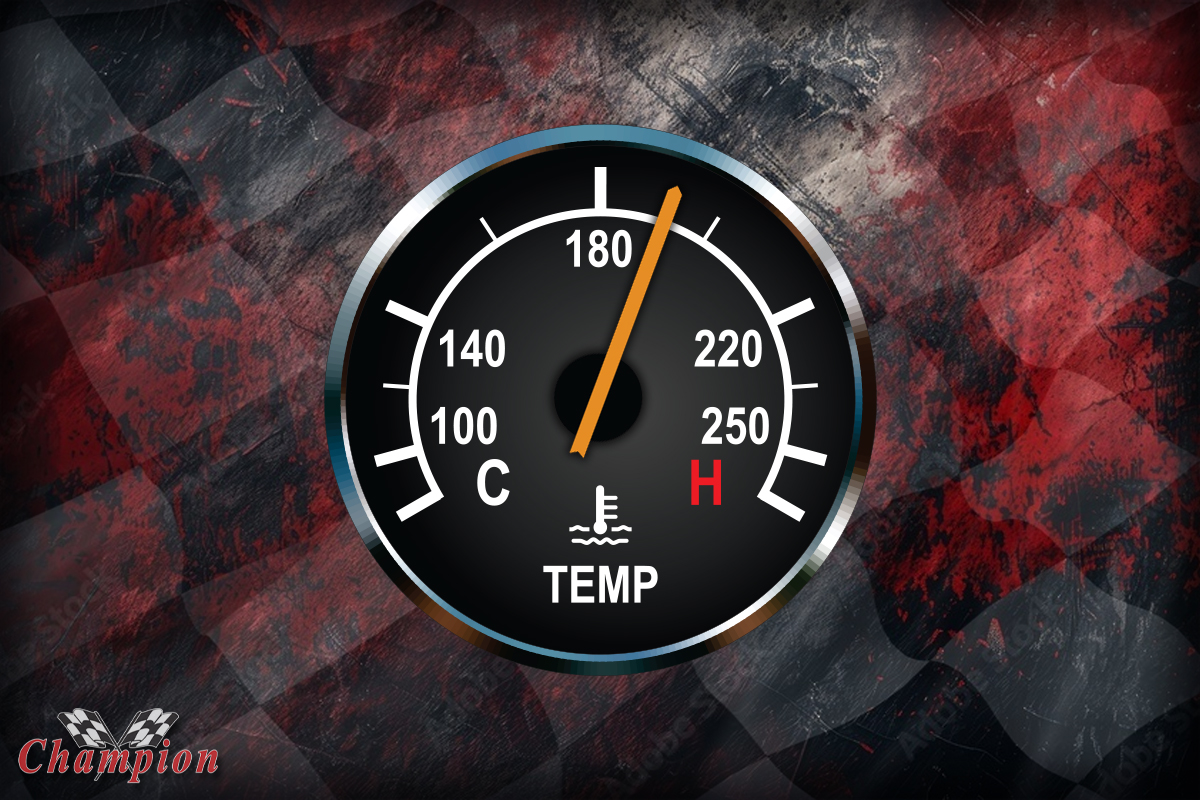
When your engine operates at about 190º and your thermostat is about 185º, the coolant isn’t flowing through the radiator until it gets to about 185º, when the thermostat opens and allows the cooling process. When the temperature in the block falls below 185º, the thermostat closes and the cycle repeats: it opens at the rated temperature, and closes when it falls below that.
Factors that allow both a rise and a drop in operating temperature can be determined on the air flow through the radiator, either by driving at freeway speeds, or the fans pulling more air through at lower speeds. Typically, the cooing fans don’t do much when driving at 60+ mph, because they can’t pull air through your radiator at that speed.
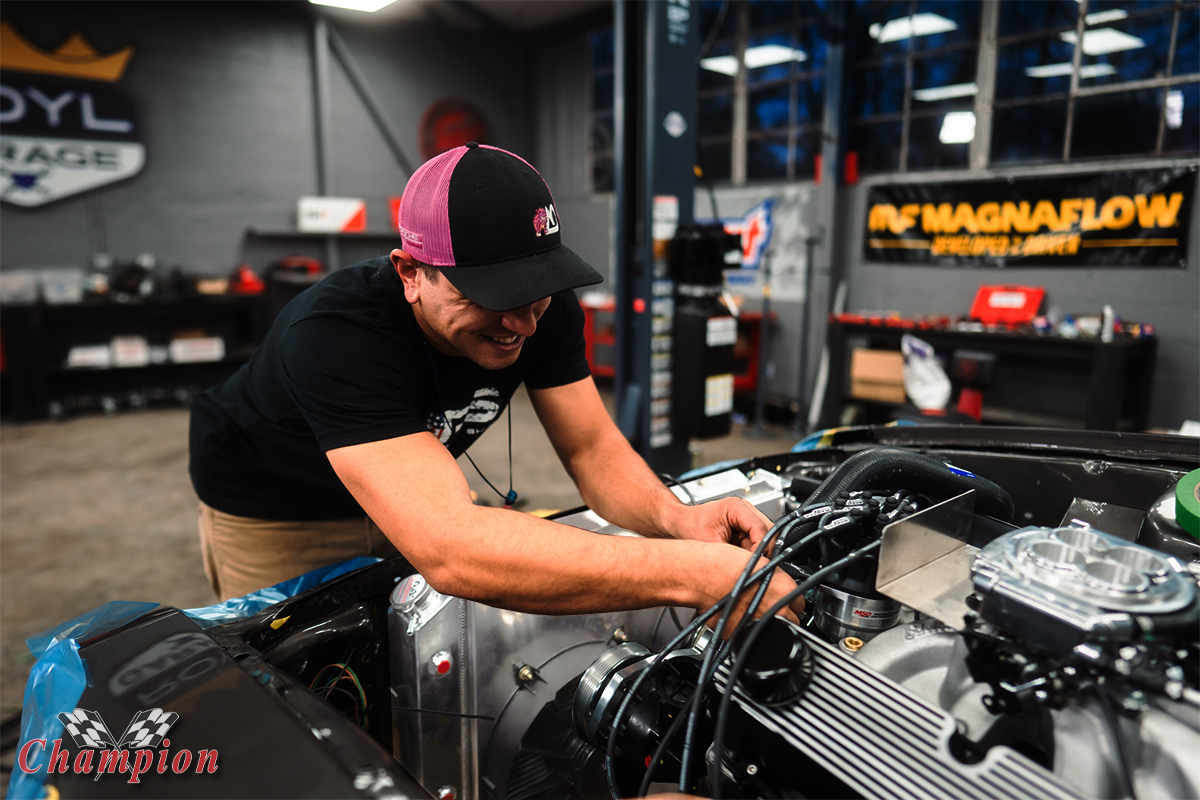
There are times, however, in colder temperatures where your engine might run considerably lower if your thermostat is rated lower than 185º. For example, during the colder months, if your thermostat is rated at 160º, you might see a lower operating temperature than you would during the summer months. Then during the summer when it’s more humid, with the same thermostat you might see temperatures as high as 205º.
Basically, you can’t regulate a lower temperature by installing a thermostat with a lower rating; if you’re overheating, the thermostat won’t have any affect on that, you must get to the root of the problem. Most of the overheating issues people face are going to be during the hotter, summer months, since the colder winter air helps to reduce the coolant temperature.

There are ways that you can somewhat ‘control’ the operating temperature in your engine, based on a combination of conditions, but on an average day where your engine operates at 195º there is little you can do to change that. If your engine is running too hot, it could be a combination of air flow, coolant flow, or both. Running hot during the summer is typical, and seeing the engine temperature rise to 205º is only a problem if it continues to climb.
Running at 205-215º is not necessarily detrimental to your engine, after all, the operating temperature for modern engines is a little higher. It might make you uncomfortable, but as long as it doesn’t keep climbing you should be fine. Just remember: if your engine is running too hot, changing the thermostat isn’t always the answer – unless the thermostat has failed and is stuck in the closed position.