
Over several decades, anyone in the automotive hobby has seen gimmicks come and go. What began from some of us as ‘flipping the lid’ back in the 1970s quickly became one big con after another – or to put it succinctly: one over-exaggerated claim after another. Some even believed that their freshly polished car ran better once all the dirt was washed off of it. At least it felt that way; sometimes the brain convinces our senses to feel what the brain wants.
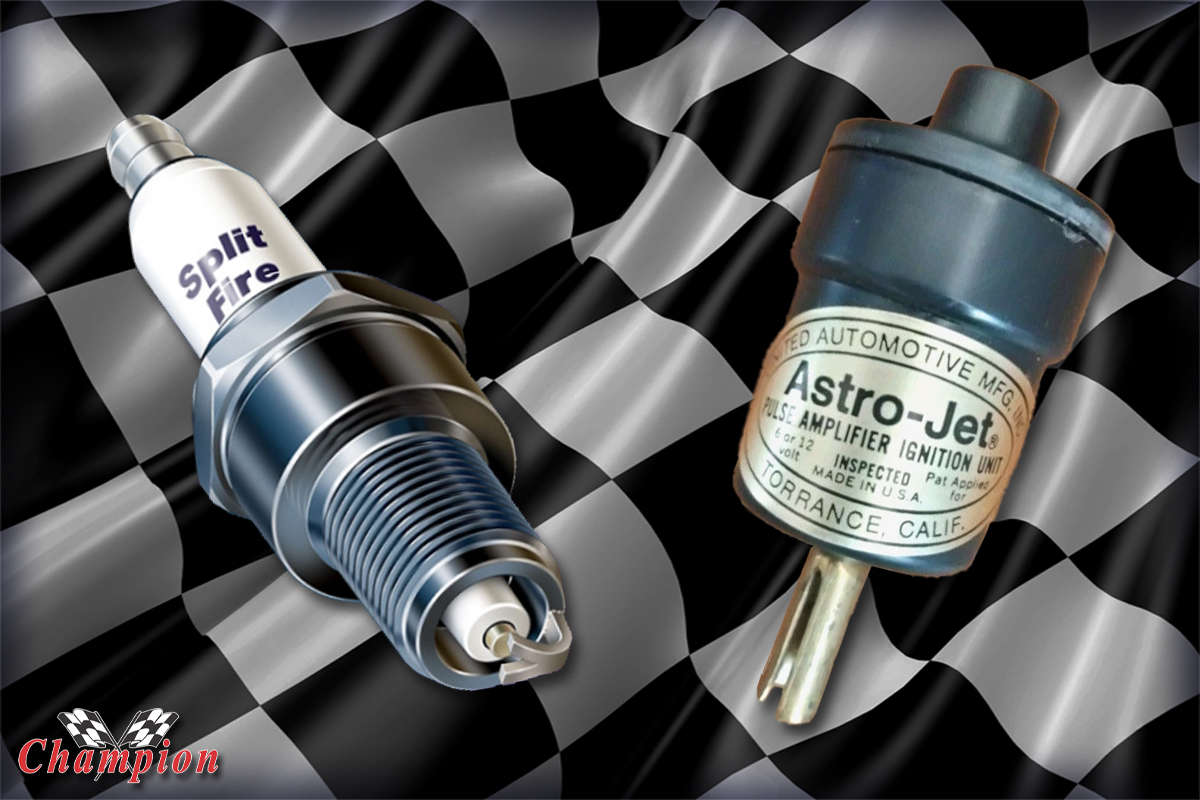
While there might be a smidgeon of truth to some claims a claim of a power increase, they’re so insignificant that you won’t feel that gain from the seat of your pants. If you think you can fell the performance gain, then you bought that particular gimmick hook, line, and sinker. One gimmick we saw in the 1980s was a spark amplifier that promised better horsepower and fuel economy – as well as better starting. In later years, we got similar promises with Split Fire spark plugs; the FTC came down pretty hard on Split Fire, however, stating that there was no proof of its claims.
Some claims truly are pure gimmicks, while others are snake-oil exaggeration. Quite often, the so-called ‘testing’ was done in optimal conditions with a perfect-running engine, using high-octane fuel. They might claim they achieved a 1.4% horsepower gain on a car with roughly 430 horsepower; that’s good for about a six horsepower increase. But how did they come to that conclusion? Was the first test run performed under less than preferable conditions – when it was cold in the morning – then the second test run was performed later that afternoon?
It’s a fact that you can do five back-to-back pulls on the dyno, and see a different number each time. One small tweak here, a small adjustment there, and voila! You just got that 1.4% horsepower gain because you turned the mixture screw in 1/8 of a turn. When a product manufacturer tells you that its product can give similar power gains, your ears understandably perk up. Not all of us can afford the huge, legitimate gains that are associated with a complete rebuild.
Another gimmick that we’ve seen quite often is the flex fan. It is true that sometimes you can see a miniscule gain in power with a flex fan, those gains really can’t be felt by the seat of your pants. At least when you flip the lid or run an open air filter, you can hear the performance gain. But you won’t really feel those gains while you’re driving. One of the automotive magazines did a comparison of what type of gains were possible by adding performance components.
While each component had listed potential individual gains, adding all of the performance components didn’t net the sum of all individual claims. With each new component added, the potential gain of each new component added was reduced, and to some that was a huge disappointment. Adding the numbers, a potential gain of 140 HP would have been nice, but once the first component was added, it reduced the impact of each component added thereafter, until the last component, which barely showed a gain at all. Performance gains can be tricky.

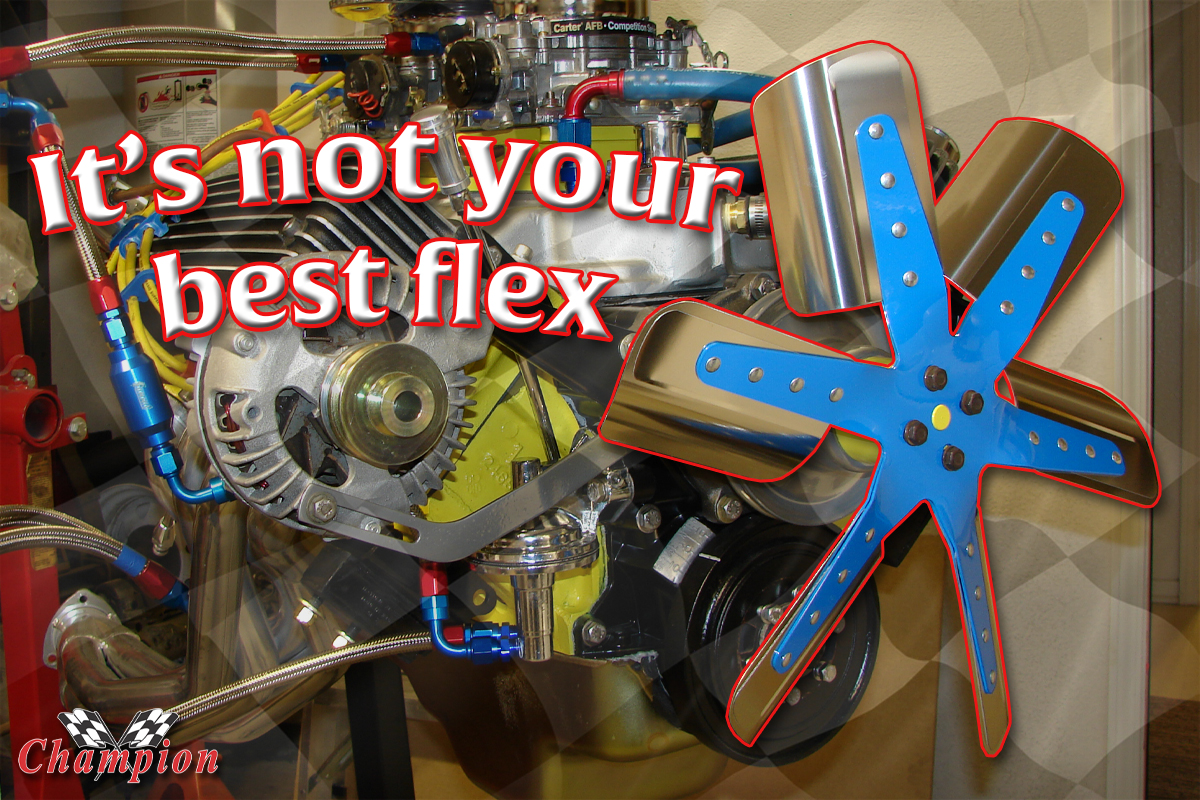
Flex fans are one component that makes big promises on the hopes that you see the bright shiny object before you see the results it claims to provide. The function of the flex fan is that when the fan speed gets to a certain velocity, the blades ‘flex,’ or flatten out. When the blades flatten, it provides parasitic less drag on your engine, thus freeing up horsepower. You might see a tiny gain in numbers, but you most definitely won’t feel it. Your brain might convince you; but realistically, you can achieve similar gains simply because of the outside temperature, or air density – or with a strong back wind.
But that minor gain isn’t where the problem lies, the common problem with flex fans is that the constant heat cycling and flexing creates metal fatigue. Over time, the flex fan won’t be as efficient as it was when it was new, and those blades begin to flatten out at much lower engine speeds. We’ve seen the blades flatten out as low as 1,400 RPM. Typically, that’s lower traffic speeds when you rely on your fan to pull more air through the radiator, because you’re not up to speed.
The flex fan boils down to making a choice: form over function, or function over form? Your flex fan might look better, but is it really worth it to potentially sacrifice the function of the cooling fan for how much better it looks? An OE-style metal fan blade is usually sufficient for cooling your engine by pulling large amounts of air through the radiator. We recommend at least a 5 or 6 blade fan, if you choose a mechanical fan – especially when you have a major power increase.
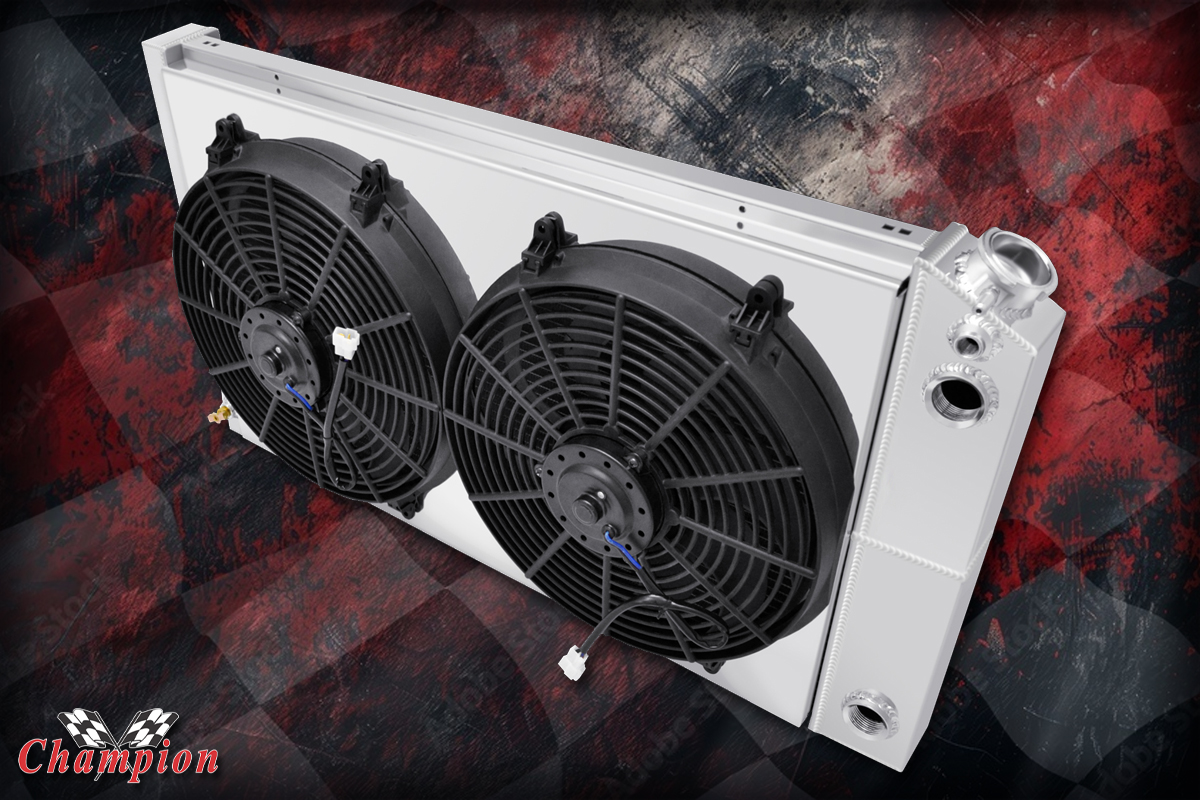
But if you really want to go for looks, nothing quite beats the look of an aluminum fan shroud with a pair of electric fans mounted to it. The advantage of electric fans is that they’ll pull sufficient air through your radiator at traffic lights or low speeds, helping to keep your engine running cooler. And they won’t ‘flatten’ out at higher engine speeds, nor will they create a drag on your drive pulleys. There’s a reason why most manufacturers today have switched to electric fans: they work.
1 Reply to “Flex Fans: Minimal Gain, Diminishing Performance”
Comments are closed.