For many automotive hobbyists, the easiest hose fitting to understand and work with is the hose barb. That’s the most popular form of fitting, and it only requires slipping a hose over a tube with a barb at the open end, and is secured with a hose clamp. This is enough to secure and seal the connection, preventing any fluids from escaping. It’s used by most manufacturers; it’s simple, it’s effective, and it’s dependable.
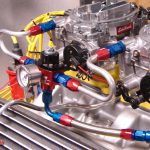
When stepping up your game and customizing your engine, there are a few more options for hose connections. Most of the time, the radiator hoses are left alone since the components require additional modifications. However, for smaller hoses such as fuel, heater, oil, and even transmission lines and brake lines, these alternate hose ends not only improve the aesthetics of your build, but can also improve the connection itself.
The AN/JIC Flare Fitting vs. The SAE Flare Fitting
Though they appear to be the same, the AN/JIC flare fittings are not the same as the SAE flare fitting, and mating one with the other can lead to disaster from a poor seal. It can even compromise the mating surfaces due to dissimilar angles. What you see on OE brake lines and transmission lines is your typical SAE flare fitting, which is a 45º angle on the mating surfaces.
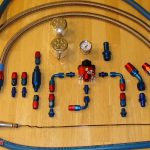
The AN and JIC flare fittings are a 37º angle, and those are the fittings you’ll typically see on fuel lines, oil cooler lines, heater hoses, and even as large as the radiator hose fittings. Some brake line upgrades can be converted to AN fittings, but all components in the hydraulic system must be converted to both male and female AN-style fittings. For these you’ll need to convert the hard lines to a tube nut and sleeve to secure on the flare end of the tube.
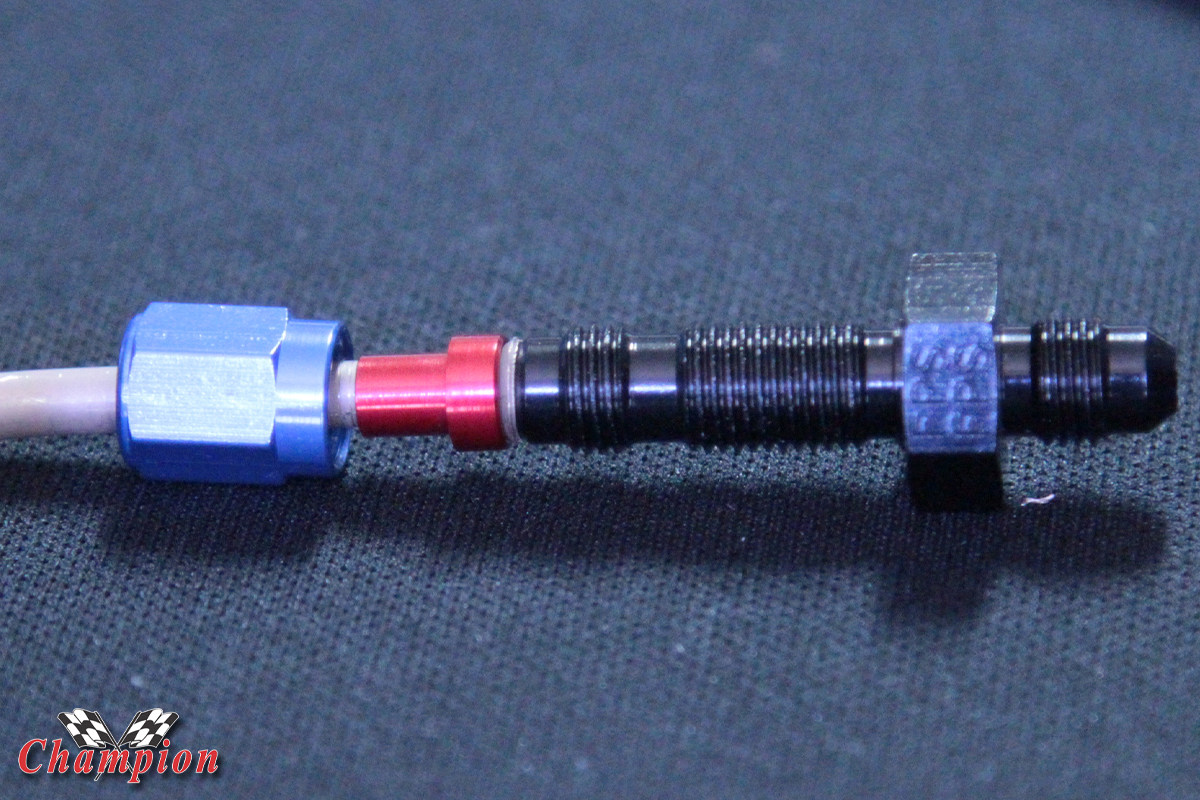
The JIC and AN flares are similar at 37º, however the JIC flare meets looser ISO standards, while the AN flare has much stricter aerospace and military standards with tighter tolerances. Both utilize a metal-to-metal contact to seal the connection, much like the SAE flare fitting does, You don’t typically find SAE flares on larger tube/hose sizes due to the looser standards.
AN and JIC fittings are better for larger hose sizes, however, the AN fittings have higher fatigue and vibration tolerances than JIC fittings. The AN stands for Army-Navy, and is a U.S. military specification created during World War II to standardize fluid system fittings. JIC stands for Joint Industry Council, and refers to a 37º hydraulic flare fitting. These are more industrial use rather than automotive use.
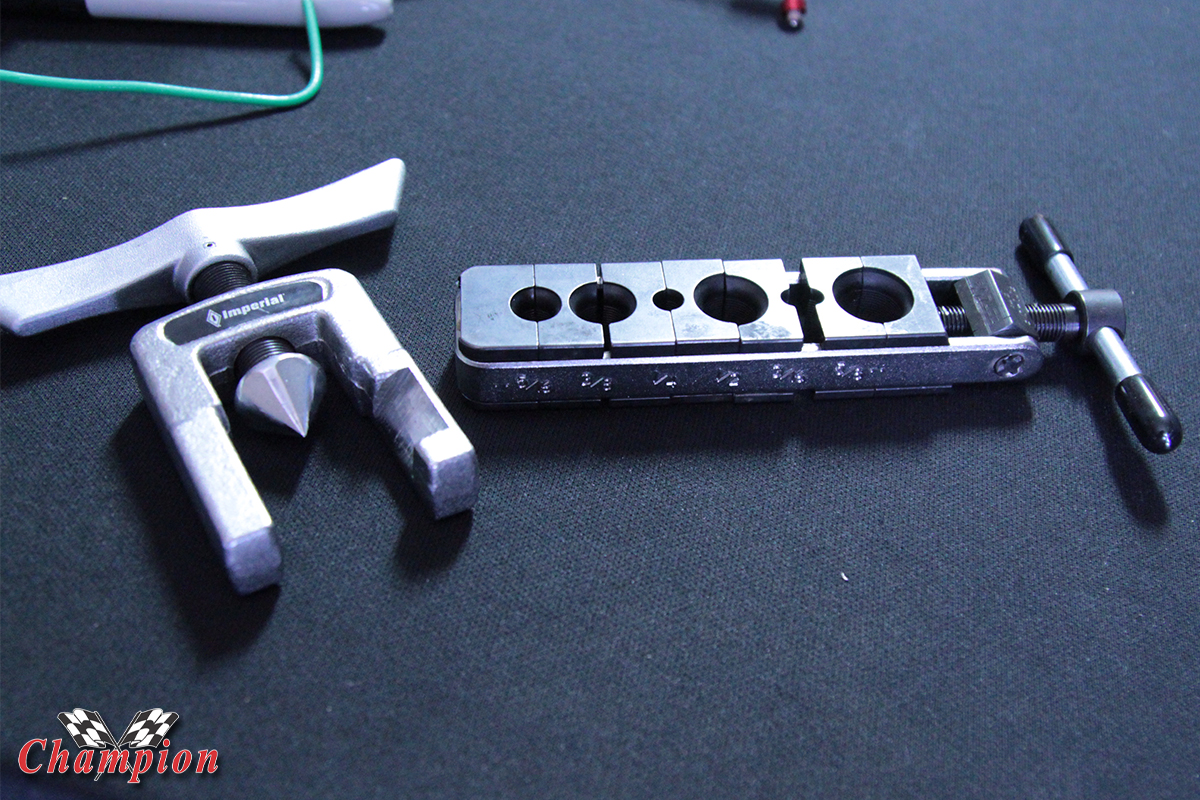
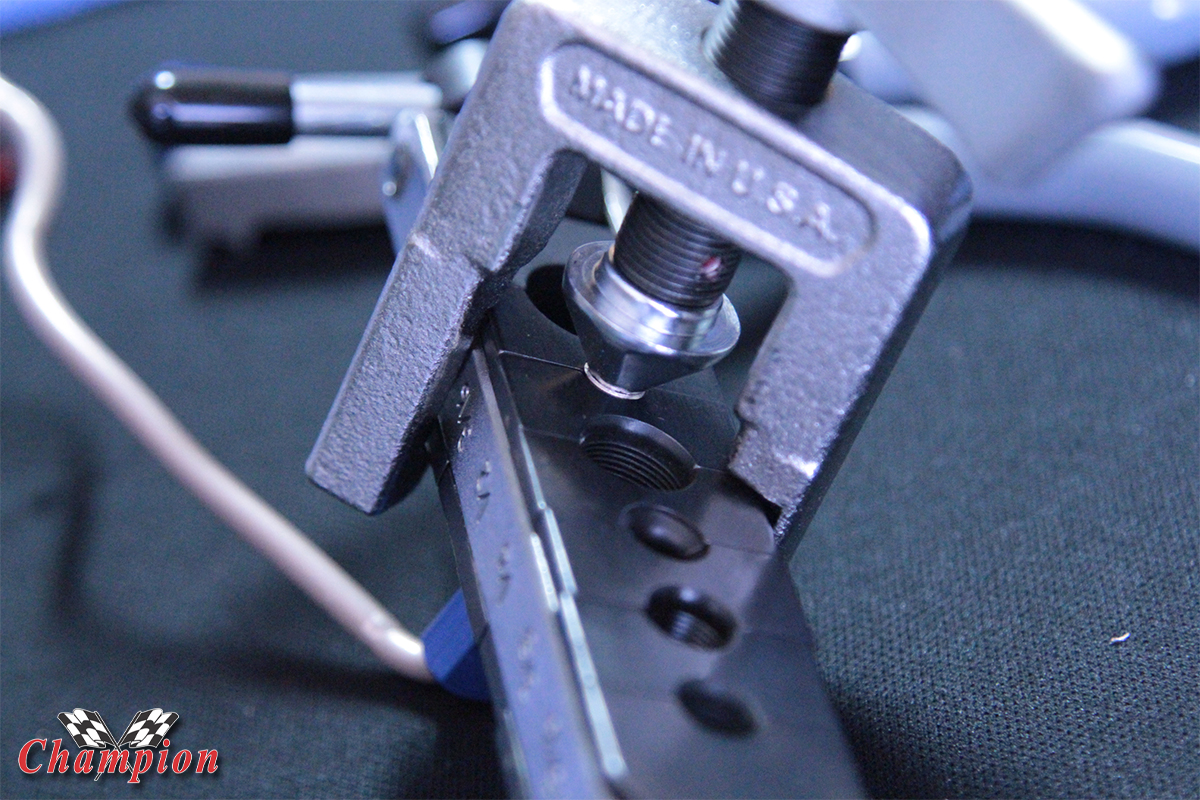
When flaring tubes, it’s important to use the proper flaring tools. A flare tool for SAE flares will not provide the proper sealing as an AN flare tool. Typical brake lines will have a double flare for SAE, and a single flare for AN.
Most AN conversions offer a couple of options when converting a hose to that method. One of the more popular was the stainless steel braided hose, but they can be problematic for larger hoses. There’s also the way that many of them go together, and the skill level required to assemble AN hoses is a bit higher than that of the typical DIYer.
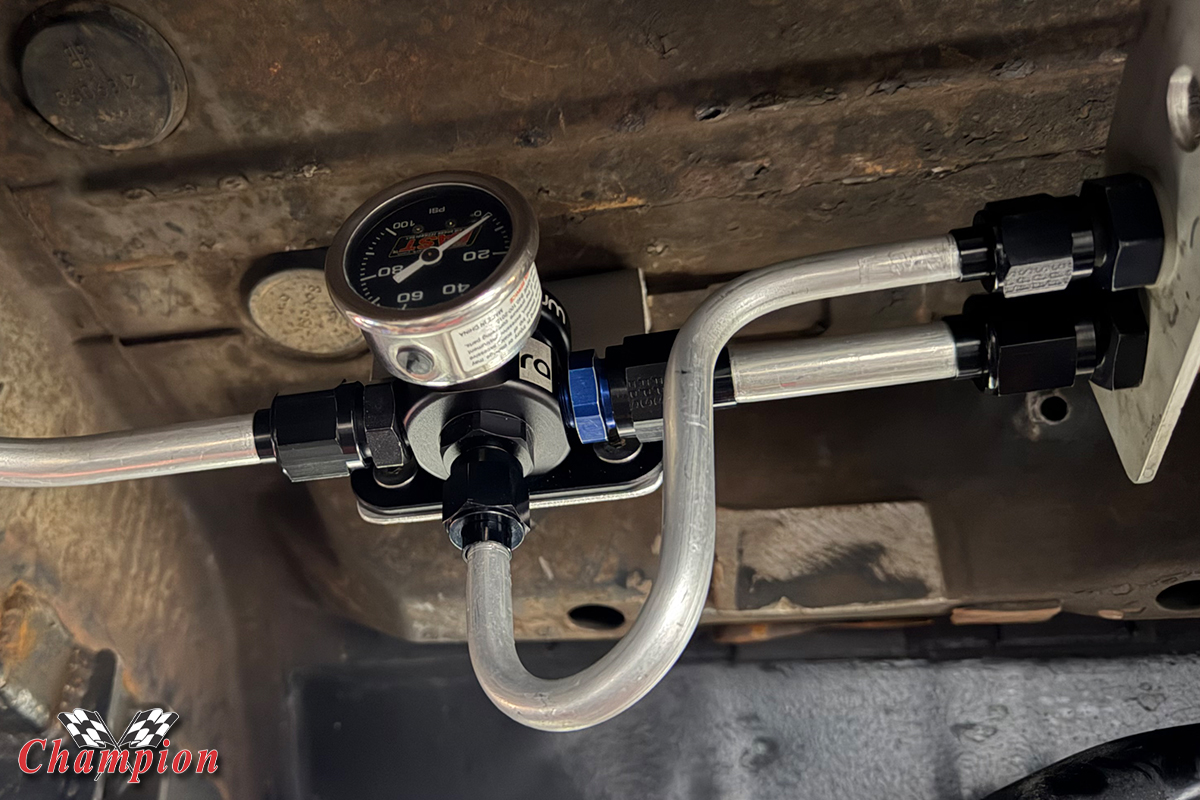
Some companies, like Fragola Performance Systems, offers an alternative connection method for hose ends, like its EZ Street push-on hose ends. These fittings assemble much easier than a typical two-piece AN fitting, but also require a specific clamp system to secure the hose. This system differs from the standard hose barb seen on a typical AN conversion, but still secures the hose under high pressure applications.
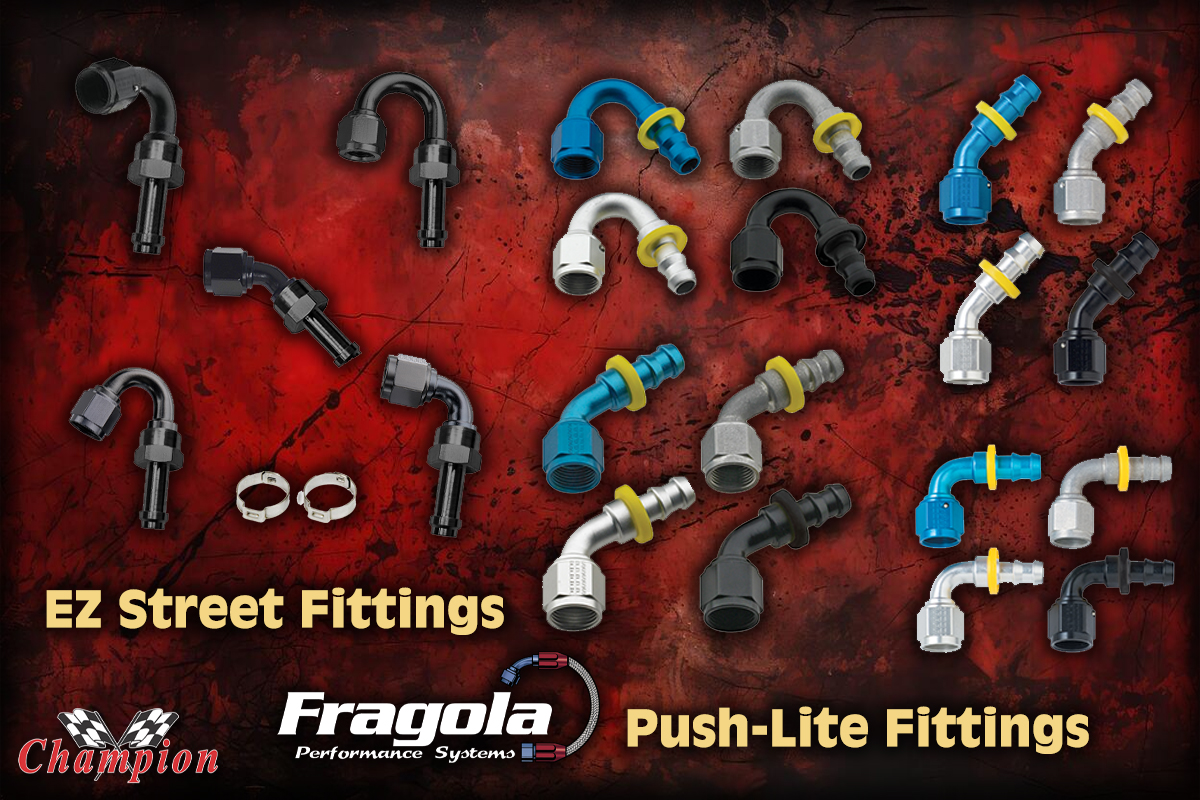
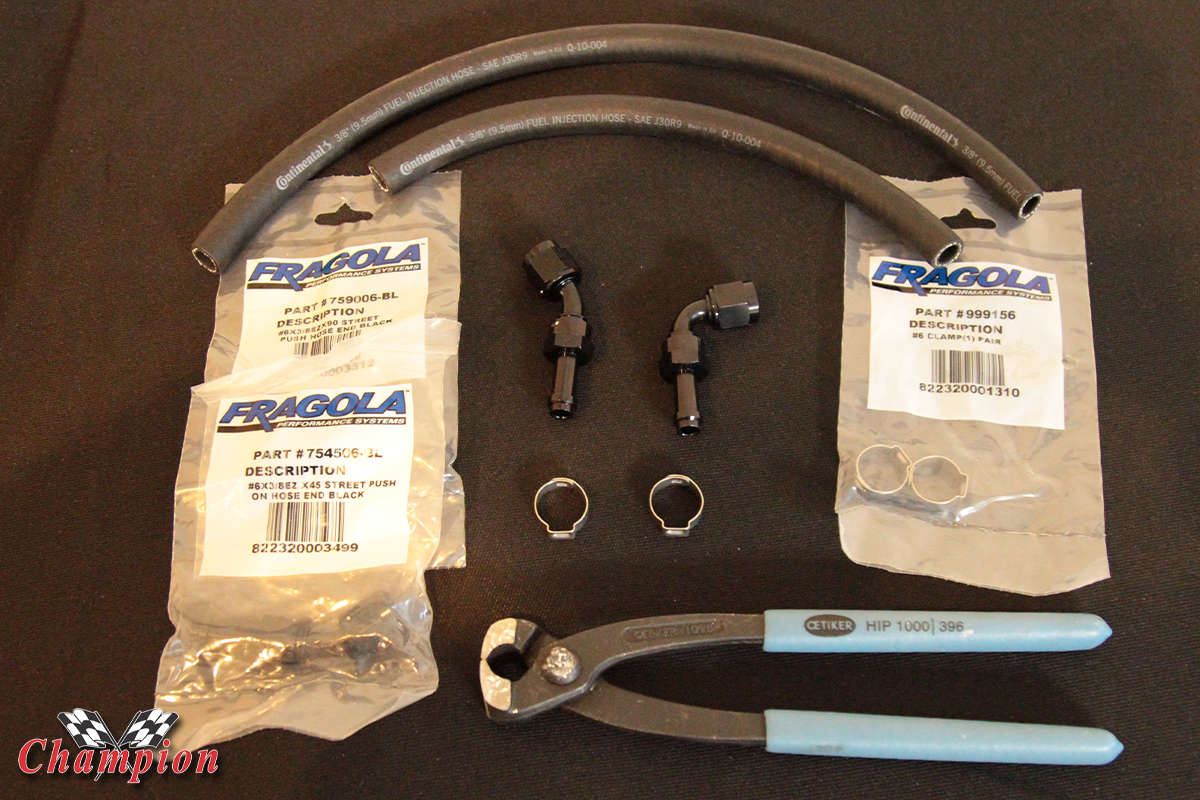
The clamps for Fragola’s EZ Street fittings require a specific pliers, while a standard hose barb, similar to the Push-Lite, can utilize a typical hose clamp found at every auto parts store. Hoses slide onto the EZ Street fittings with ease, but don’t forget to slide the clamp over the hose first, removing the hose is near impossible.
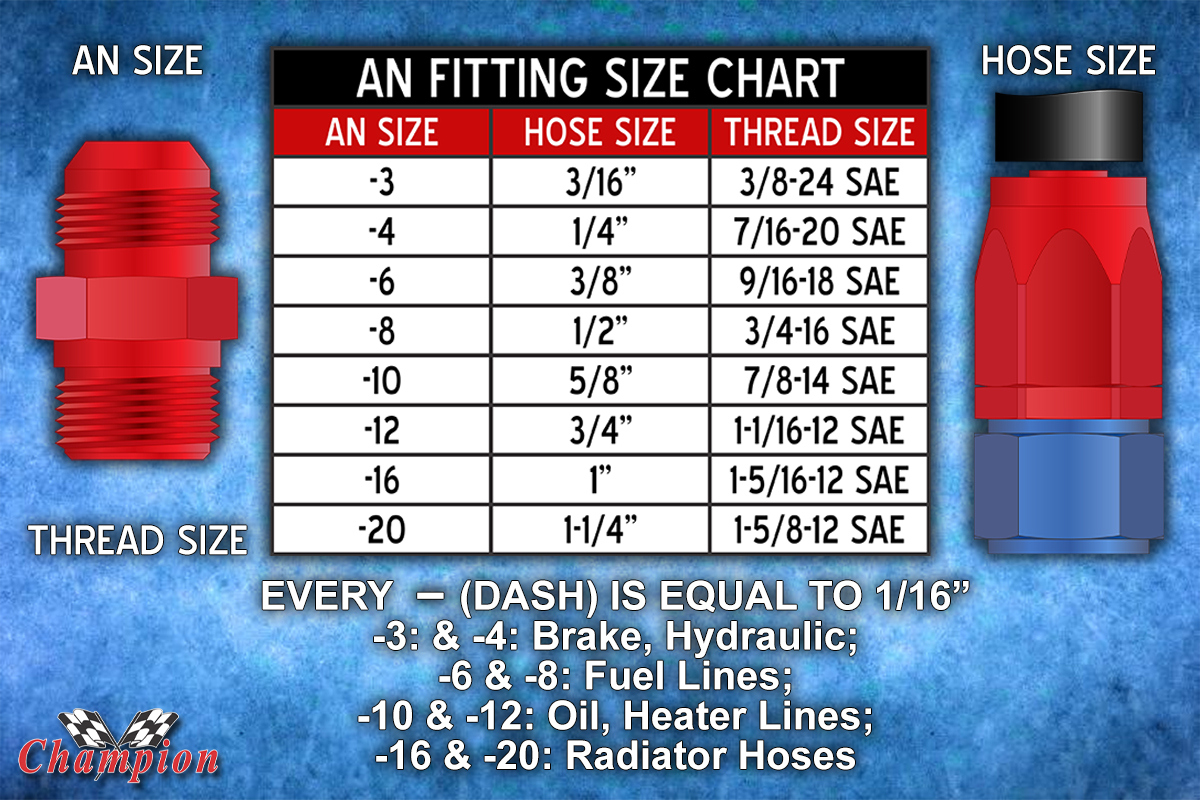
While most people simply head for the two-part AN female fitting for the hose end, the opposite end requires a different fitting, which we’ll get into in the next section of this article. The chart at the top provides a reference to sizing, and what thread sizes match up to the AN sizing, but that doesn’t mean that every -8 AN male fitting requires a 3/4-16 thread size, sometimes you need to step up or down a size or two, depending on the application.
While it’s best to stick with similar sizes when converting thread sizes over to AN fitting sizes, it’s not always possible depending on the components being mated together with that particular hose. However, one should never try to convert to a much different sizing, that can lead to pressure and flow failures and even pump issues, depending on which direction that sizing change impacts the system.
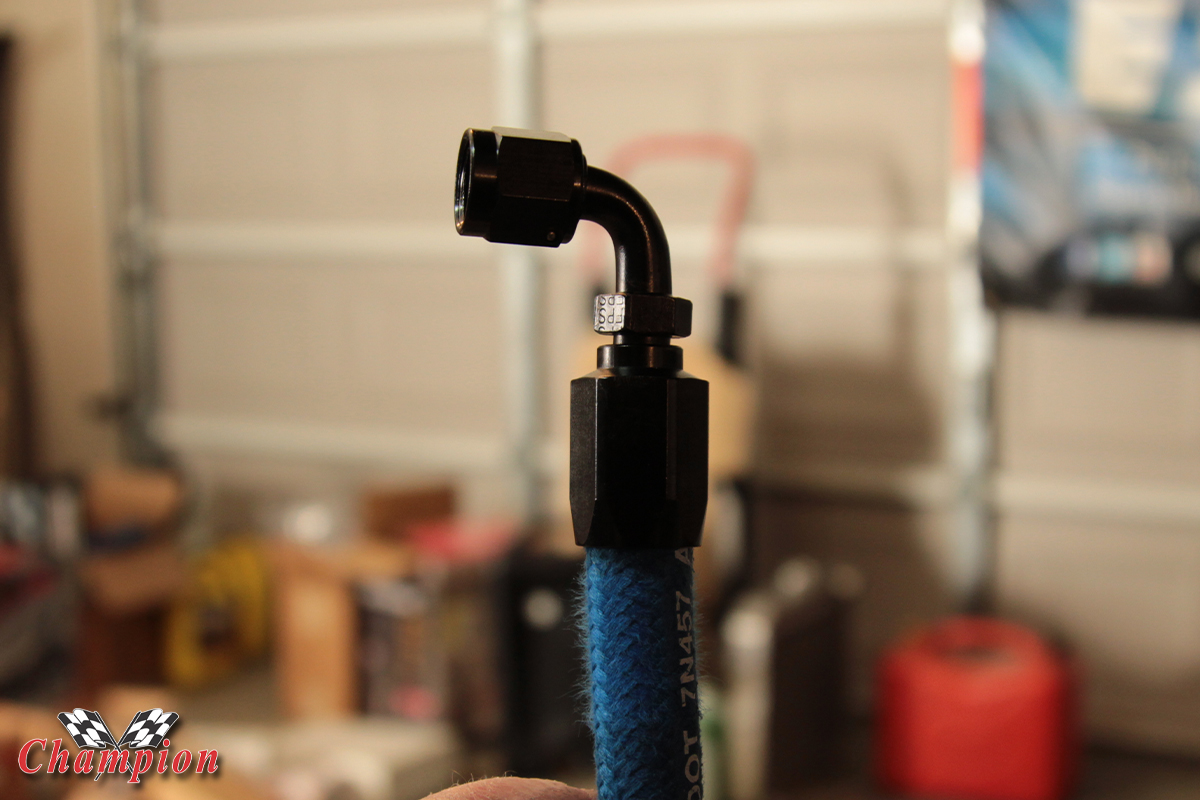
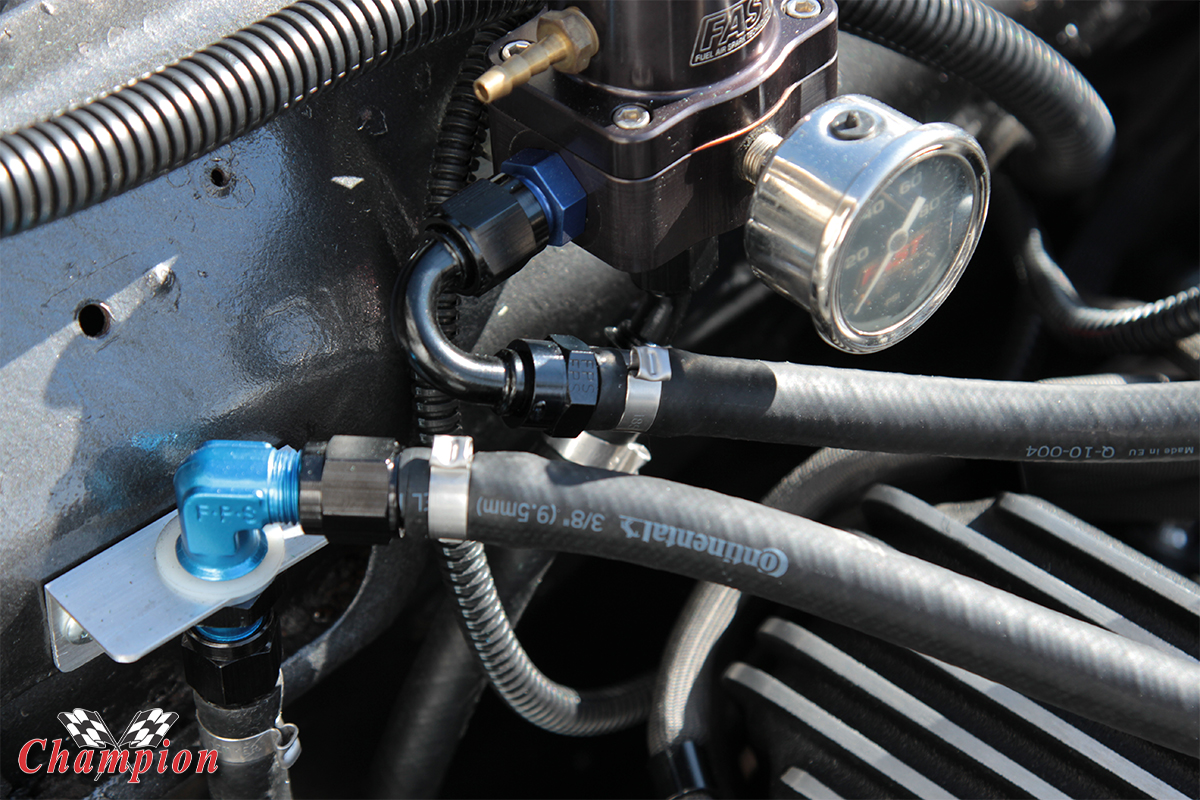
The two-piece AN fitting method is a little more difficult to assemble, but looks cleaner than a barb-fitting. But we kind of like the ease of use and the more mechanical way of attaching these Fragola EZ Street fittings for fuel lines.
The two-piece AN fitting typically needs to be pressed into the nut portion of the fitting, and then the nipple portion of the fitting needs to fit inside the hose, and is threaded into the nut. This is more difficult with steel braided hoses, and sometimes even more difficult with larger hoses. There are tools for pressing these pieces together, and they do make the job much easier.
The alternative is to work the hose all the way into the nut, and then install a soft-jaw on your bench vise and try to turn the two parts together. Of course, a good set of AN wrenches can make this job easier, but in some situations that larger nut on the hose end is between the standard -6 & -8 AN wrench sizes. That’s when a bit of masking tape and an adjustable wrench might come in handy. Sliding a hose over a barb is often much easier, but then you have the clamp to contend with, and a standard worm-gear clamp is, well, ugly.
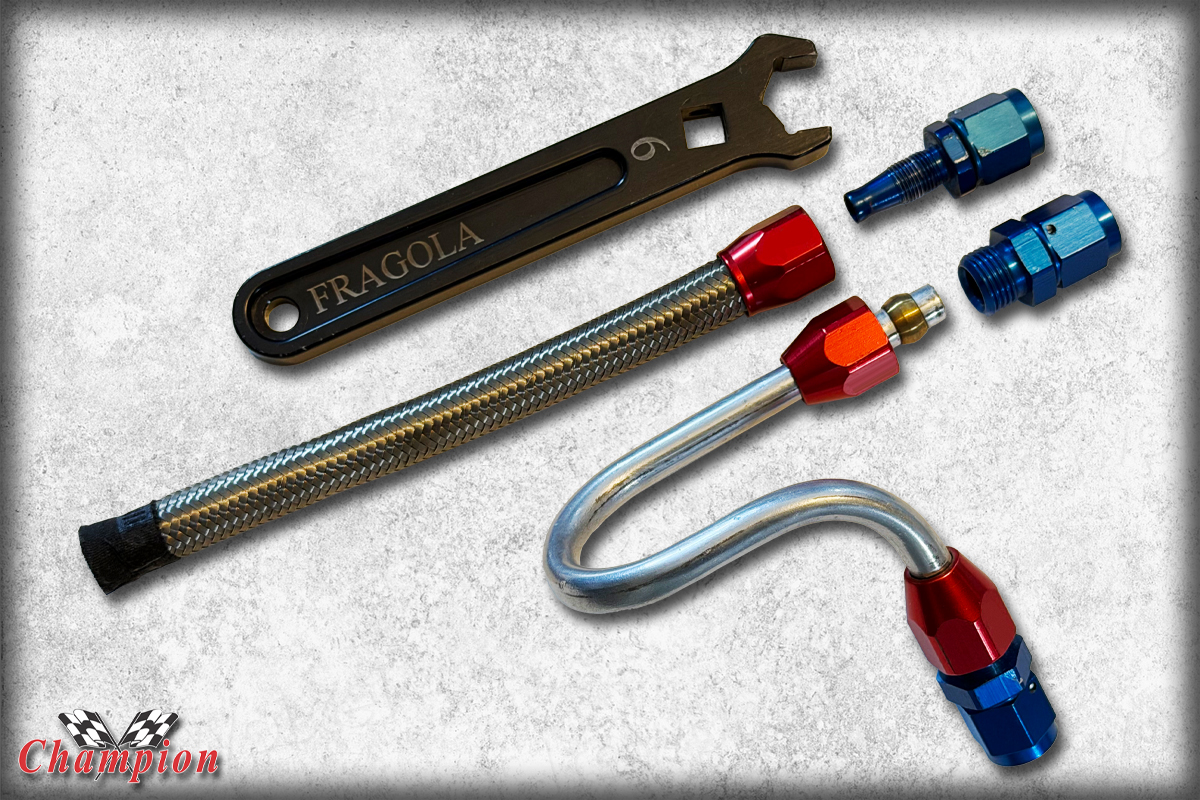
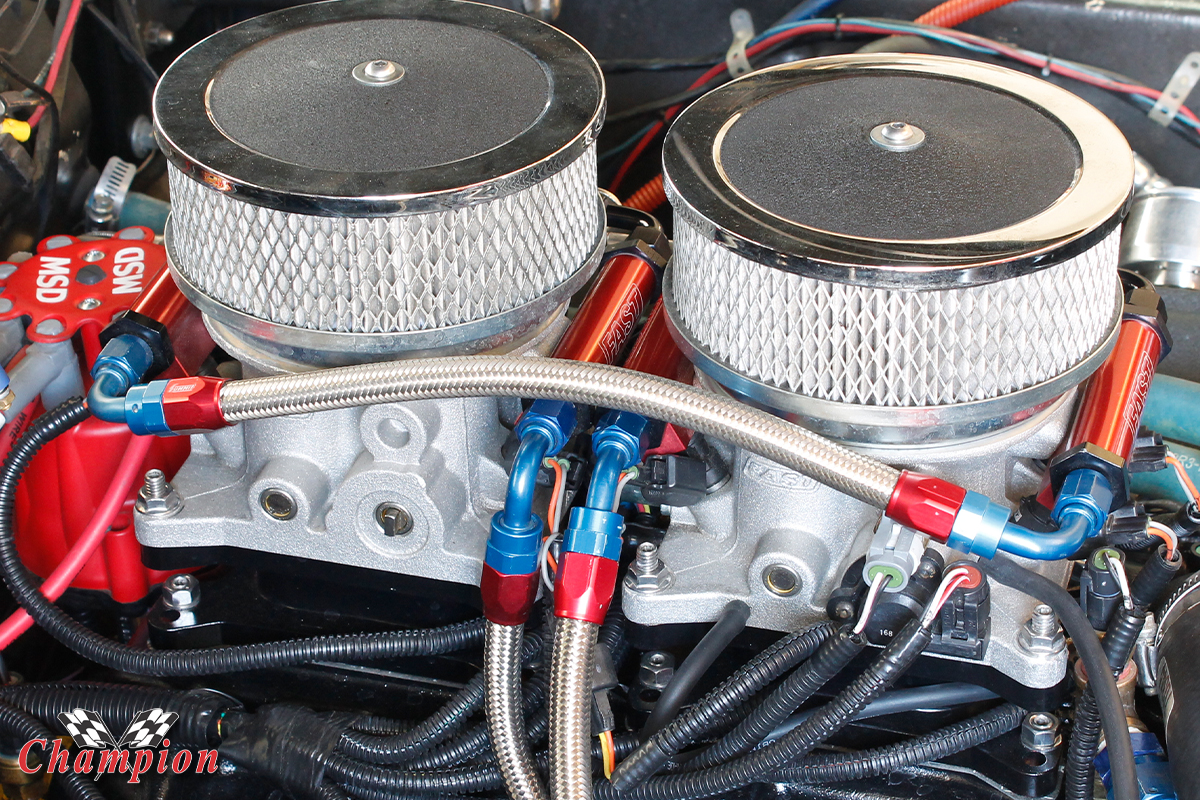
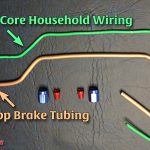
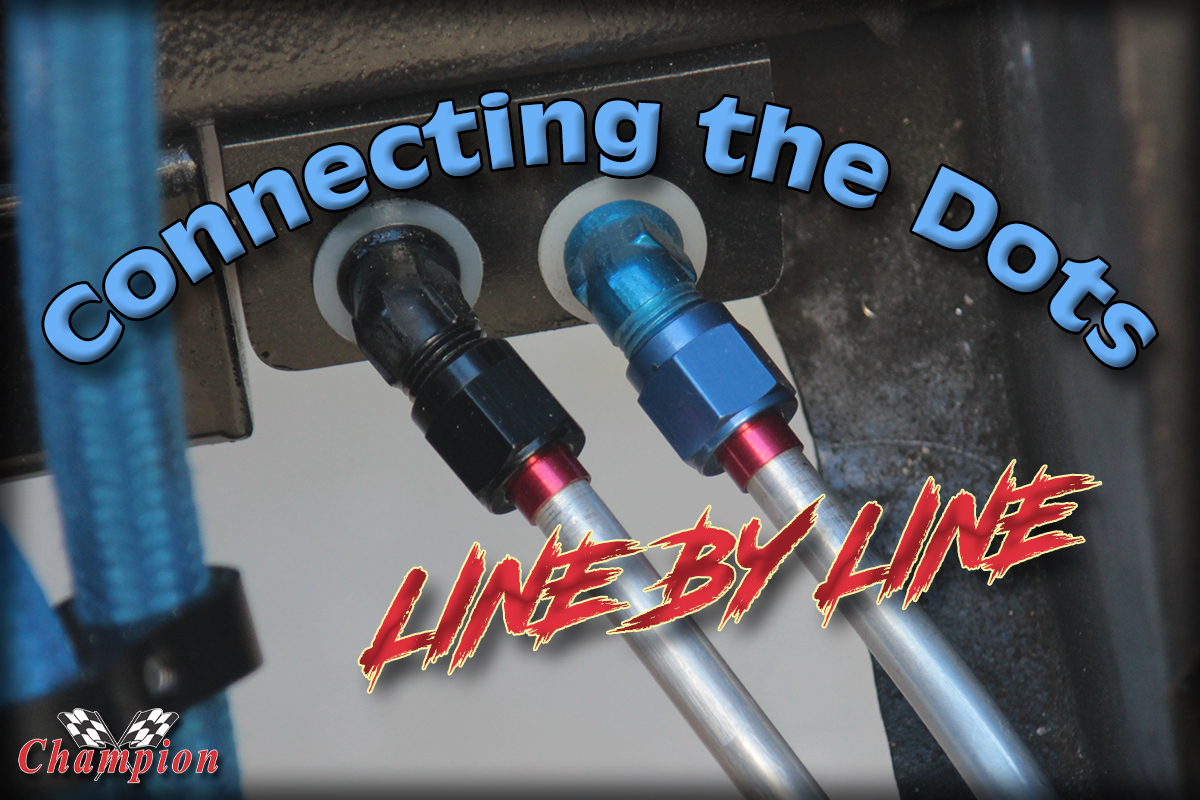
It’s not always the easiest method to convert to AN hose ends, but it can be the more aesthetically pleasing way to go. If flaring the line isn’t your forte, another method is the compression sleeve, at the bottom on the left photo.
The ORB Fitting vs. The NPT Fitting
Another fitting you may have seen on custom applications is the ORB fitting. This differs from the typical NPT fitting that you see on components like your intake manifold. This includes the screw-in heater and bypass hose fittings, and the temperature sensor for coolant gauges or triggering electric fan relays. They are typically brass fittings, and can be found in most home improvement stores.
NPT stands for National Pipe Taper, and is a tapered thread – meaning, the more you screw it into the receptacle, the tighter it gets. This will apply to both the male and female threads, and are designed to create a pressure tight seal by wedging the two components together. This differs immensely from the standard thread, and won’t provide the same seal as a standard hole that is drilled into a component and tapped by hand.
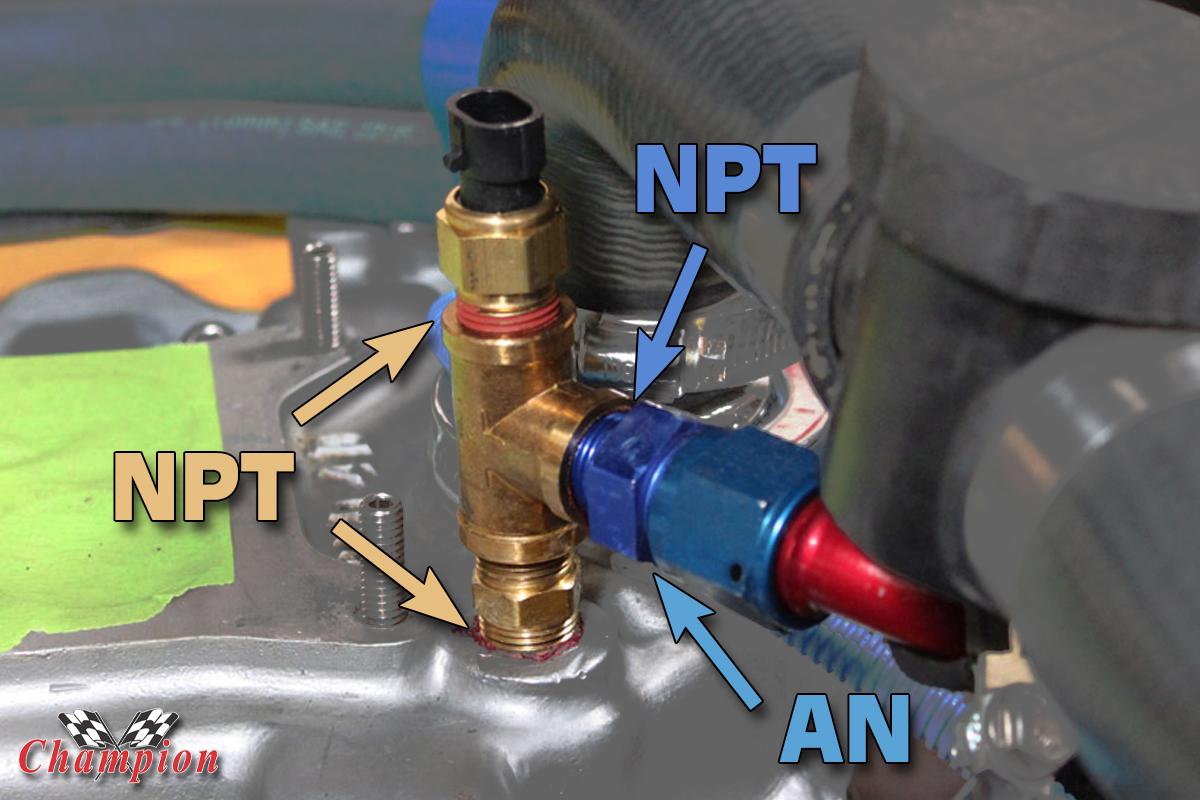
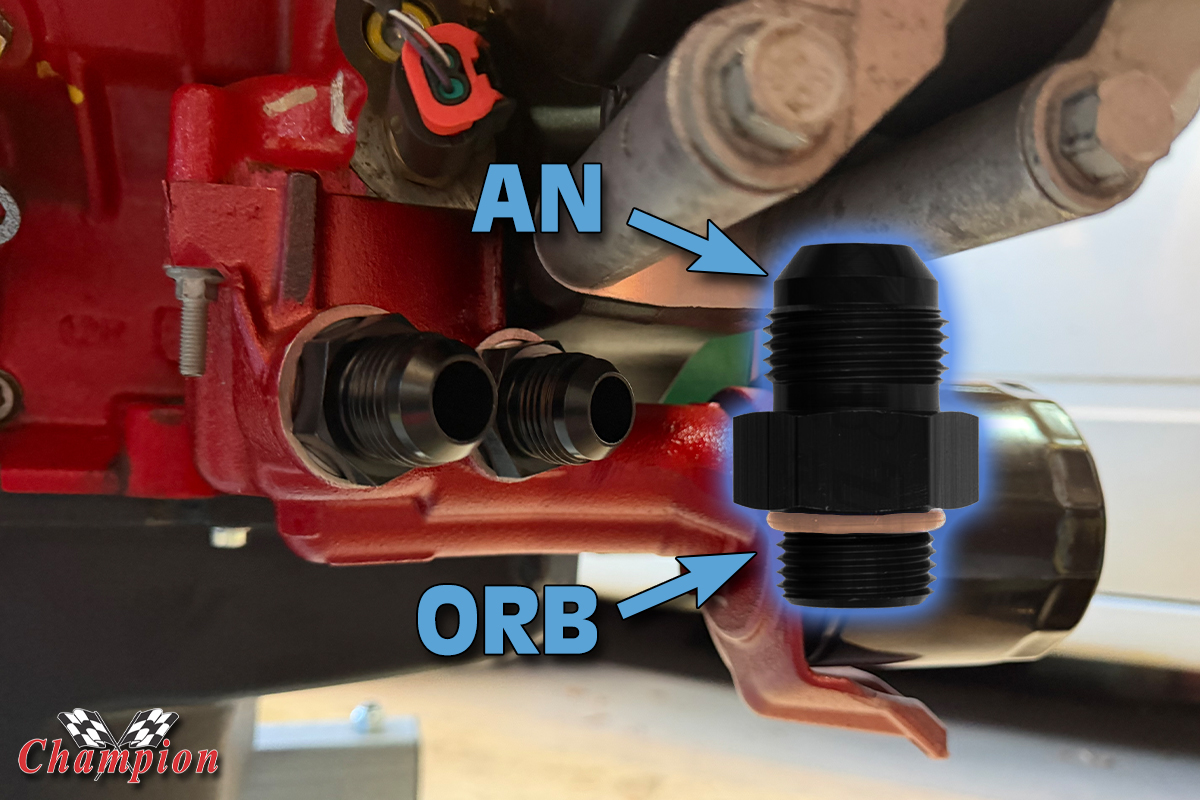
An NPT fitting can easily be found at home improvement stores, but you likely won’t find any that will work with an AN fitting. For those, head to Summit Racing, Jegs, or the manufacturer directly. knowing the thread size – and if it’s NPT or ORB – is paramount.
It should be noted that an ORB male fitting will not work with a female NPT fitting, and vice-versa. You’ll typically see nothing but threads on both the male and female NPT fitting, and for the male and female ORB fitting you’ll find a smooth surface for O-ring seating. The O-ring slides over the threads and seats once threaded into the component, and can provide an AN male fitting, or other styles, to attach your hoses.
It should be noted, however, that both NPT and ORB fittings do not require maximum torque specifications to make the proper seal. We recommend to tighten the fitting until it’s snug and then give it a 1/4 turn to secure the fitting. Once the fluid begins to flow past the coupling, if you see a drop of liquid or a leak, give the fitting another 1/8 turn and tighten as necessary. It’s better to have to tighten it than it is to overtighten the fitting and compromise the threads, or even crack the aluminum.