
Occasionally, we get customers who ask about hard wiring their electric cooling fans, or running a bypass switch so they can turn on their fans at will. While it is certainly feasible to run a bypass switch, there are some points to remember about having that switch. We explain temperature switches a little more in detail in this article we posted to our blog.
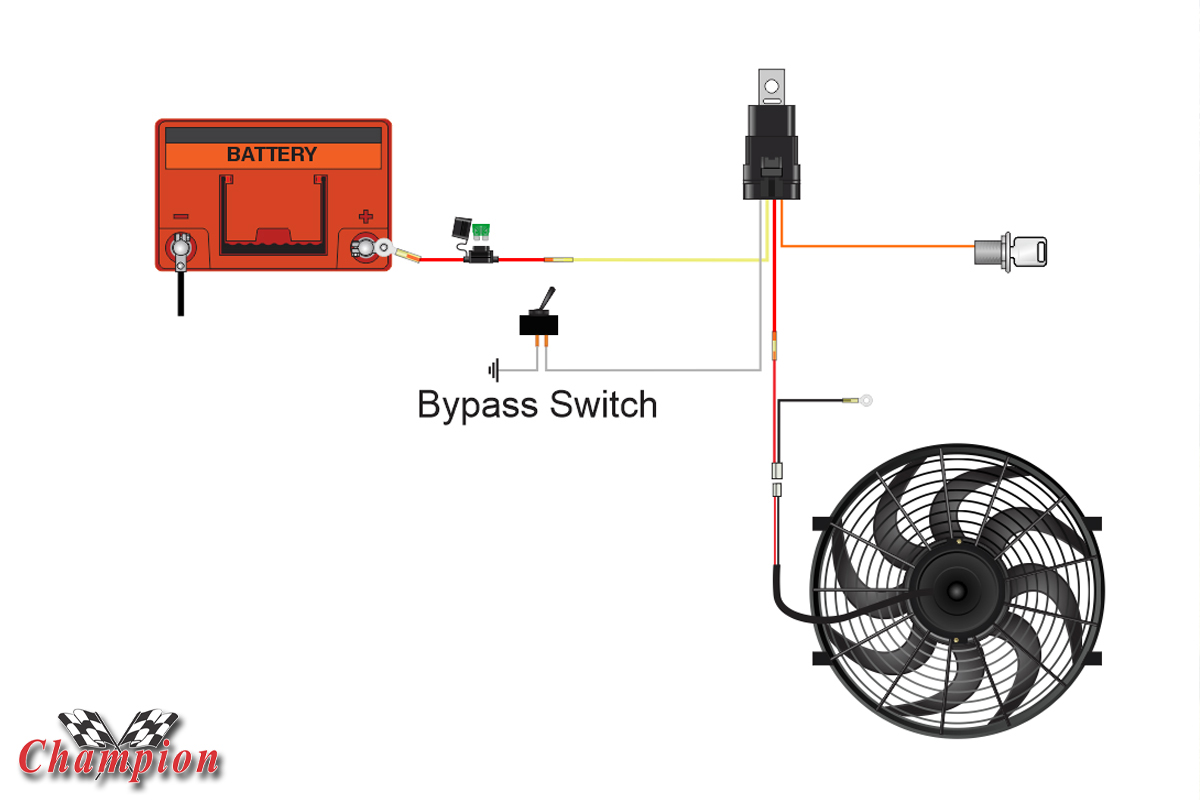
First and foremost, installing a bypass switch in lieu of using a temperature switch can potentially become a bad situation. If you choose not to install a temperature switch, you have to remember to watch your temperature gauge. When it gets to about the 180º mark, it’s time to flip the switch so your cooling fans can keep the temperature down. Countless times we’ve seen where someone decided to go this route, and then realized at 215º+ that they forgot to turn the fans on. Once the temperature drops, however, the fans will remain on unless you turn off the switch.
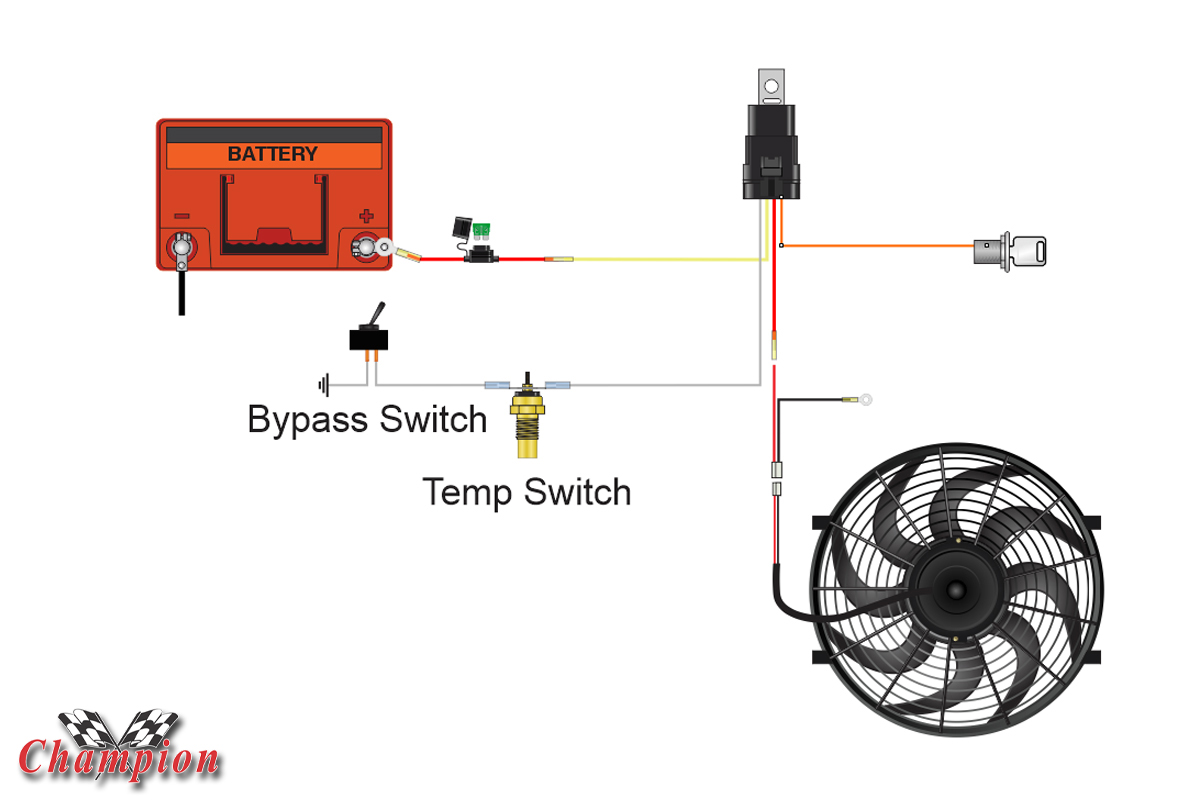
If you choose to use a bypass switch, it can always be wired in conjunction with the temperature switch, allowing you to turn the fans on sooner, such as when turning on the A/C. This will allow you to turn on your fans prior to the engine reaching 185º, however, if the temperature is above 185º, this method won’t allow you to turn off the fans. The temperature switch would override the bypass switch, as long as the ignition key is on, and the temperature is above 185º.
If you want to have your fans kick on when you turn on the A/C , that can be done fairly simple. But the fact is, when your A/C is on, the added heat from the condenser, along with the added drag from the compressor, will typically cause your engine to run warmer anyway. In that case, the fans will kick on sooner than normal because of the residual rise in temperature from the A/C system being on.
Adding a pusher fan in front of the condenser, and adding an additional relay connected to the trinary switch, would be the best method for providing more air flow through the condenser and to help keep the temps down. We recommend contacting the A/C manufacturer to find out how to connect your fan relays to the trinary switch, as well as finding out if you have a binary or trinary switch. The latter would be required to operate cooling fans.
It should also be noted that any switch you decide to add to control your electric fans manually should be connected to a relay, and never directly to the fan itself, let alone two fans. Most switches are rated at about 10-15 amps, and are not designed to handle a higher load that electric fans can require. Electric fans can sometimes draw above 20 amps each with spikes up to 30 amps, which is far more power than a typical automotive switch can handle.
Relays are designed to handle higher current loads, most of them upwards of 30 to 40 amps, while only requiring as little as 5 amps or less to switch the relay circuit. Therefore, a bypass switch should be grounded on one terminal, and the opposite terminal connected to the relay. The opposite terminal on the relay should be connected to a 12V source when the ignition switch is on, or in the run position. You should always connect one side of the switch to a ground, with the other side going to the relay.
Why Does My Temperature Rise After I Park My Car?
We have also seen people who connected the orange wire on Champion’s relay directly to the battery, instead of the ignition. Some have said they prefer that the fans stay so that the engine can cool down after they park their vehicle. They say that because when they make a quick stop in the store, they return to their vehicle only to find that the engine temperature has climbed 10-15º higher than it was when they left. This is especially true on a humid day.
Some have asked about this on forums, and we’ve even seen others respond that it means there’s a problem with the fans, or the radiator, or the engine itself. But that isn’t always the case; the idea that leaving the fans on will keep the engine temperature from climbing is flawed. The main reason why the temperature rises a little is because the coolant isn’t flowing. The engine just sits with hot coolant in it, without a source to help dissipate heat the way the radiator does.
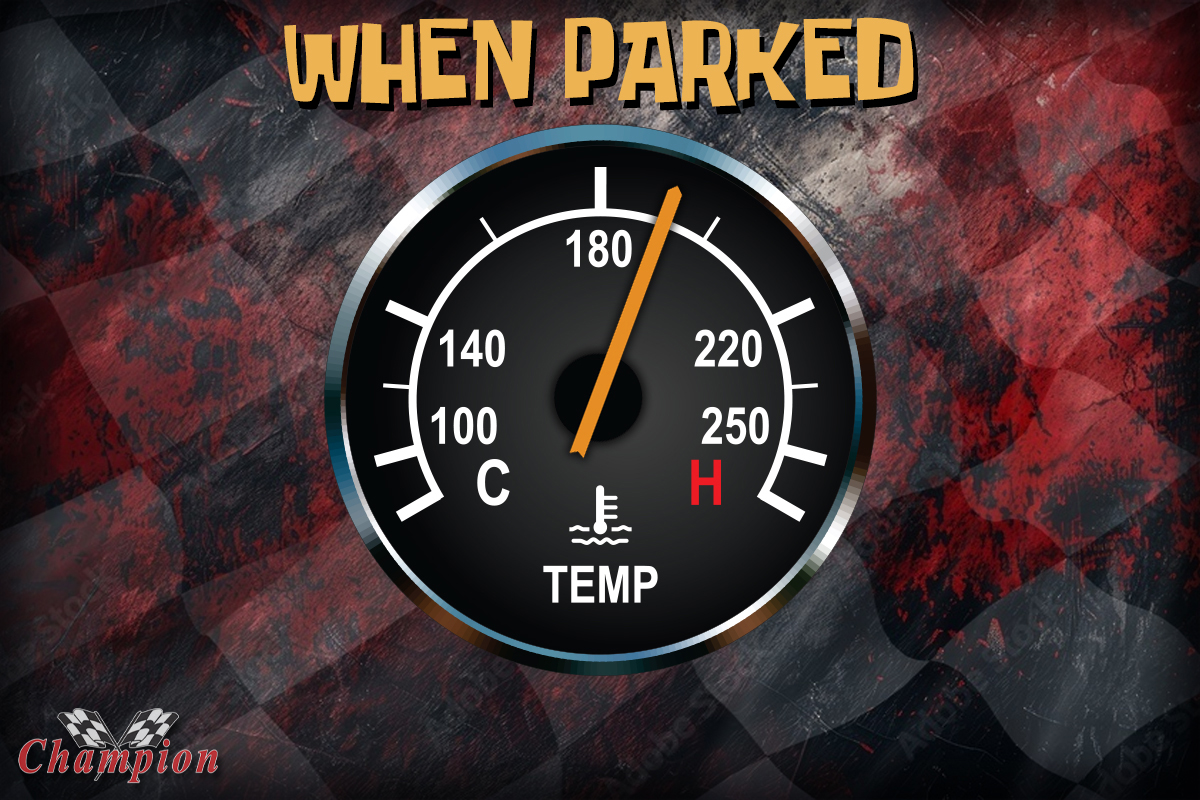
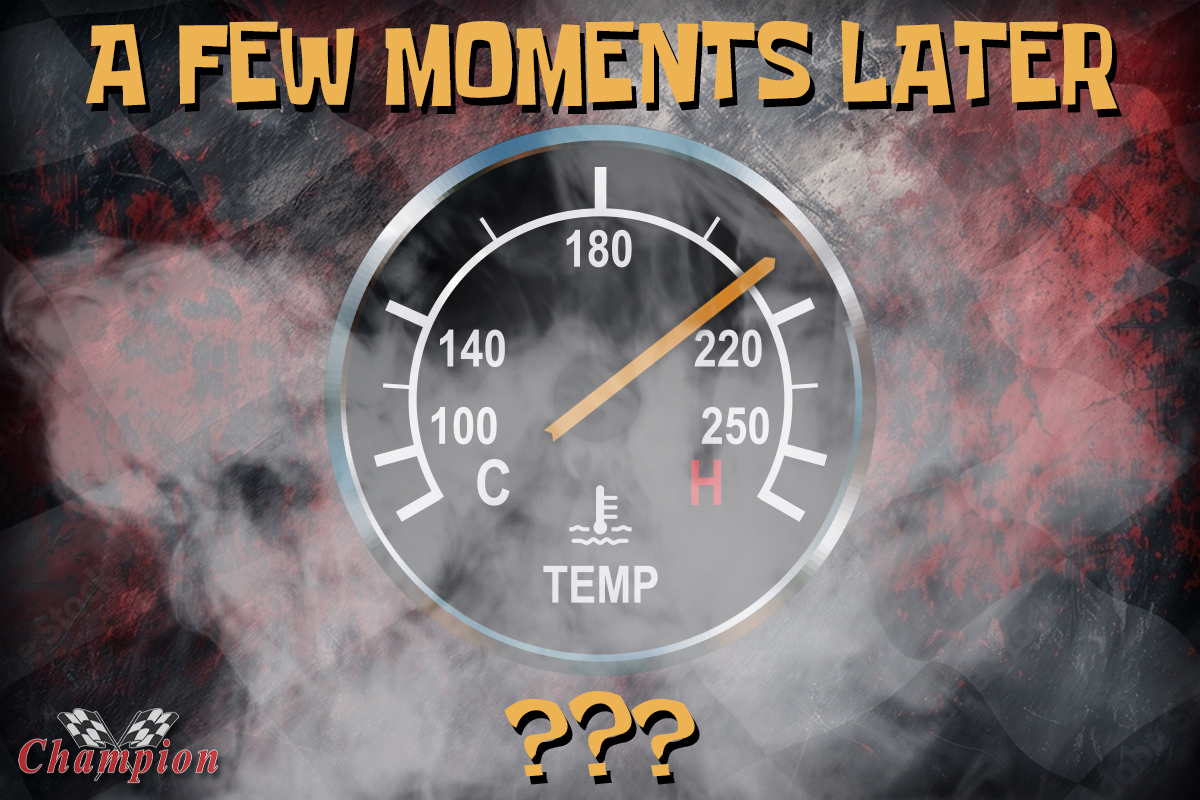
After parking your car and running into the store, seeing a slightly higher temperature when you return isn’t necessarily something to be alarmed by.
Since the coolant isn’t flowing, the only thing that actually takes place is helping the radiator to dissipate heat, effectively cooling down the radiator. In effect, all you’d really be doing is drawing power from the battery. On a significantly hot day, the fans could potentially run the entire time you’re in the store, without dropping the engine temp significantly. Two high-powered fans running for 15-20 minutes can be quite a draw on your battery.
The bottom line is that installing the electric fans with relays and a temperature switch, as designed, has worked for decades. Turning the fans off when you park has not been proven to be a detriment to your cooling system, or your engine. After all, even if the temperature does rise to 200º, it’s not going to damage your engine, or cause a head gasket failure. Running your fans as you’re driving, and conserving battery power when parked, is a tried and true method to maintaining your cooling system. An overheating issue will show up when you’re driving, not just when your vehicle is parked.