
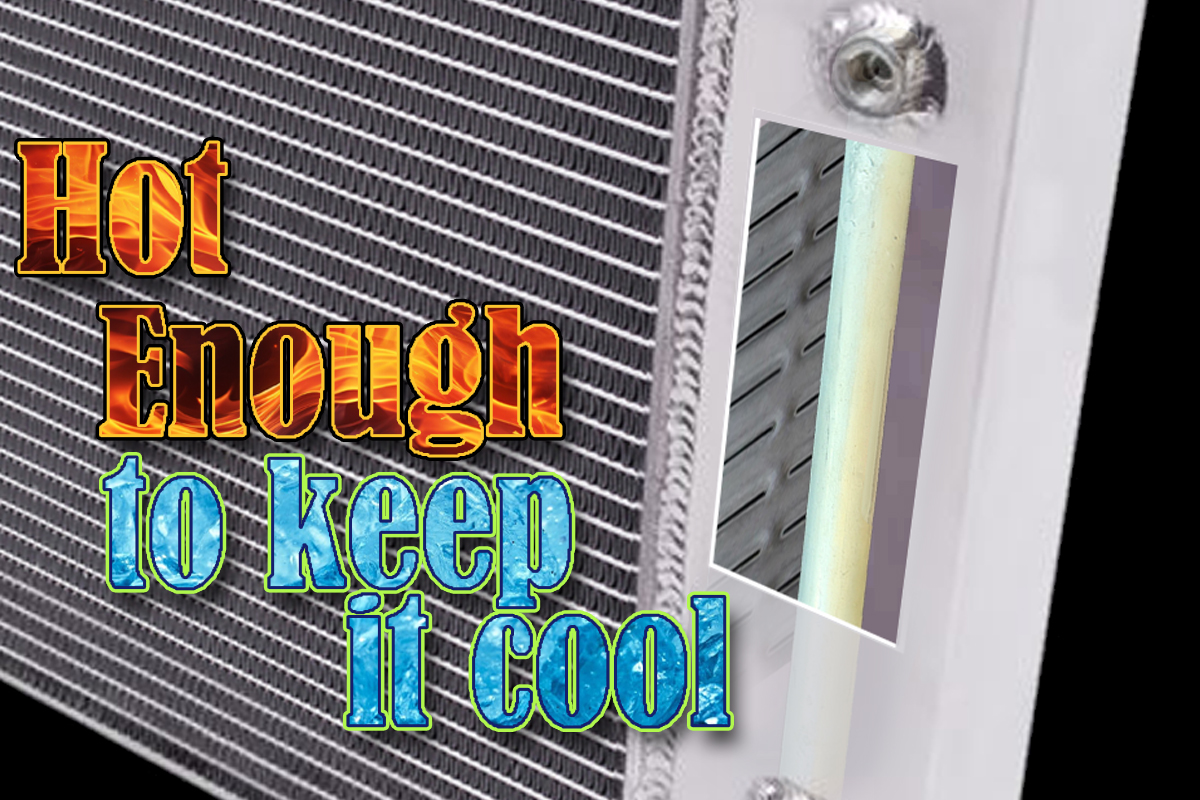
Most vehicles with an automatic transmission come equipped with a transmission fluid cooler, whether it’s an internal cooler that passes through the radiator, or a larger external cooler mounted to the core support to capture air flow as it passes through the grille.
Another type of fluid cooler, like the finned frame mount cooler that Champion sells, can also help to keep your transmission fluid from getting too hot. But when do you determine whether you need an external type cooler, or a larger one, versus using the internal cooler that passes through the radiator tank?
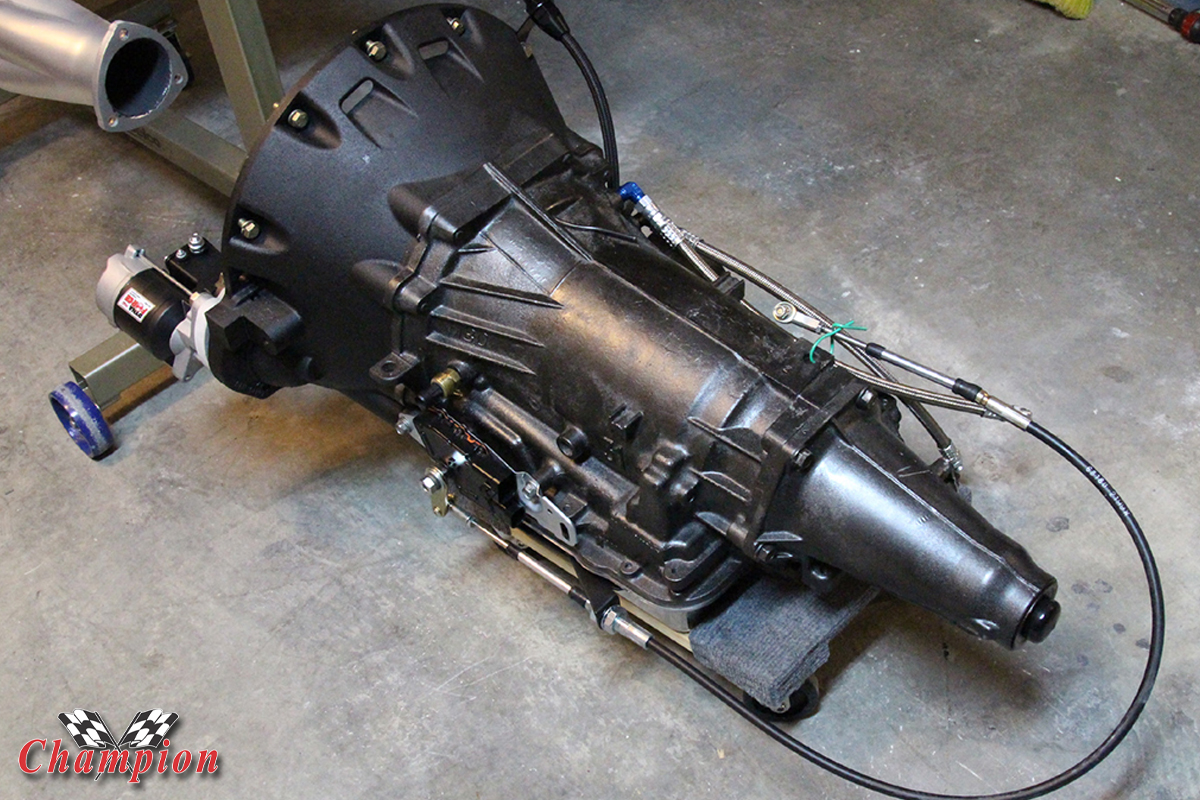
Like anything, it will often depend on what you drive, how you drive, and how much heat is generated from any performance upgrades that you make to your vehicle. For most vehicles, having the fluid pass through the internal fluid cooler in the radiator will be sufficient, and an external cooler isn’t required. External coolers typically come into play when you’re towing, hauling, or for heavier, full-size vehicles, like SUVs or trucks.
Upgrading to a larger cooler should be done when necessary, however, not because you’re concerned that your transmission fluid is too hot from passing through the cooler inside the radiator tank. Your transmission fluid is at operating temperature when it’s about the 180º mark. If you cool the fluid too much, your transmission performance is affected, and that can lead to premature failure.
TYPES OF TRANSMISSION COOLERS
Internal – Inside the Radiator
Though a vehicle with a manual transmission won’t likely have a transmission cooler, many radiators will contain an internal transmission cooler simply because it doesn’t affect anything, and doesn’t decrease coolant capacity enough to be a detriment. This makes it convenient for manufacturers to sell the same radiator regardless of transmission; fewer part numbers help to maintain inventory when the application is common to both.
This type of cooler benefits from having coolant pass over it in the cooling process to help cool the transmission fluid if it gets too hot, but helps to maintain about 180º. Inside the tube you’ll find turbulators that agitate the fluid for maximum surface contact, and better cooling. Again, cooling the fluid too much can cause problems; most engines will operate at about 180-195º, and that is sufficient for keeping transmission fluid temperatures down. Having an internal cooler when you have a manual transmission, however, is not going to be a problem.
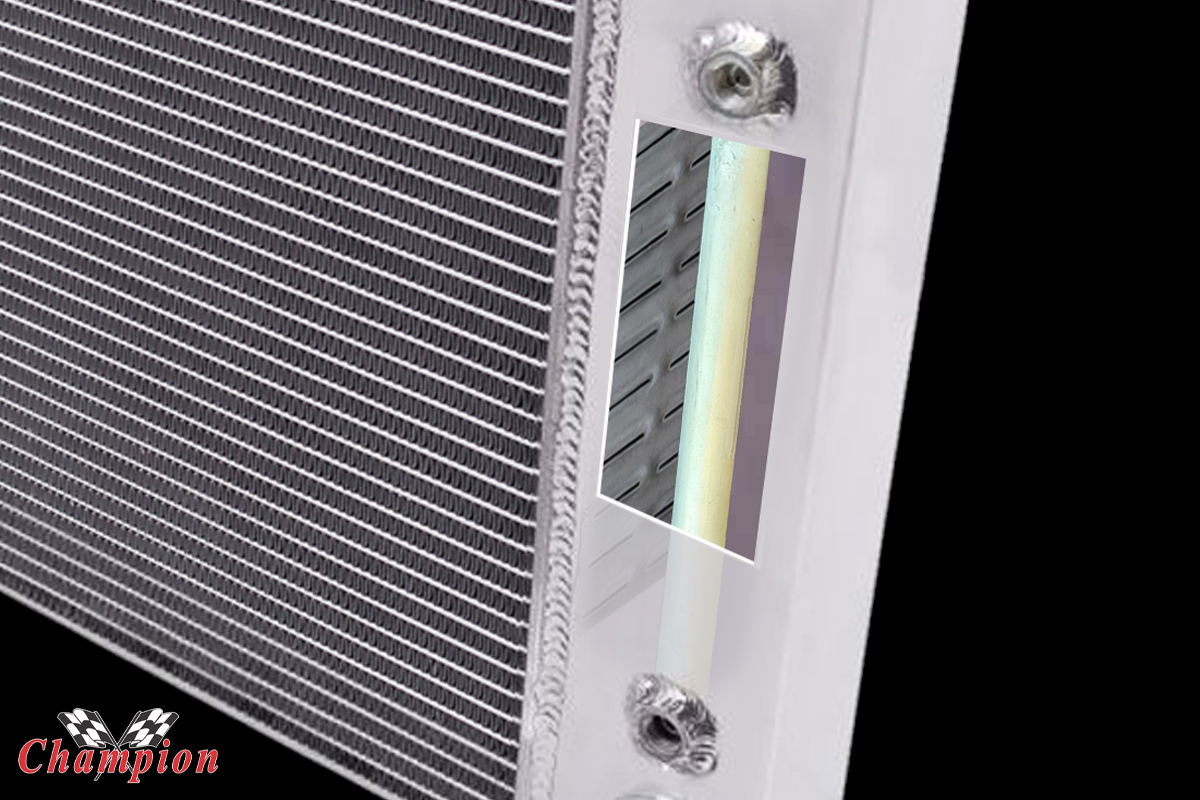
We have often had customers ask what the fitting sizes are so they can block off the inlet and outlet ports. Since the internal cooler is a separate tube that is welded to the tank, it is completely isolated from the coolant. The plastic plugs that often come supplies with the radiator are sufficient, but brass plus are certainly okay to use. There is no need to block the ports, since no fluids pass through that tube when it’s not being connected to a transmission.
External – Tube & Fin Design
The tube & fin design transmission cooler typically mounts in front of the radiator, but typically does not require much real estate. Its purpose is to help dissipate heat, and draw it out of the fluid. These types of coolers typically have fins outside of the tubes to help draw out heat as the air passes through. Inside the tubes are turbulators, like our internal cooler, that disrupt the flow of transmission fluid.
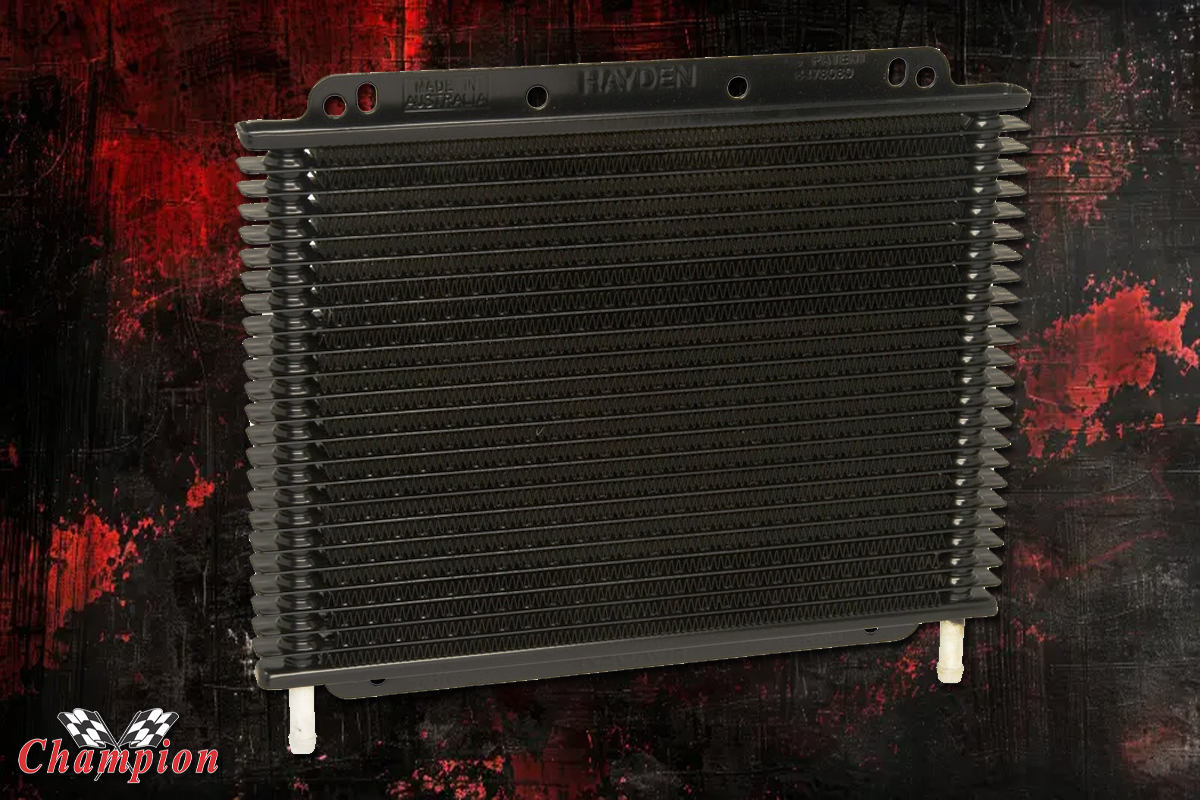
This fluid disruption slows down the fluid through resistance, and causes the fluid to agitate, thus allowing more surface contact inside the tubes. If the fluid passes straight through, without any disruption at all, the fluid inside the core of the tube will remain closer to its entry temperature, without the benefit of the surface of the tube drawing out the heat.
This type of fluid cooler is usually off to one side of the radiator, but for tow rigs and heavier vehicles it can be a much larger unit, taking up more space. You should never upgrade your transmission cooler to a much larger unit if you’re not towing, or having cooling issues. Too much heat can destroy your transmission, but overcooling can be detrimental as well. If you’re uncertain, smell the fluid and see if it smells burnt, or visit a local transmission shop, and they can advise what is best.
External – Remote Mount
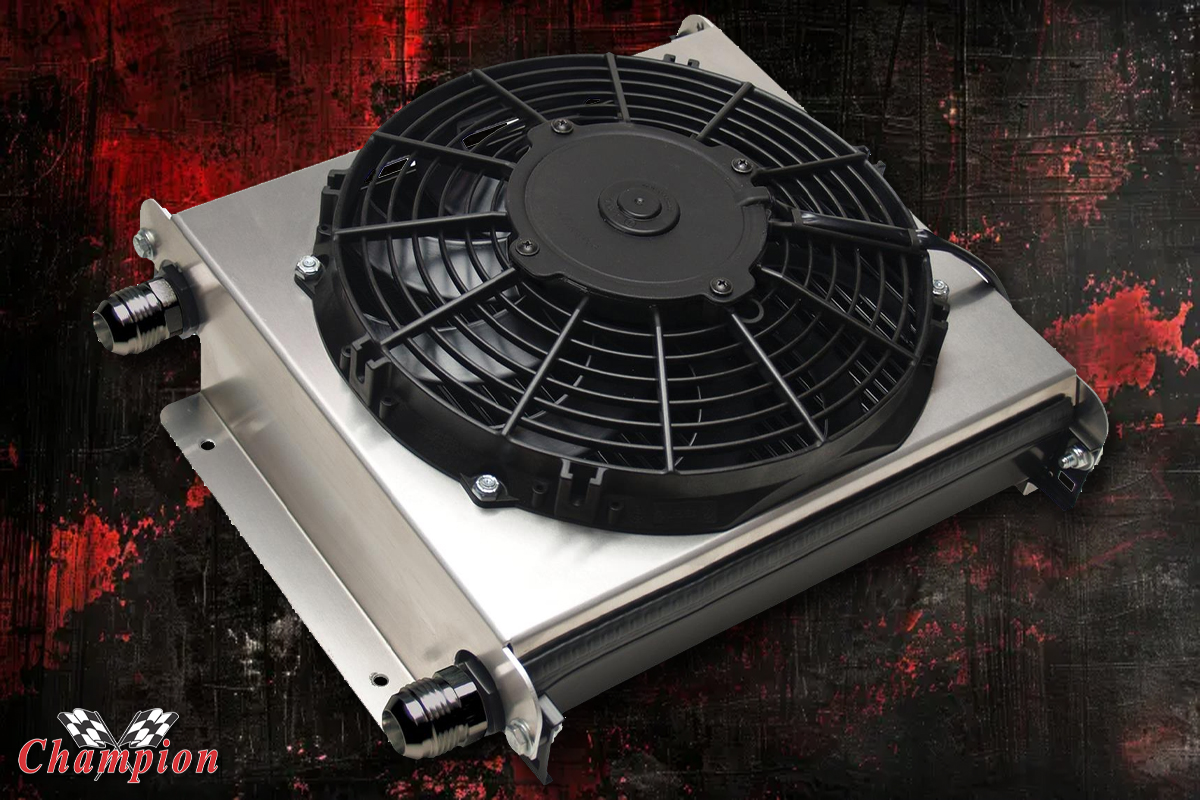
Another type of transmission cooler is one that we use on Project Windstorm. It’s a remote mount cooler from our friends at Derale, and has its own, self contained cooling fan and thermal switch. While most daily driven vehicles won’t require this type of cooler, where it’s beneficial is for high performance applications and allows mounting in a remote location under the vehicle where it might not benefit from proper air flow.
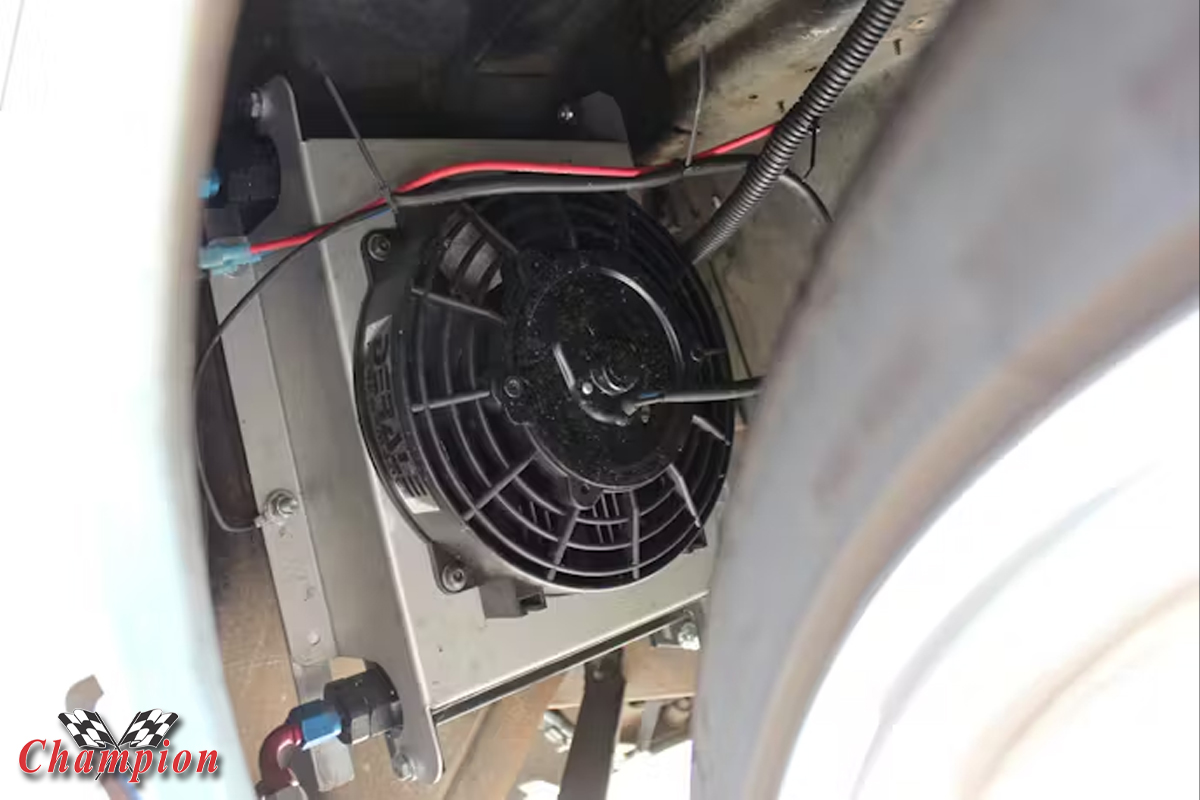
The self contained fan and thermal switch help to regulate the temperature when it rises above about 185º, when the fan kicks on and helps to bring the fluid back to normal operating temperatures. As you can see from the photo, it can mount to a solid panel, either vertically as shown, or under a floor pan, where it might not get much air flow. Many vehicles used in racing applications will benefit from this type of cooler because it can virtually be mounted just about anywhere.
External – Log Style
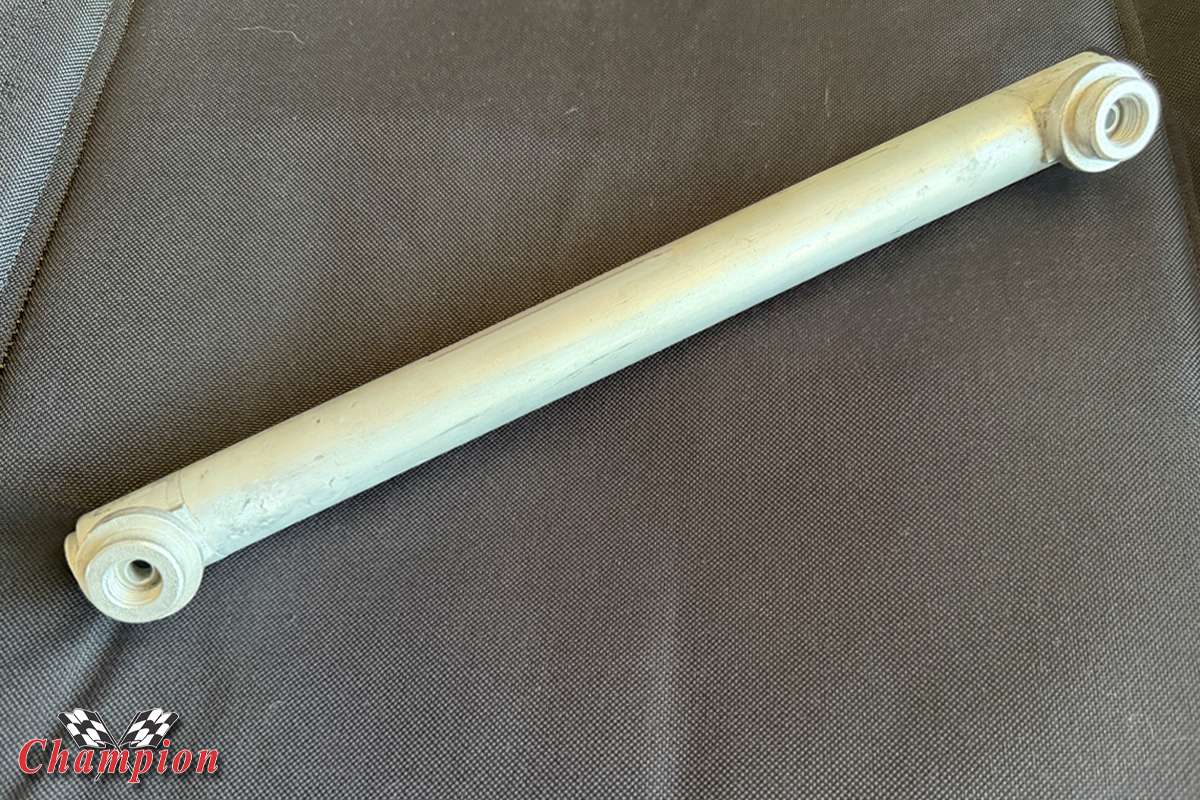
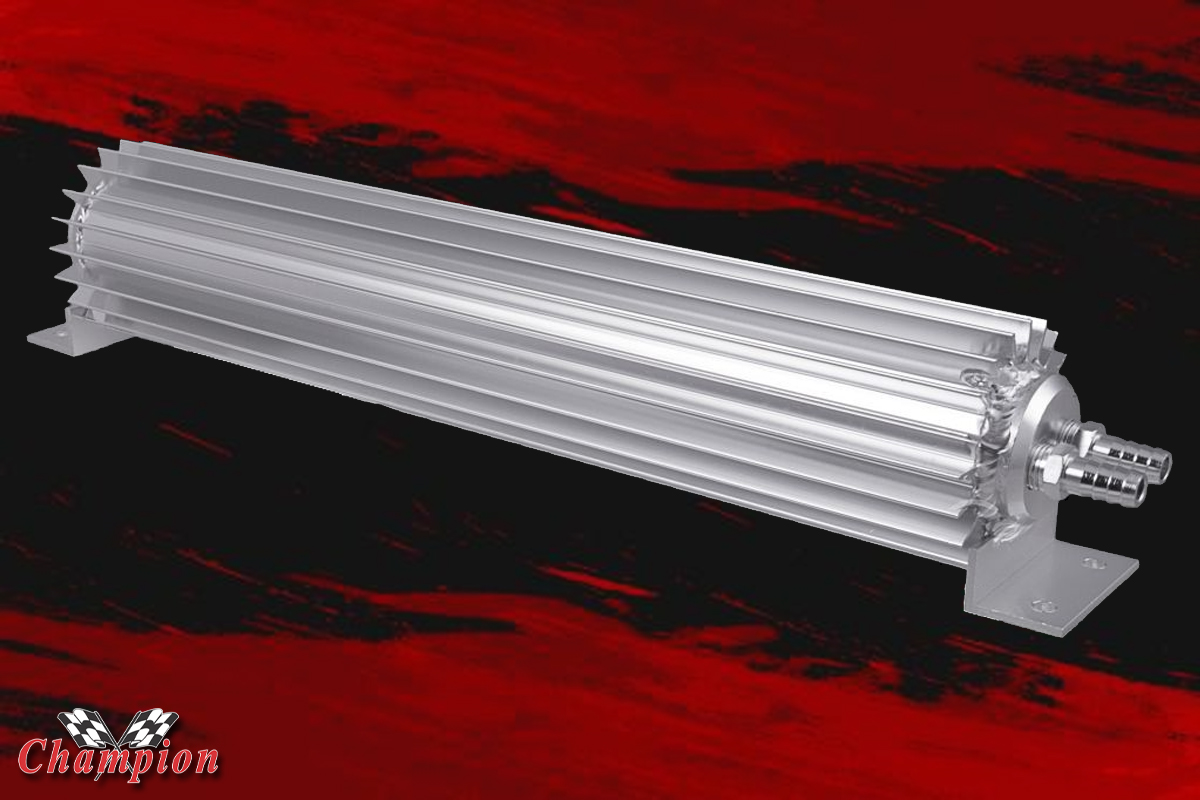
The external, log style transmission cooler that we offer is primarily for vehicles where an internal transmission cooler isn’t possible – such as on most double- or triple-pass radiators. Likewise, when there’s just no space for a tube & fin design fluid cooler, or it becomes an issue of having too many fluid coolers in front of your radiator, then our frame mount log style cooler can provide some transmission fluid cooling.
This type of design allows for remote mounting where real estate is at a premium, such as a street rod or custom application. While there are a couple of versions for this type of cooler, one of the benefits with the Champion Transmission Cooler is that it has a divider down the center of the tube, between the inlet and the outlet, which forces the fluid to make two full passes, for maximum surface contact. The divider is open at the far end so the fluid can return on the opposite side.
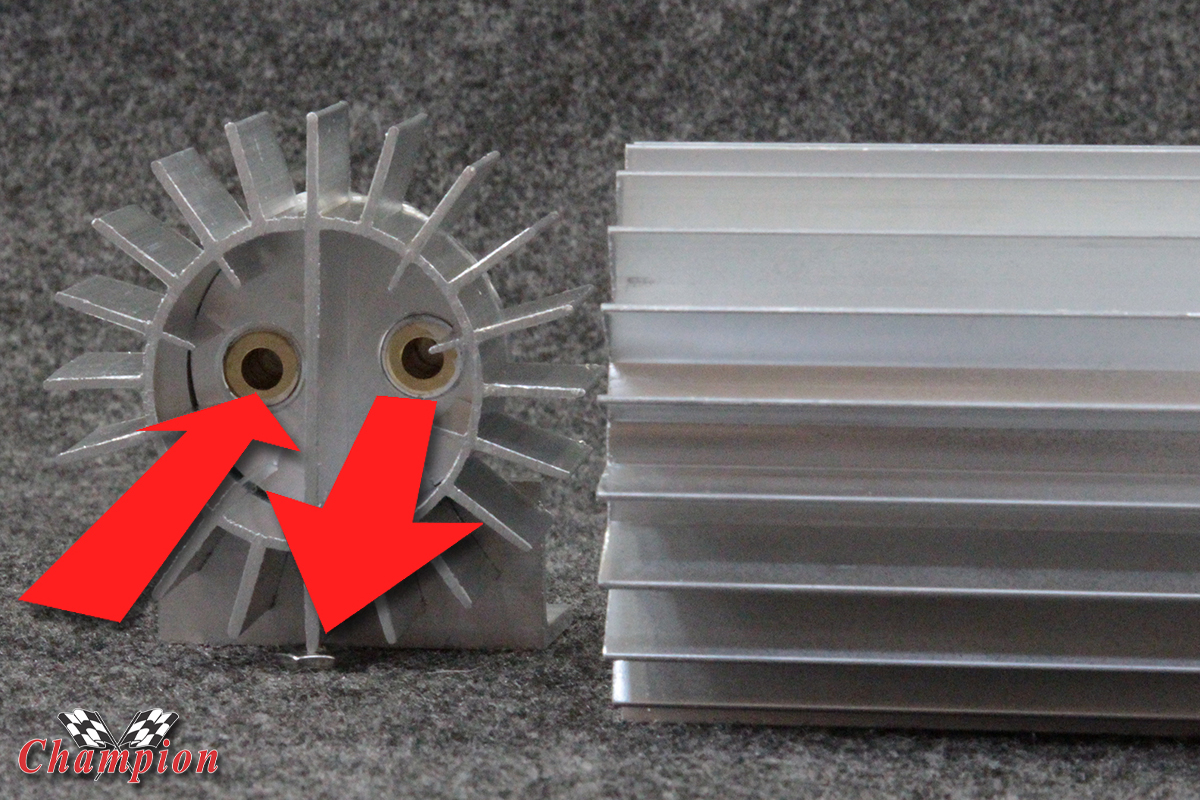
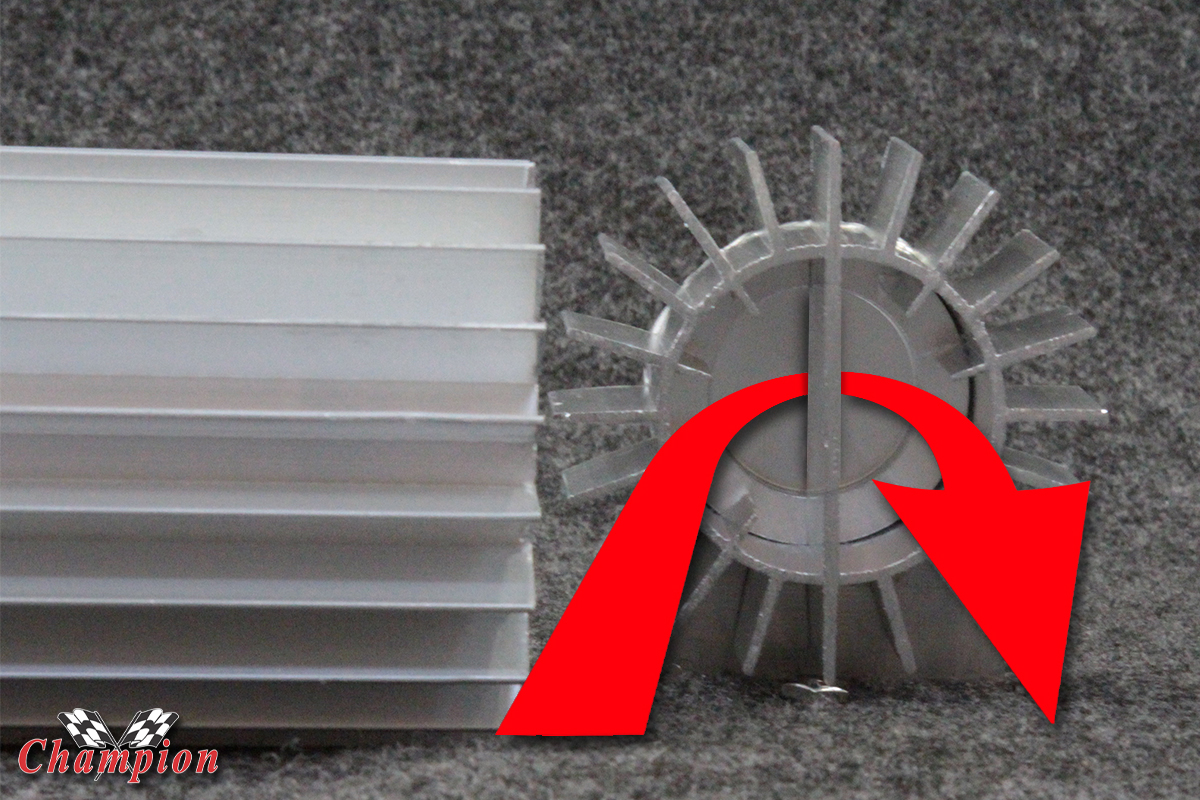
With our Frame-mount Transmission cooler, the fluid enters one side, extends the length of the cooler, and is then returned back out of the cooler, providing a dual-pass for maximum cooling efficiency.