Almost every new vehicle coming out today has LED-style bulbs, whether it’s headlamps, side markers, turn signals, or tail lamps. There’s a reason for it: they’re far more efficient than the old incandescent bulbs we’ve been used to for the past several decades. But if you’re not making the switch to LED, why not?
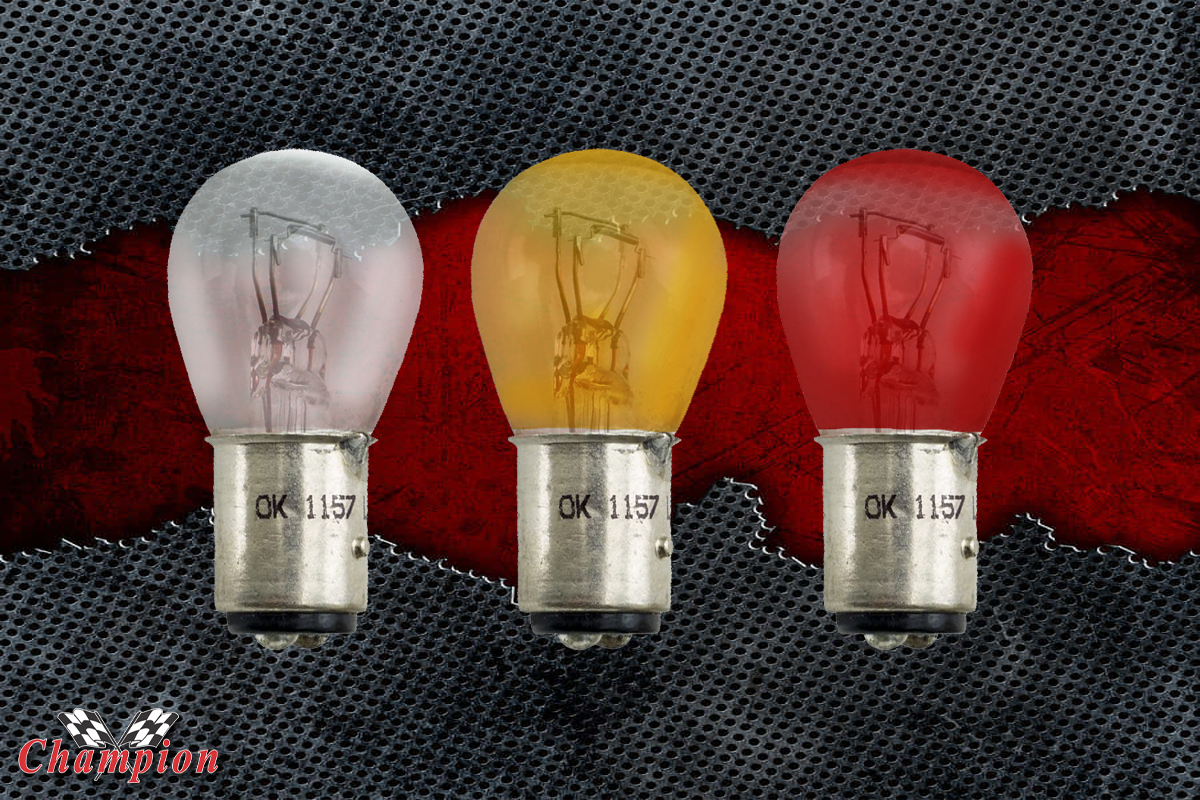
While it’s true that the bulbs are a bit more expensive than the garden variety incandescent bulb, they can last many times longer than a standard bulb, and they can put out much more usable light than your regular bulb. Even if you opt for an amber- or red-colored glass bulb, you’re still not getting the efficiency of a high-powered LED bulb.
Most of us are familiar with the first design LED bulbs that were made available to us many years ago. They were a bit more costly then, and even though they included multiple LEDs for each bulb, they weren’t really everything we had hoped they would be. The quality of the LEDs weren’t getting better, so they upped the quantity and impressed you with 12 LEDs on each bulb.
While these bulbs were okay for side markers and tail lamps, if they were on a turn signal circuit, you either had to change your turn signal flasher, or you needed to add a load resister. Adding a load resister, however, simply increased the wattage, requiring more amperage – and that took the efficiency right out of the circuit. Those load resisters also could get very hot, enough to burn some flesh on your fingers, or anything else they touched.
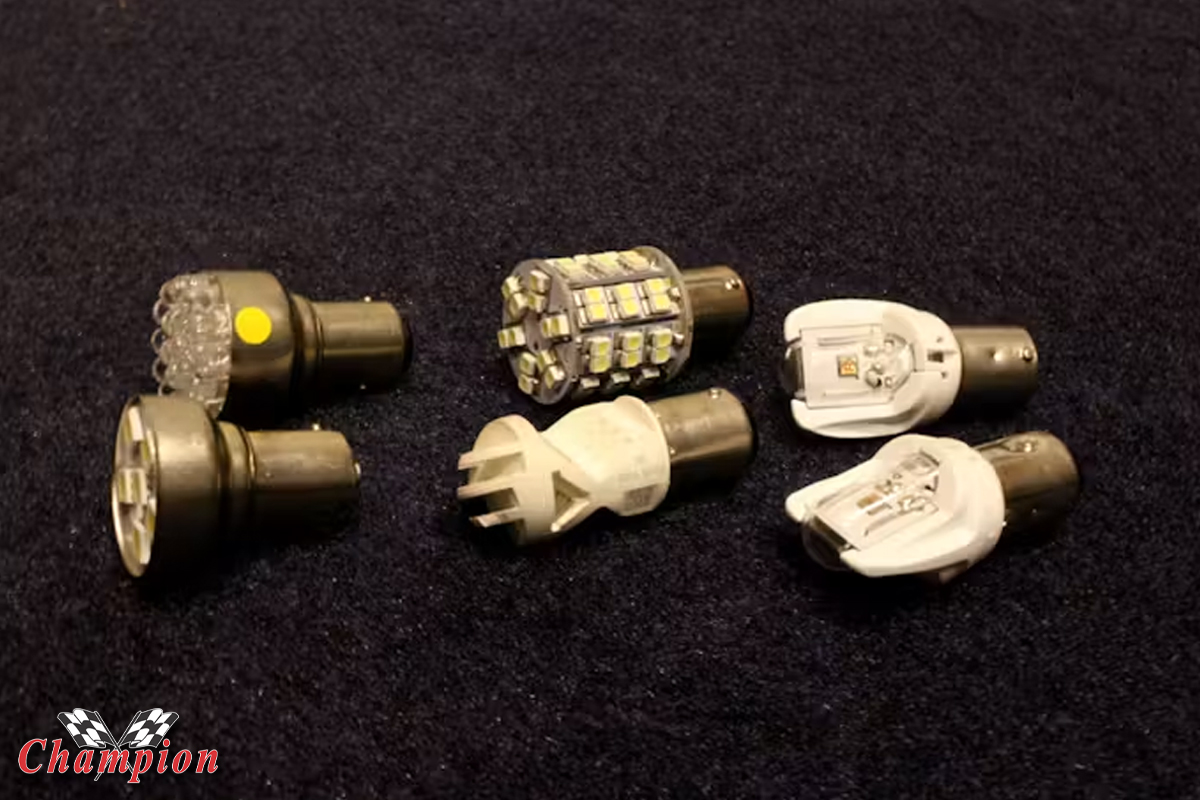
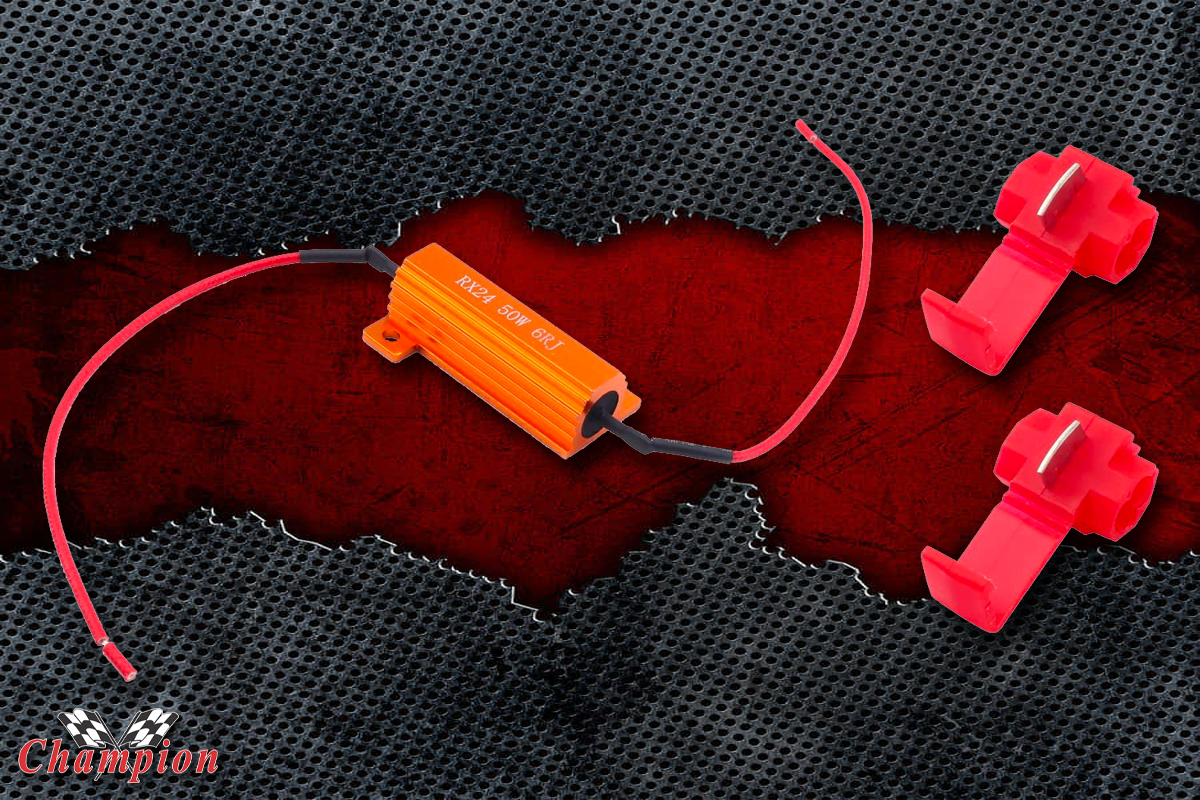
Top: Some of the too many LED bulbs available these days, and there are even more. Bottom: Adding a load resistor might be necessary, but not always required. These became popular when people got tired of their turn signals flashing at a very high rate, or when they didn’t work at all.
We did some testing with LED bulbs on a couple of our Project Builds, and bought some of the cheaper bulbs, as well as some of the more expensive. When it comes to pricing, there’s a certain part of you that says, “$22 for one LED bulb is ridiculous!” At the same time, we typically don’t balk about the fact that we buy multiple $3 bulbs over the course of twenty years for the same vehicle.
However aside from the cost of the bulbs themselves, how much do we spend on our builds for strictly cosmetic reasons? How about for performance reasons? Then there’s handling, comfort, and we even spend money on items under the hood that can only be measured by how ‘cool’ we feel for adding them – like chrome or black wrinkle-finish valve covers. So why not spend a little of that money on something that allows your ride to be seen by someone driving behind you, you know, so they will stop in time if you have to hit the brakes unexpectedly?
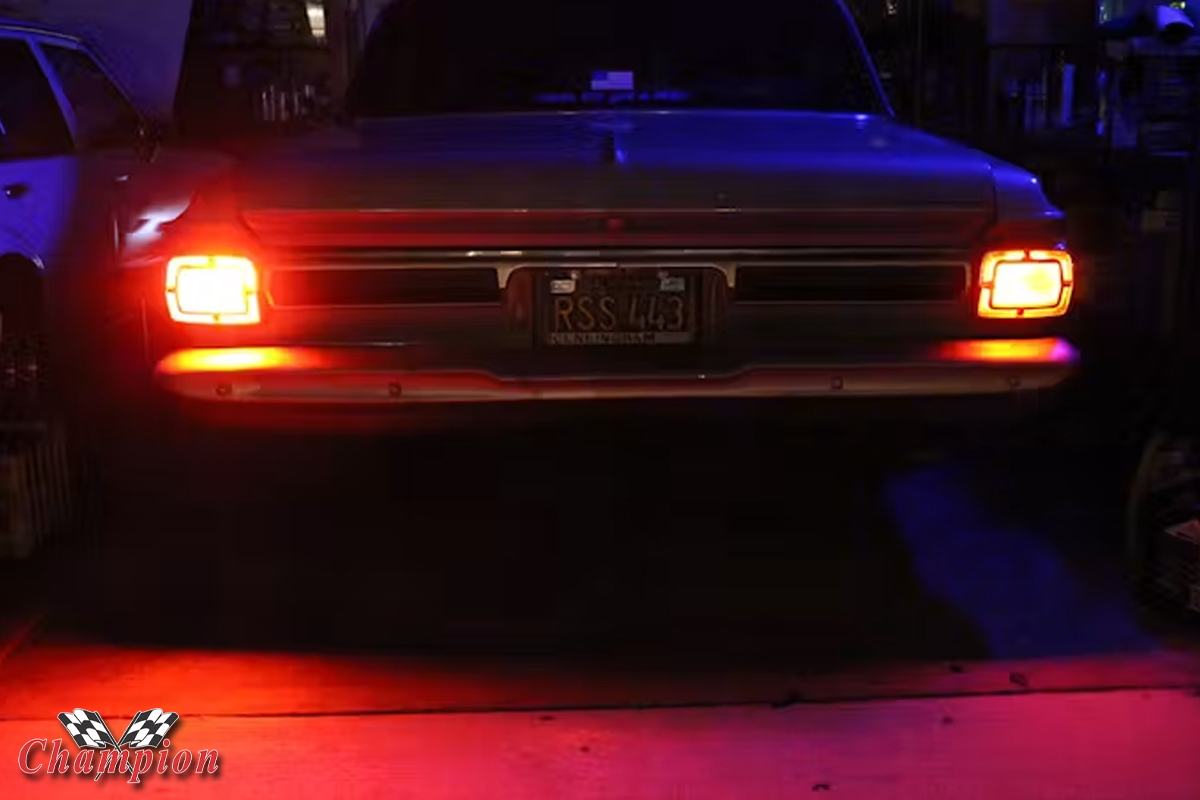
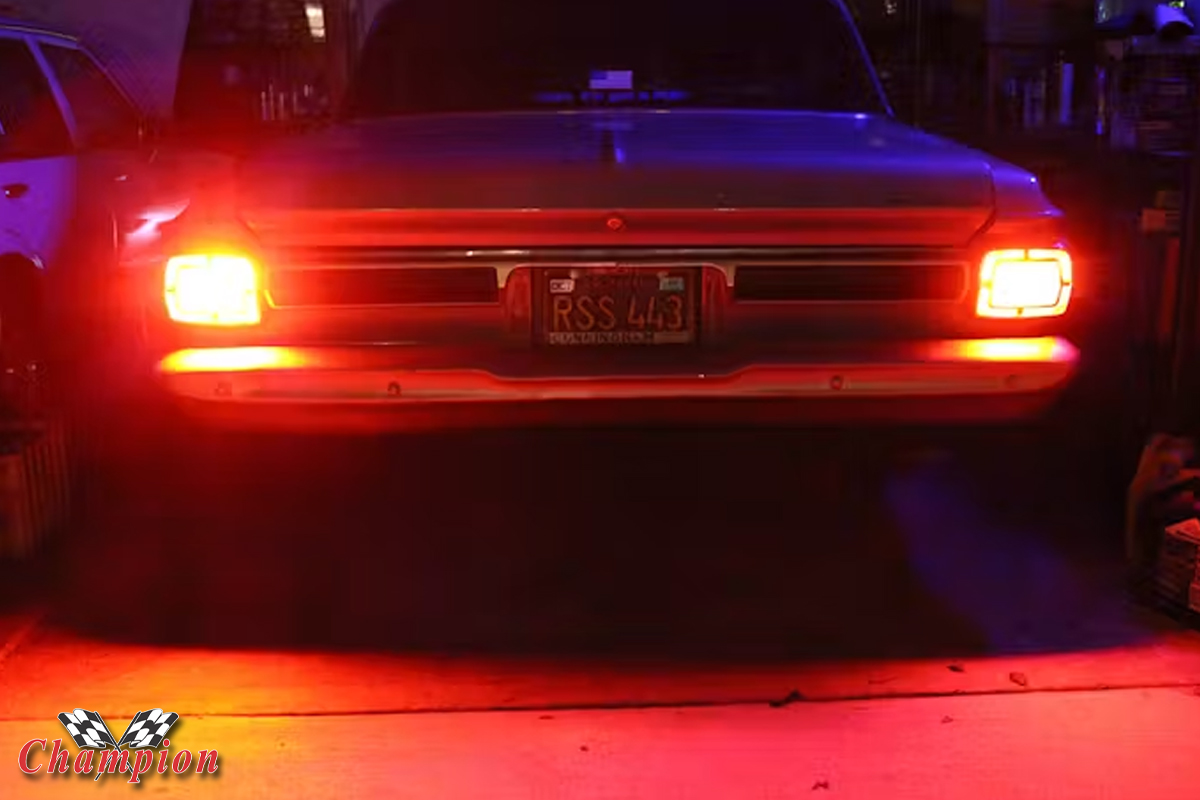
Above: We installed the United Pacific High Power 1157 LED on the driver’s side, and a Philips 1157 LED bulb on the passenger’s side for comparison. Philips is one of the better name brands available, and yet the United Pacific bulb was significantly brighter. The left image was just tail lamps, while the right image was with the brake pedal depressed.
Below: With the United Pacific bulb in both locations, the tail lamps are far brighter than an incandescent bulb, and uses less energy. If you have a classic car with original style bulbs, you probably have seen your headlights dim a little when you applied the brakes.
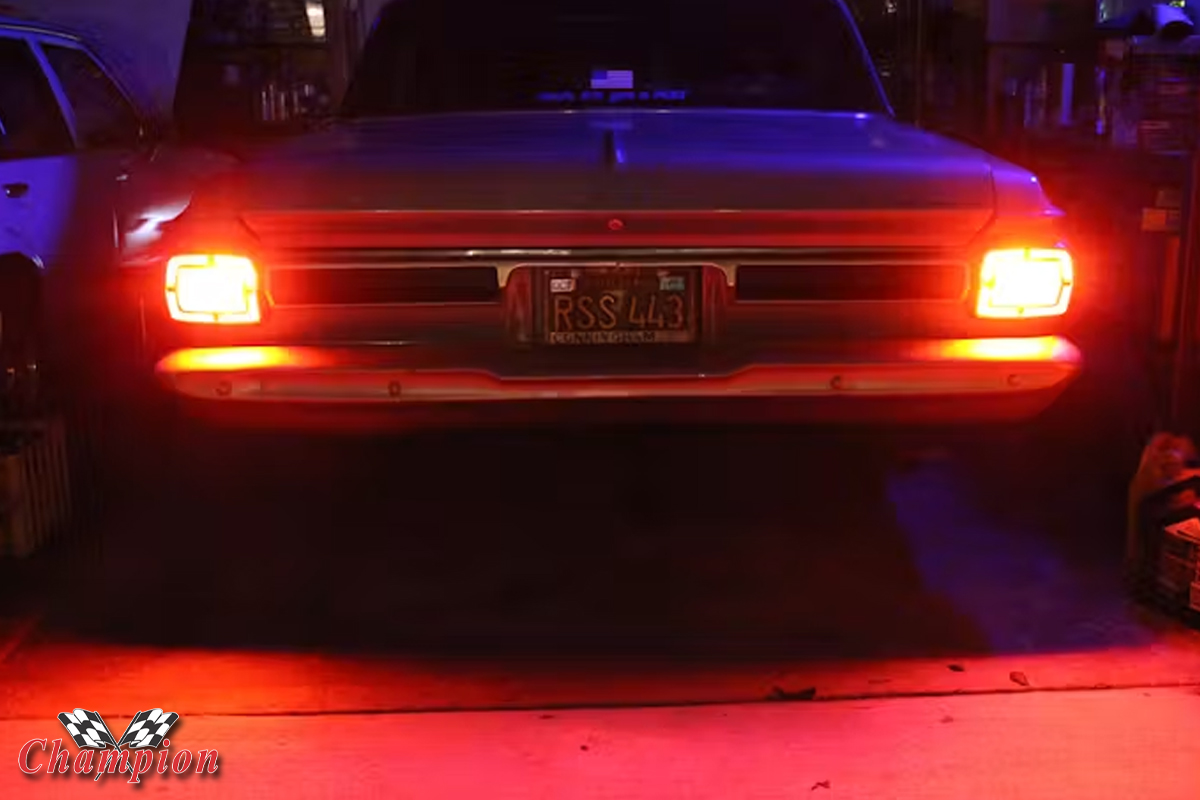
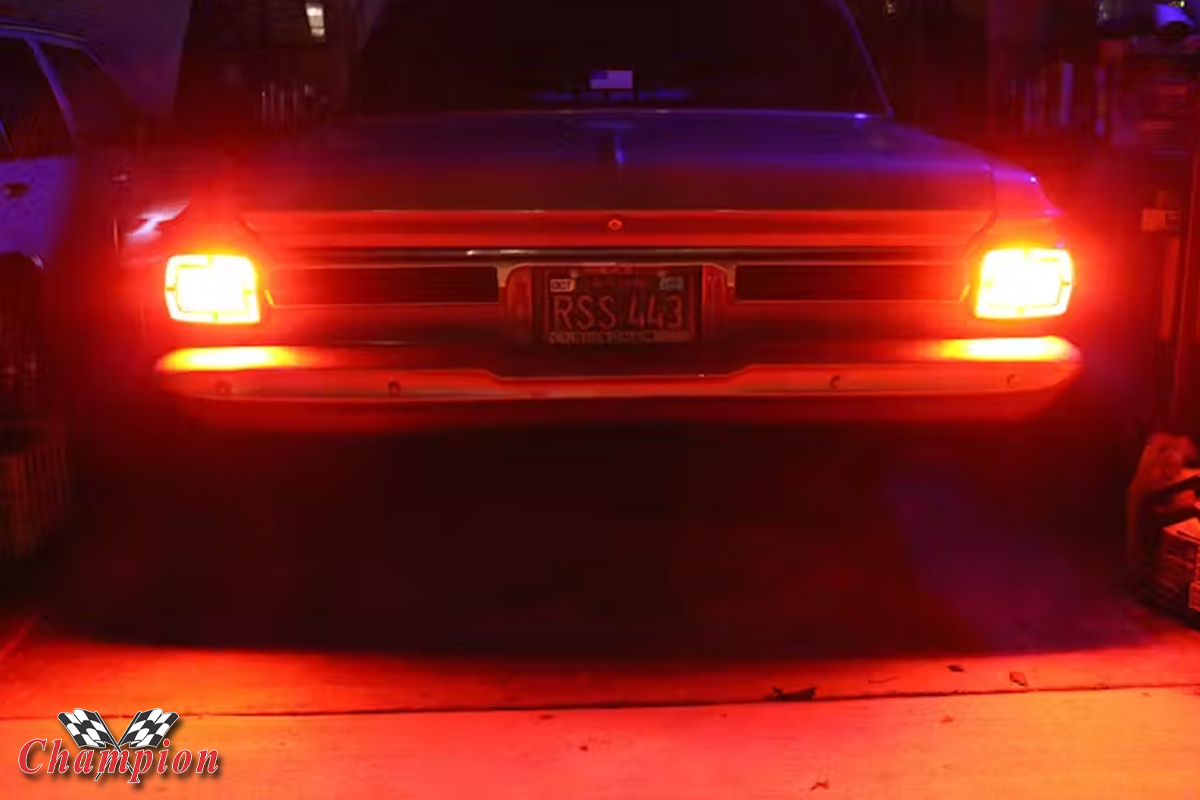
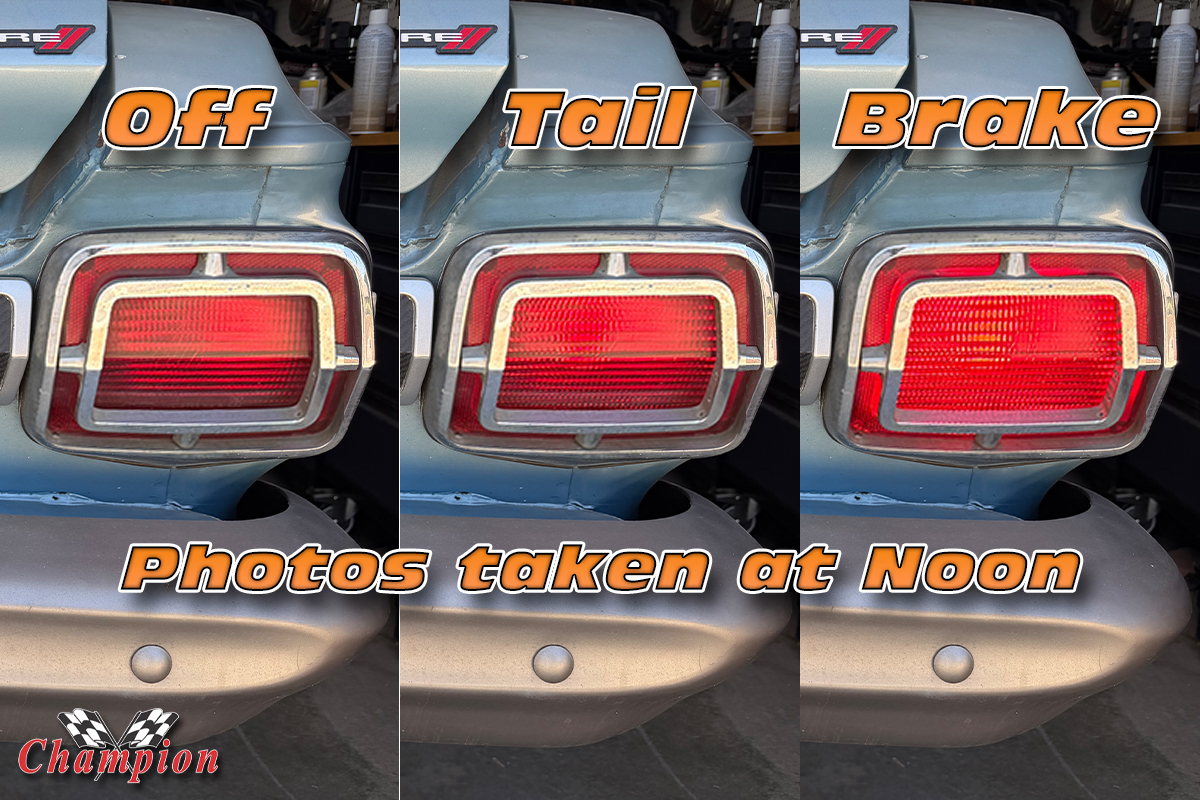
Then there’s another issue that can be made about the safety of having a brighter bulb at the rear of your vehicle that will help you be seen by those driving behind you in broad daylight. Incandescent bulbs typically about 5 watts, with the signal/brake bulbs putting out 21 watts. Still, behind a red tail lamp lens, in bright sunlight, they might be difficult to see by those behind you.
Many of us have seen older cars with old wiring, and you could barely see when the brake lights come on, especially looking into the sun. Having a higher quality LED bulb can be a night and day difference, and the person behind you will definitely notice when your lens takes on a much brighter red glow. There’s a reason why many new vehicles today have LED bulbs: they can be seen in nearly any lighting or weather condition.
How About LED Headlamps?
Many of us can remember the first time someone with Xenon (HID) headlamps came up behind us on a dark road. We swore they had their high beams on, but had they lit us up with their high beams, it probably would have transported us to another zip code. Those Xenon bulbs were all the rage for a while, but they were very costly, with some manufacturers charging upwards of $1,500+ for a replacement lamp.
But the rise in technology also brought us LED lighting that was more affordable, and could produce a similar, high-intensity beam much like the Xenon bulbs, but at a fraction of the cost. If Xenon bulbs were a television, they would be the plasma screens. But even plasma screens have been phased out for much more affordable LED TVs. When it comes to your headlamps, there’s also a great benefit that you simply can’t get with halogen bulbs: coverage.
The function of early LED headlamps were simply a Hi/Lo beam, and the option for a DRL (Daytime Running Lamp) that was not quite as bright as the headlamp itself. Headlamps have progressed these days, and even automotive manufacturers have added the halo for DRL, with a switchback light for signaling turns or hazard lamps. And the colors; these days it’s not surprising to see someone approach with blue, purple, green, even red halo – even though they’re technically illegal on public roads.
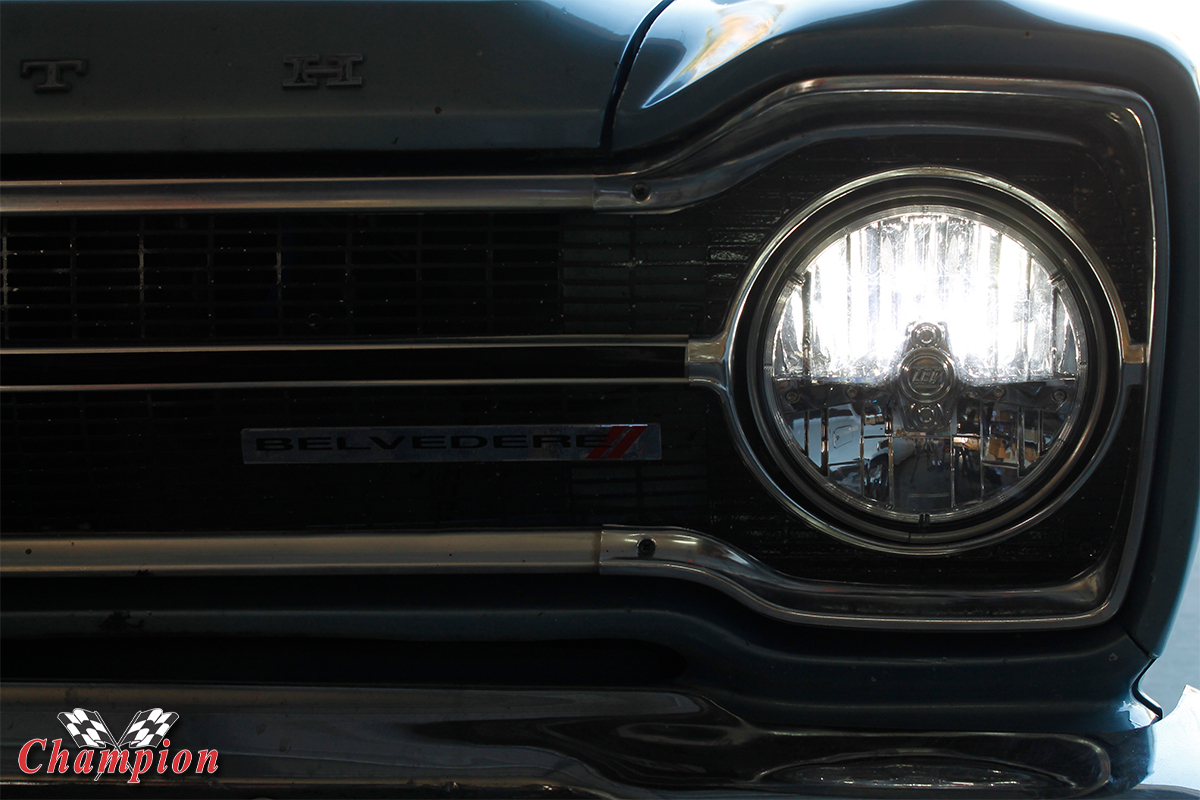
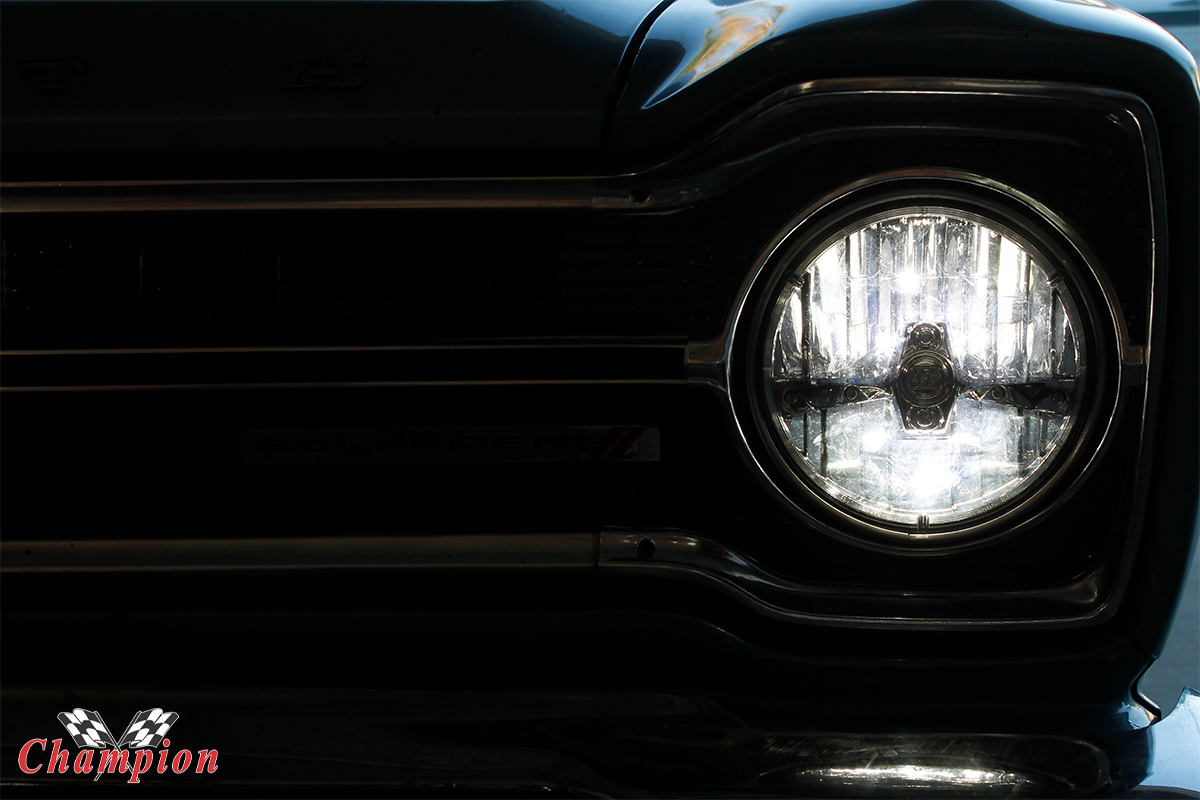
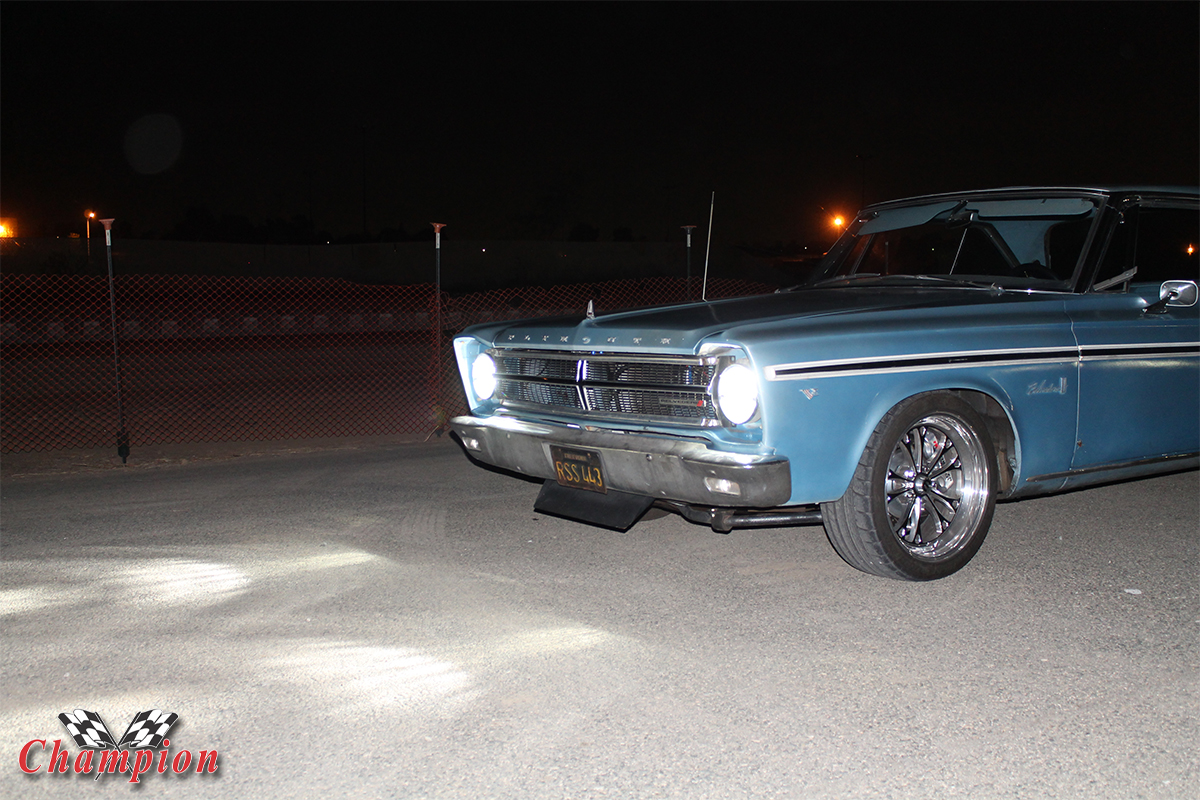
The low beam on this United Pacific LED headlamp is in the upper portion of the housing, while the high beam adds the lower portion. That’s the beauty of having multiple LEDs in a custom-designed housing such as this: a bigger pattern for better visibility.
Aside from all of the RGB lighting options, however, one of the more important functions of LED lighting is something you simply cannot achieve by replacing a bulb in your headlamp, such as an H4 type conversion. Newer LED headlights have a better design behind the lens that helps project the beam pattern much wider than you’ll ever get with your standard H6024 headlamp.

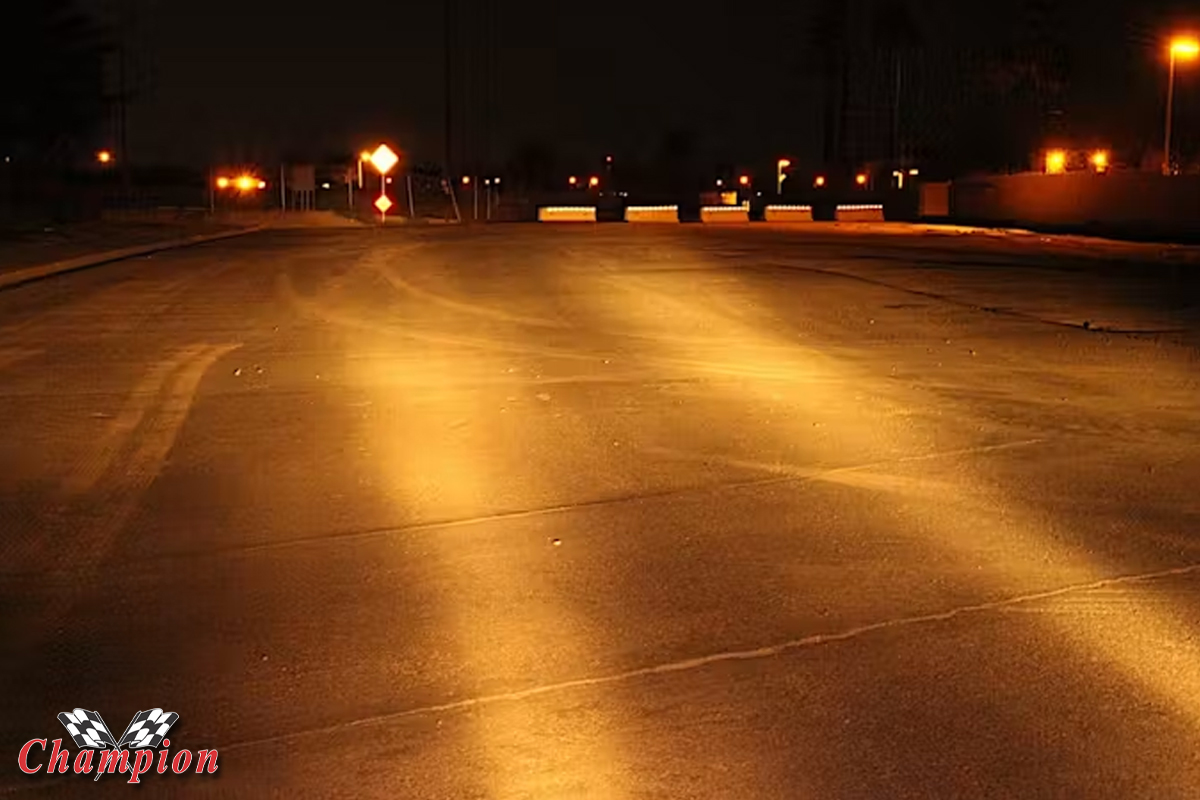
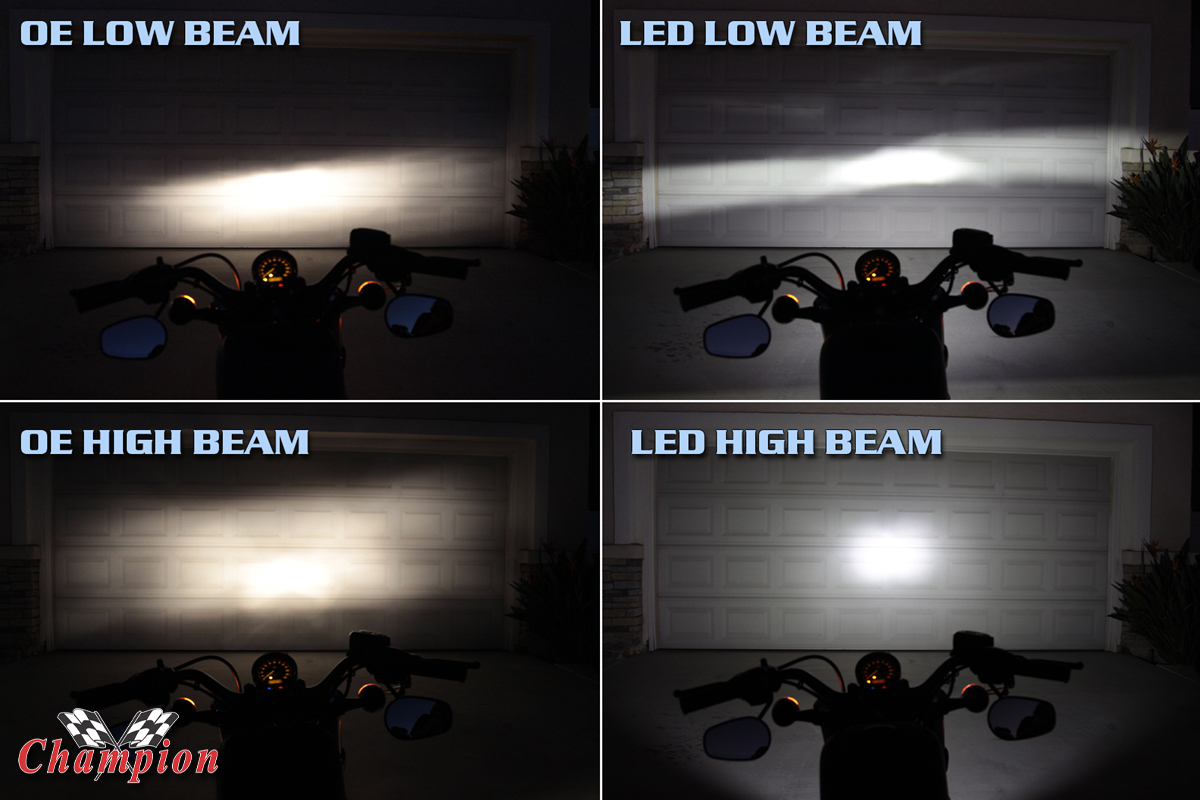
Above: That yellowish lighting is a by-product of halogen gas or incandescent lighting. On the let is the low beam, with the high beam on the right. Neither does much for you when you’re turning at an unlit intersection on a back road.
Below: With the United Pacific LED headlamps, the low beam projects a wide pattern in front of the vehicle that allows for better visibility, with a brighter, white light. On the right, the high beam fills the road in front of us, and still allows for a broader beam.
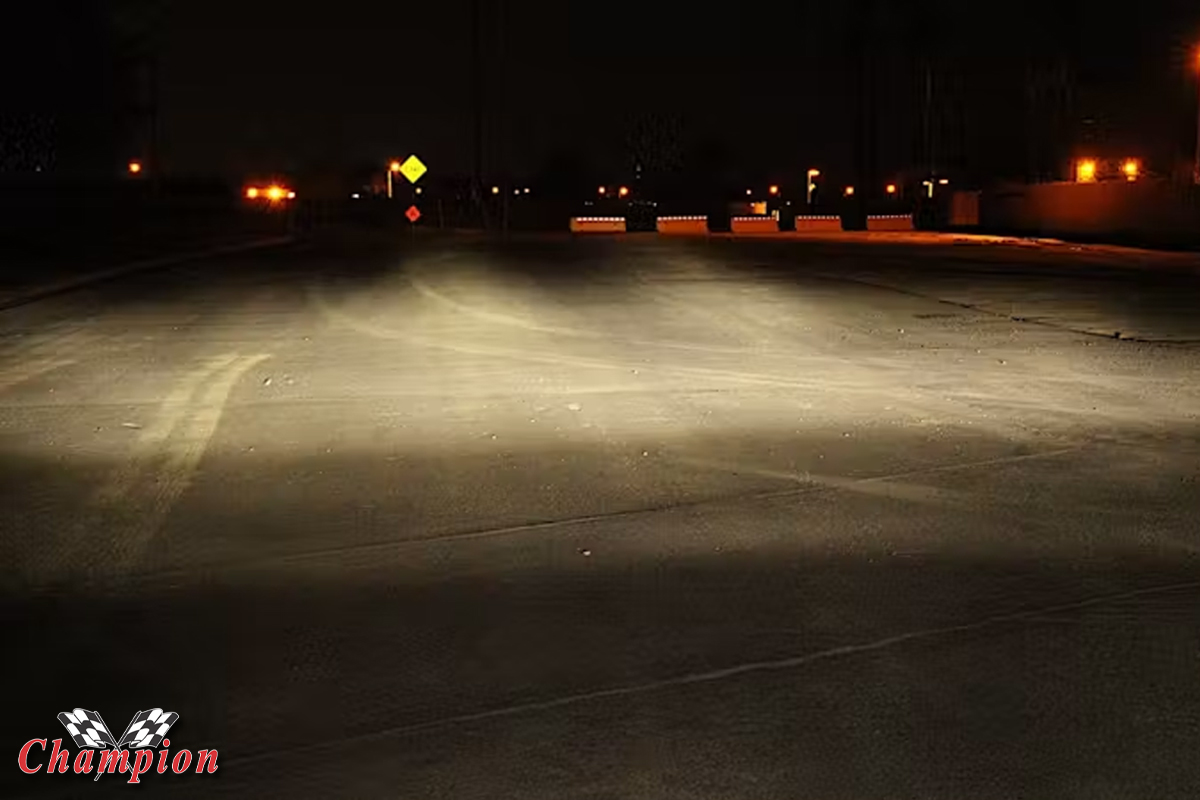
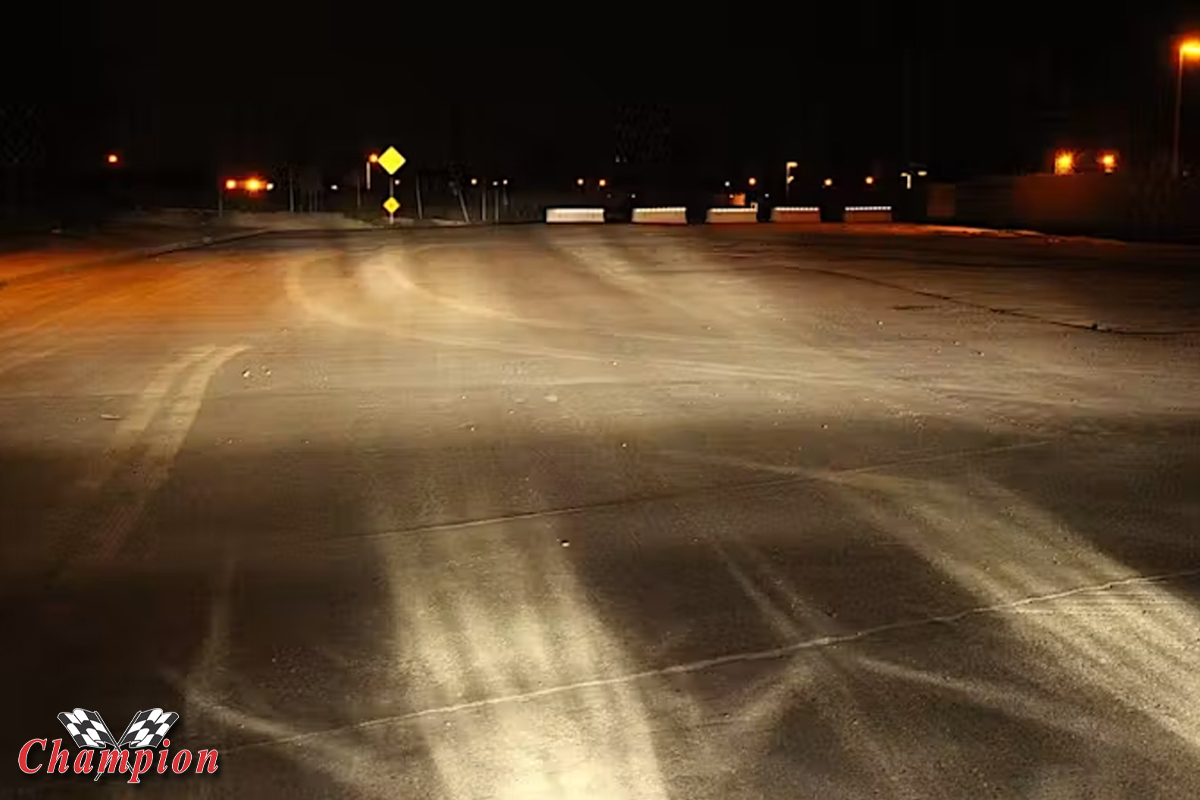
While we did notice that the LED headlamps didn’t quite shine a beam as far down the road as a halogen bulb could, there was the fine print that we weren’t two miles down the road, anyway, so is it really imperative that you see something that could easily take you over a minute to reach, anyway?
If it came down to it, the much wider beam lighting up both sides of the road next to us is preferred over seeing something that’s literally a couple of minutes away. But with technology such as projector bulbs and beyond, the road ahead of us is looking much better, even in the dead of night.