We’ve all been there: you put off filling up because you know you can squeeze just a few more miles out of the vapors that sift through your fuel lines. But then you see a hill up ahead, and wonder if you’ll make it to the next gas station. If you’re running a carburetor, you can probably get by for a short while, but if your EFI fuel pump sucks air, you’ll be on the side of the road in no time.
We found ourselves in a similar predicament out on the autocross track, but we had a near-full tank of gas, and we were on flat ground. First thought: it’s a hiccup. Start the car, get back in the game. Then it happened again, and again. But there was something peculiar going on, and the common denominator was that the engine died on every hard right turn. But how can that be with more than 3/4 of a tank of gas?
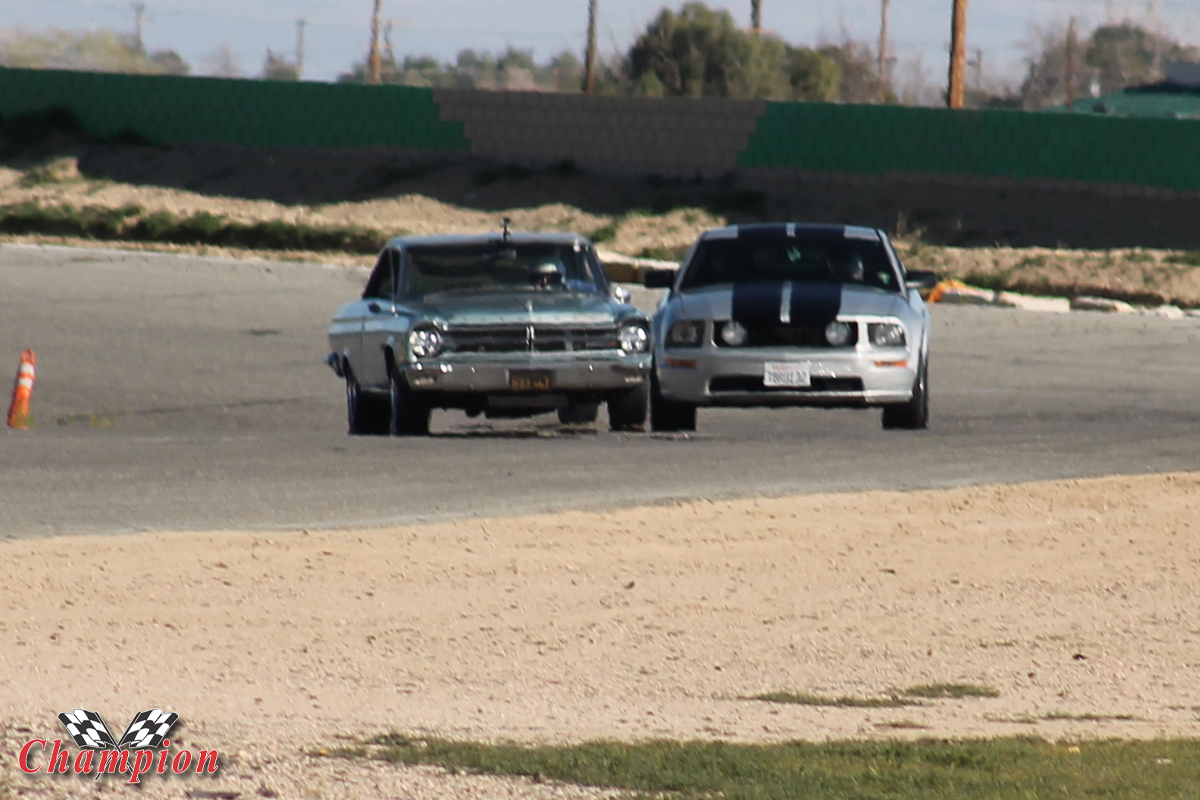
We had a common failure with our Belvedere, and it was only on right turns. We already had a little fuel spill out of the filler neck under heavy acceleration, which is why we were only running about 3/4 of a tank. But surely that should have been enough for the fuel pump to send the go juice to the throttle body, right? You would think, but this custom tank we had built by a local hot rod shop in town wasn’t cutting it.
We went there with specific instructions: the Belvedere gets autocrossed and road raced, so we needed a tank that could handle it the twisties. A few days and several hundred bucks later, we had our custom tank. After the install, we headed out with high hopes to the first event. That’s where we learned that “right turn Clyde” was knocking us down like an orangutan and some beatnik bikers at an intersection. We went back to the shop that built the tank, and told him that his tank was failing us. He didn’t like that much, and literally yelled at us saying he built the tank we asked for.
It was pretty frustrating, actually, but not just from an inconvenience standpoint. We were asked to vacate the track because stalling three times and having to coast off the track to get restarted was causing problems, and that’s kind of embarrassing at the same time. That’s when we decided to cut bait and develop another plan; we reached out to our friend Hector Guerrero at Rick’s Tanks.
When we spoke to Hector about the problem, the first thing he told us was that many shops can build tanks for hot rods, but building one for road racing requires a specific design. And he had just the ticket for solving our dilemma. Everything we were experiencing from our first custom tank was learned in elementary school, and it’s called Newton’s First Law of Motion, and it has to do with inertia – or, in gearhead terms: fuel slosh.
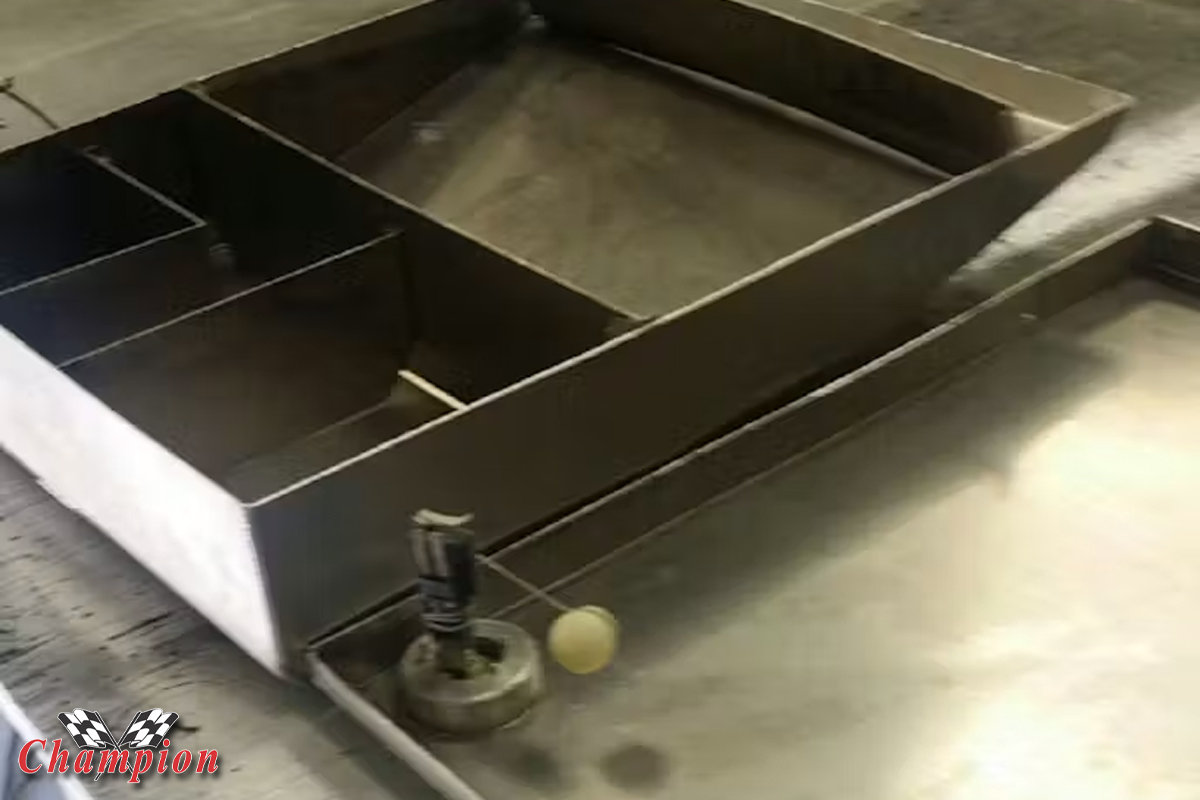
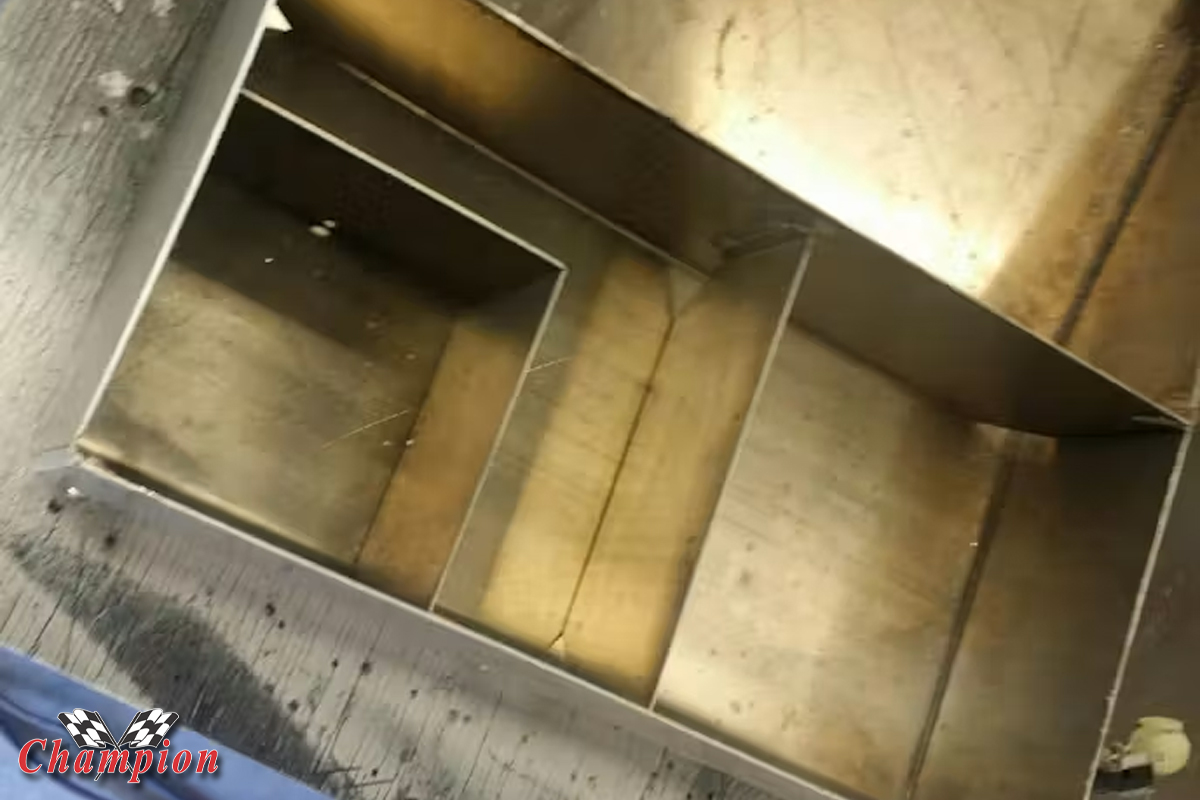
For kicks and grins, we shipped Hector our first custom tank and asked him to cut it open and send us some photos. There’s the problem: a large, shallow area with no way to trap fuel to keep the pump submerged.
Rick’s Tanks hadn’t built a custom tank for a 65 Belvedere when we approached them, so we bought a new tank from Spectra, and then sent our custom tank to see how it failed us. Seeing where the problem was, he assured us that he would build us a tank that wouldn’t leave us stranded, and it all begins with stainless steel, some carboard, and lots of measuring, marking, cutting, and welding. Piece of cake!
Hector is a class act, too. He requested that we didn’t mention the shop that built the other tank within the same conversation about his custom tank. “It’s just bad business,” he said. We can definitely respect that principal, it’s one I learned many decades ago about the founder of the golden arches: Ray Kroc. It was a corporate policy to never mention the competition in any vain – which is why you never saw McDonald’s compare its Big Mac to any other burger chain. Always sell yourself on your own merits, rather than the presumed failures of others. It’s a key principle to live by.
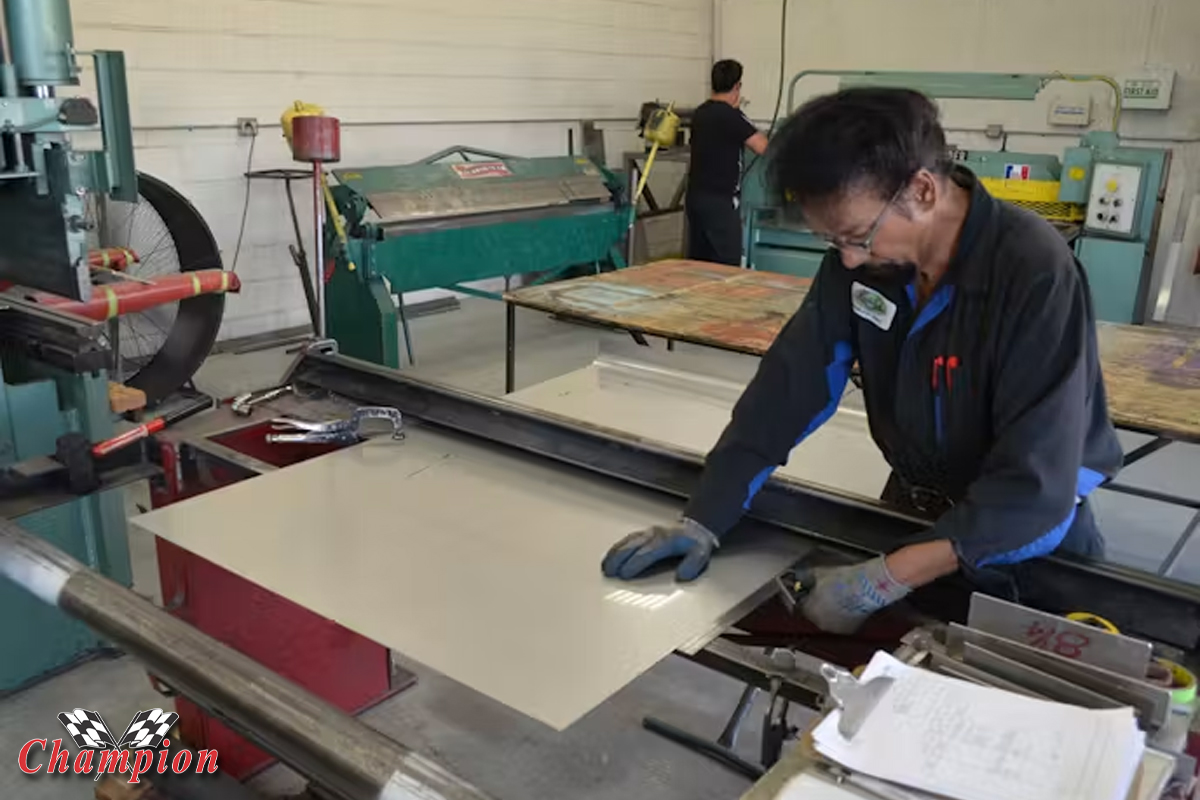
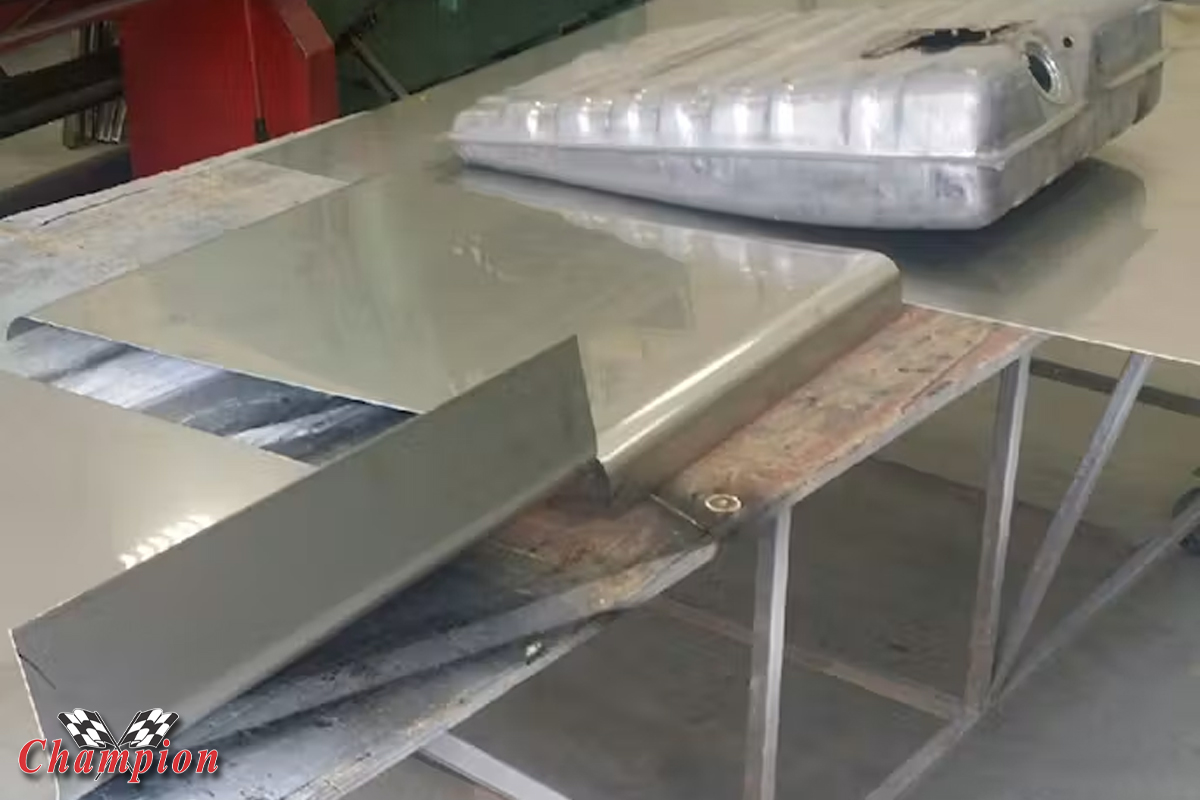
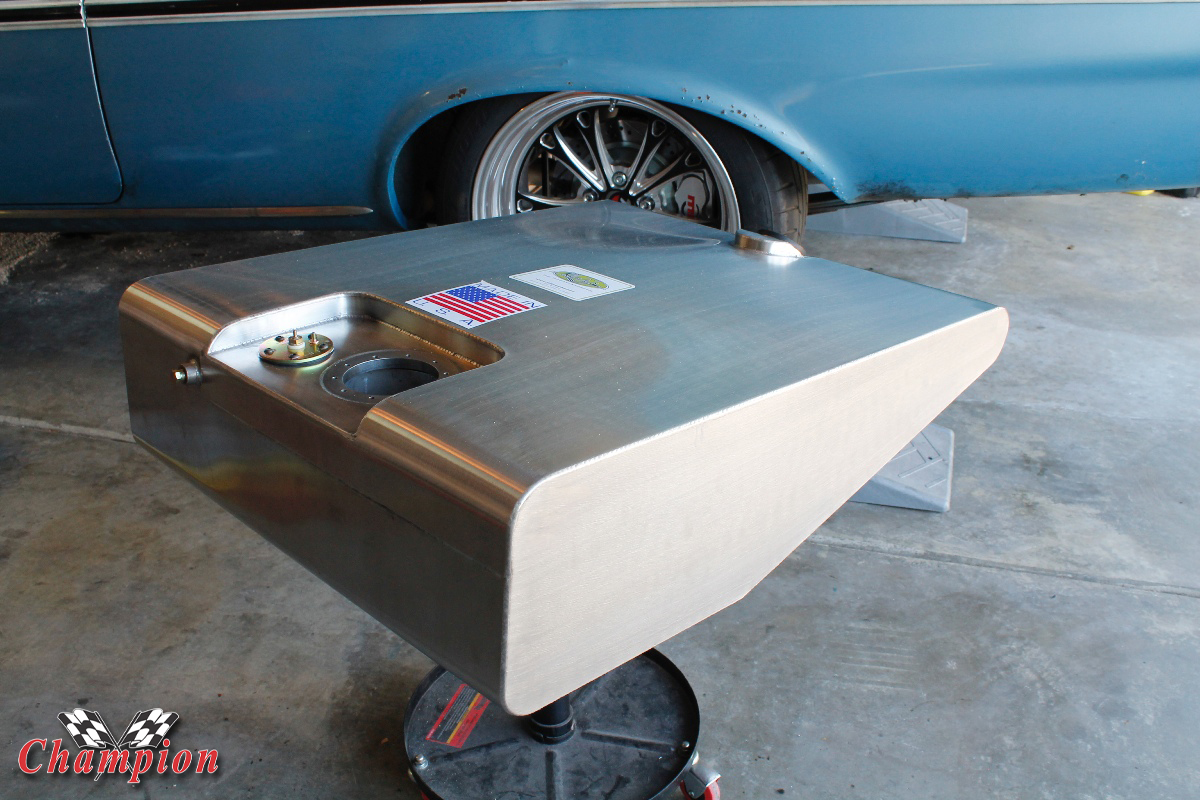
The custom tank began with 16 gauge 304 stainless steel, and a master set of skills to pull it off. 25 years of know-how was behind this piece of art.
Hector explained that while the tank was a nice unit overall, he felt that the baffling was in the wrong place, and was far too large of an area to keep the fuel from sloshing around. He also noticed the location of the rear baffle, and told us, “If the rear baffle is not in the right place, it won’t control fuel slosh, there’s a balance to putting baffles in the tank. You can really bias a drag car tank. The first 60 feet needs help with fuel control.”
He continued, “We create a bias so that the fuel gets to the pump, and reduce the capacity to increase the fuel flow.” This balance he refers to means that fuel needs to surround the pump easily, but there also needs to be a way to keep the fuel from getting away. The area needs to be small enough to keep the fuel in place, so that it doesn’t have a lot of movement when accelerating or turning.
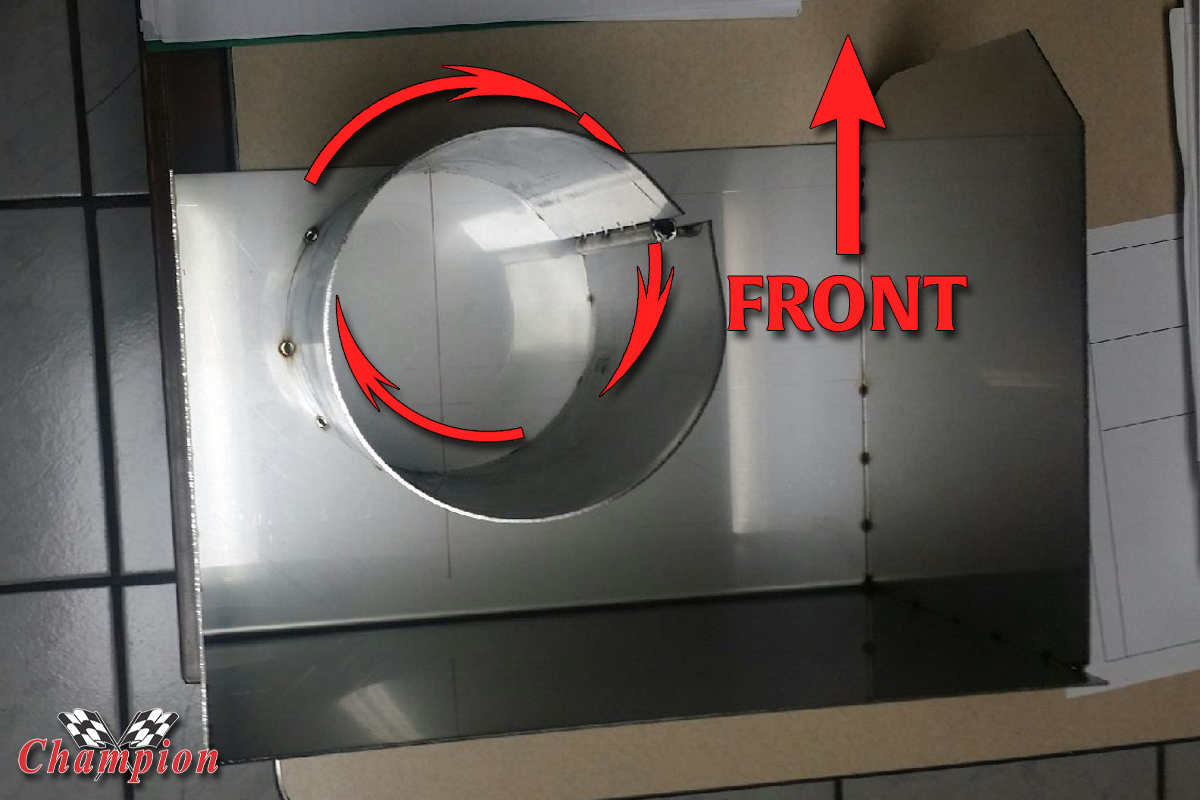
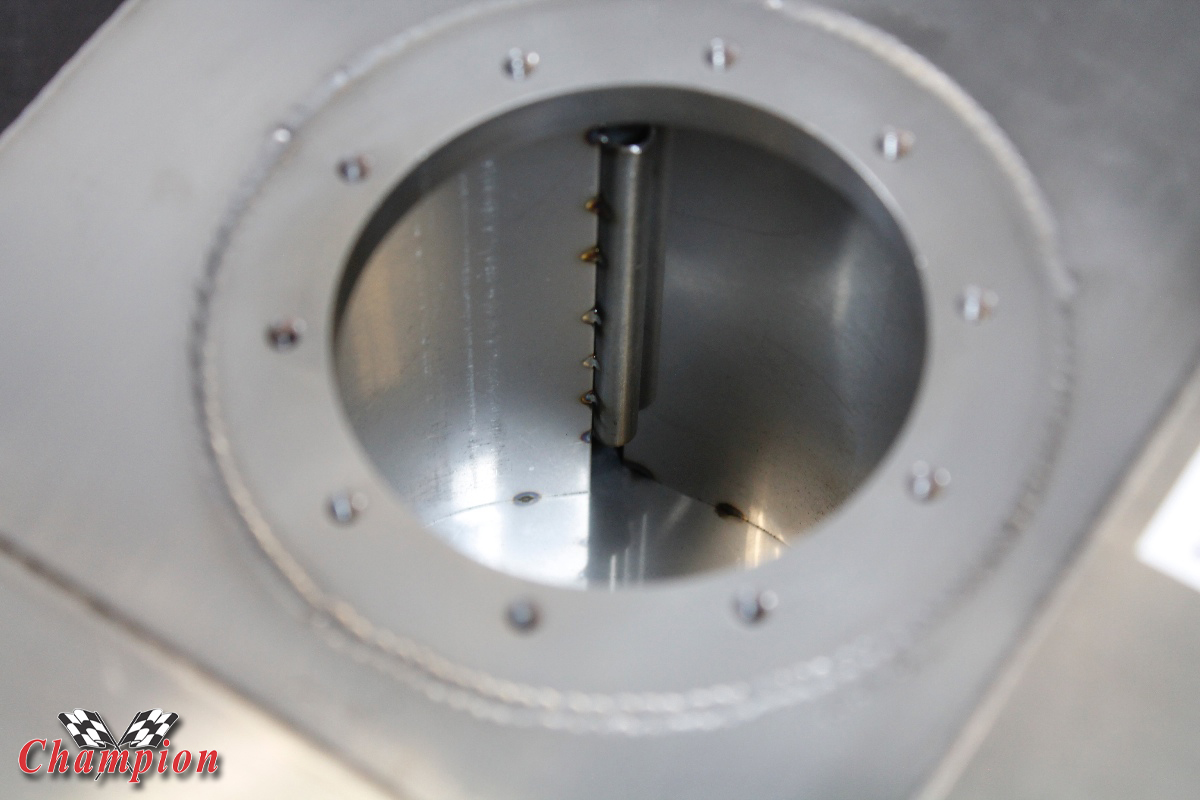
The baffle design is one of Rick’s Tanks’ own design, and the goal is to trap enough fuel during hard cornering or acceleration.
While the previous tank had a much larger area, the whole point is that you don’t need a gallon of fuel to get through one turn, or through the 60 foot mark. You just need enough fuel to keep the sock submerged in fuel, and avoid starvation. That made sense; a high-powered build isn’t going to go through a half-gallon of fuel in one turn, and once the car settles, the design of the baffle allows the fuel cavity to refill with fuel.
The baffle around the fuel pump has small notches in the bottom that allows fuel to enter the cavity. Fuel enters when there isn’t enough inertia to move the fuel around. Once there is fuel movement from inertia, making it harder for that fuel to escape is key. This matters much more for an EFI system than for a carburetor; an EFI system is far less forgiving when the fuel stops flowing for a brief moment.
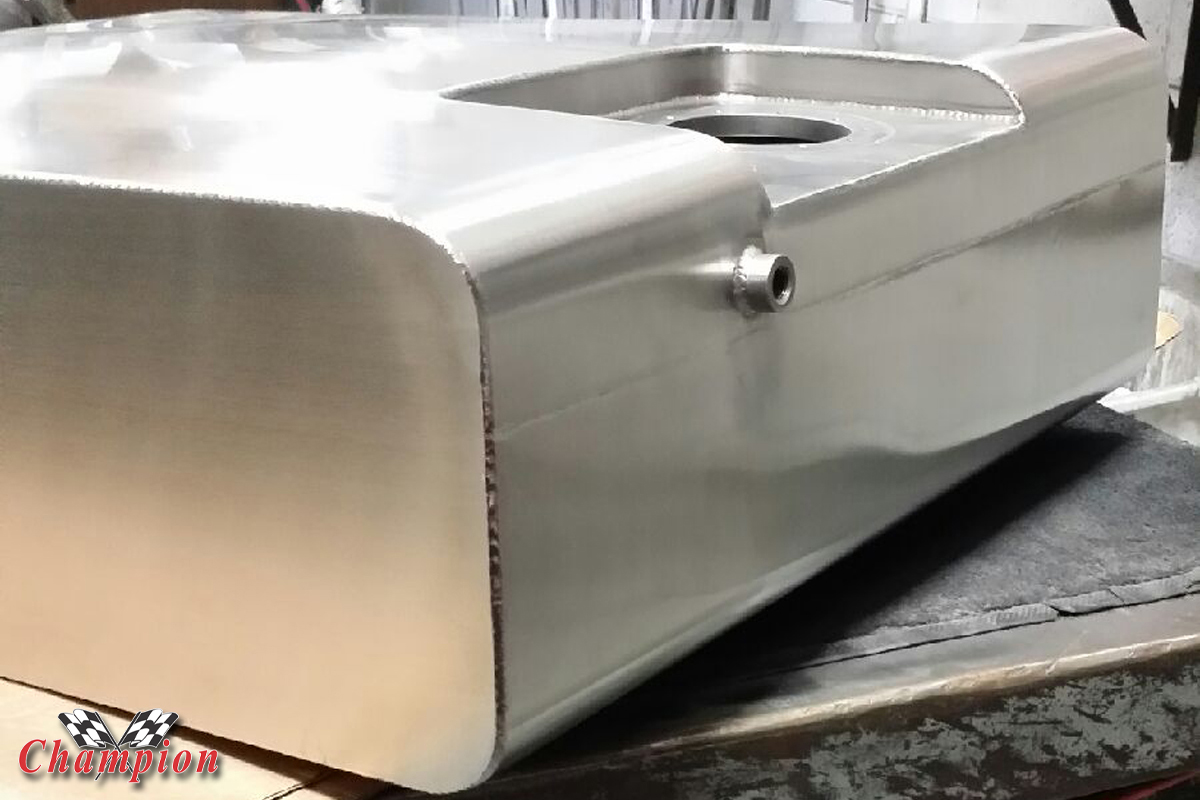
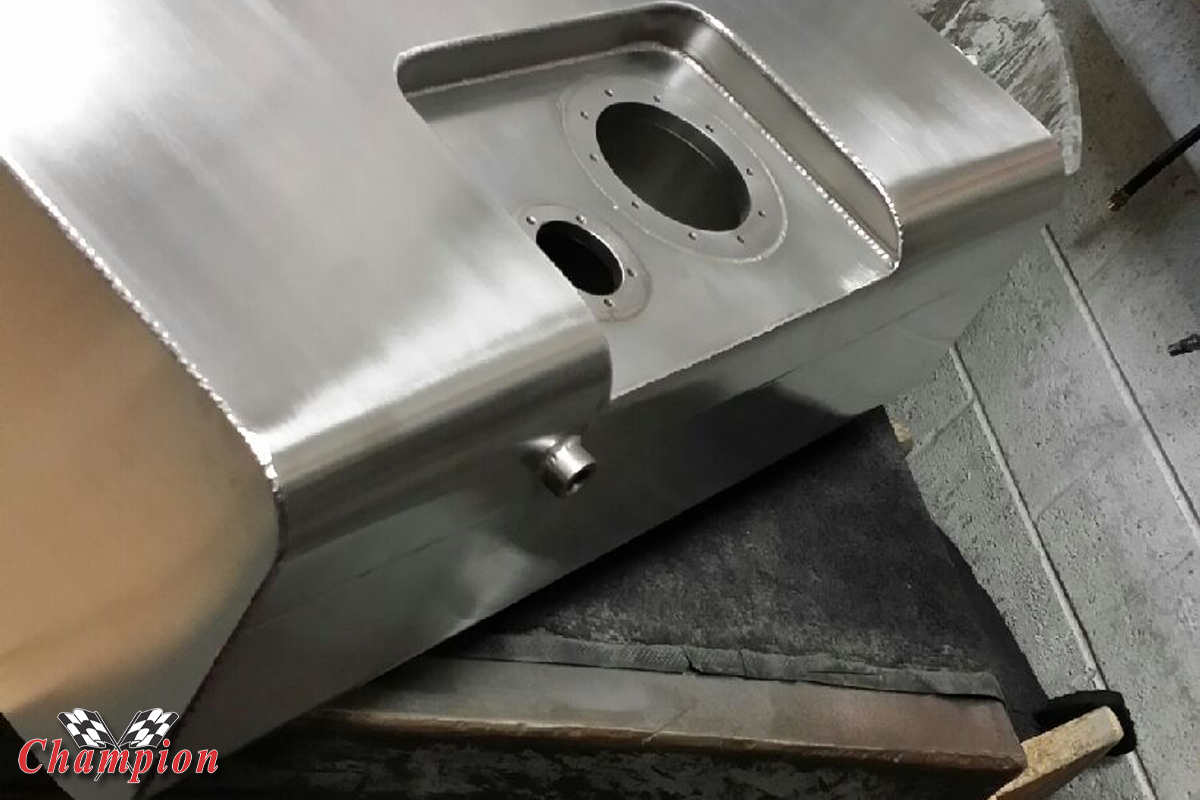
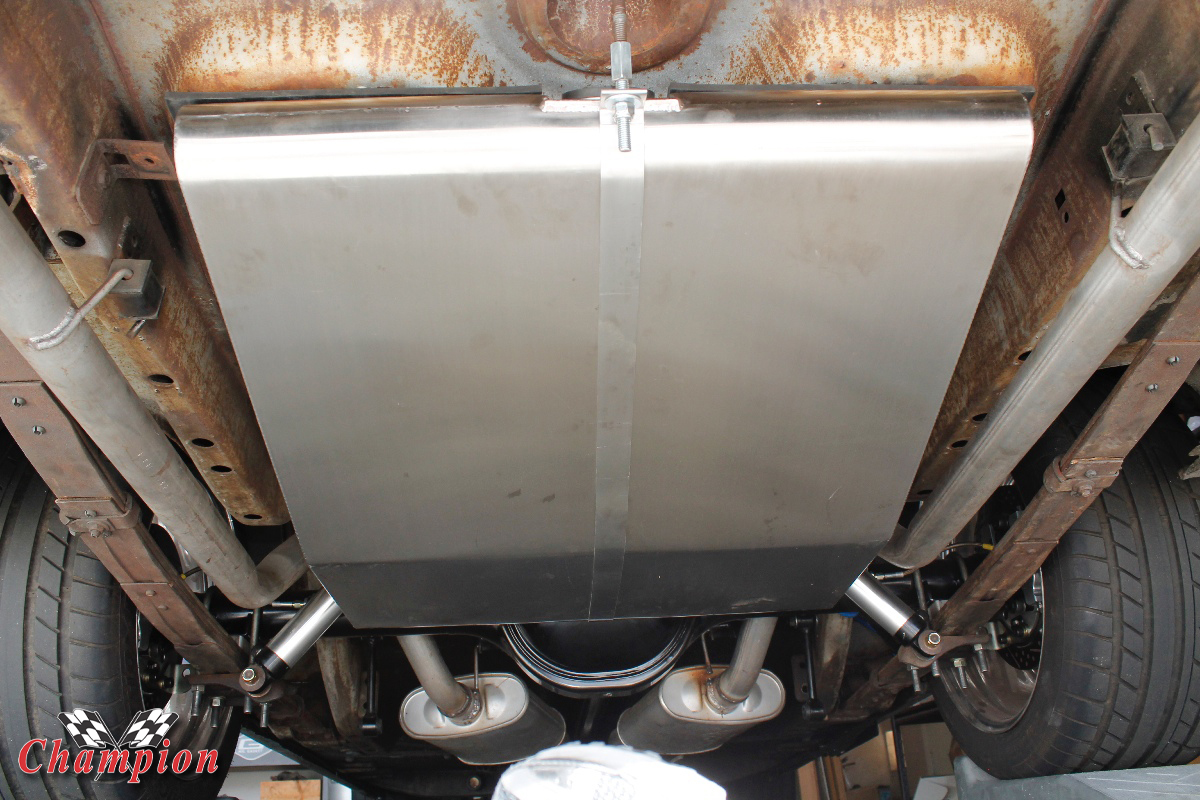
That tank came out great, and even with the odd filler neck design, Rick’s was able to make that work for us as well, utilizing the OE filler tube.
Rick’s is located in El Paso, Texas, and has been building custom tanks for over 25 years. They’ve built tanks for all sorts of fuel delivery methods, and can add the proper flange for the pump and sending unit for a ready-to-install tank. They’ll get all of the specifics from you when you order, such as any custom exhaust work or details about your build with regards to power, how the car is driven, and whether it’s boosted or not, and even suspension. Anything that strays from stock needs to be considered when fabricating a custom tank.
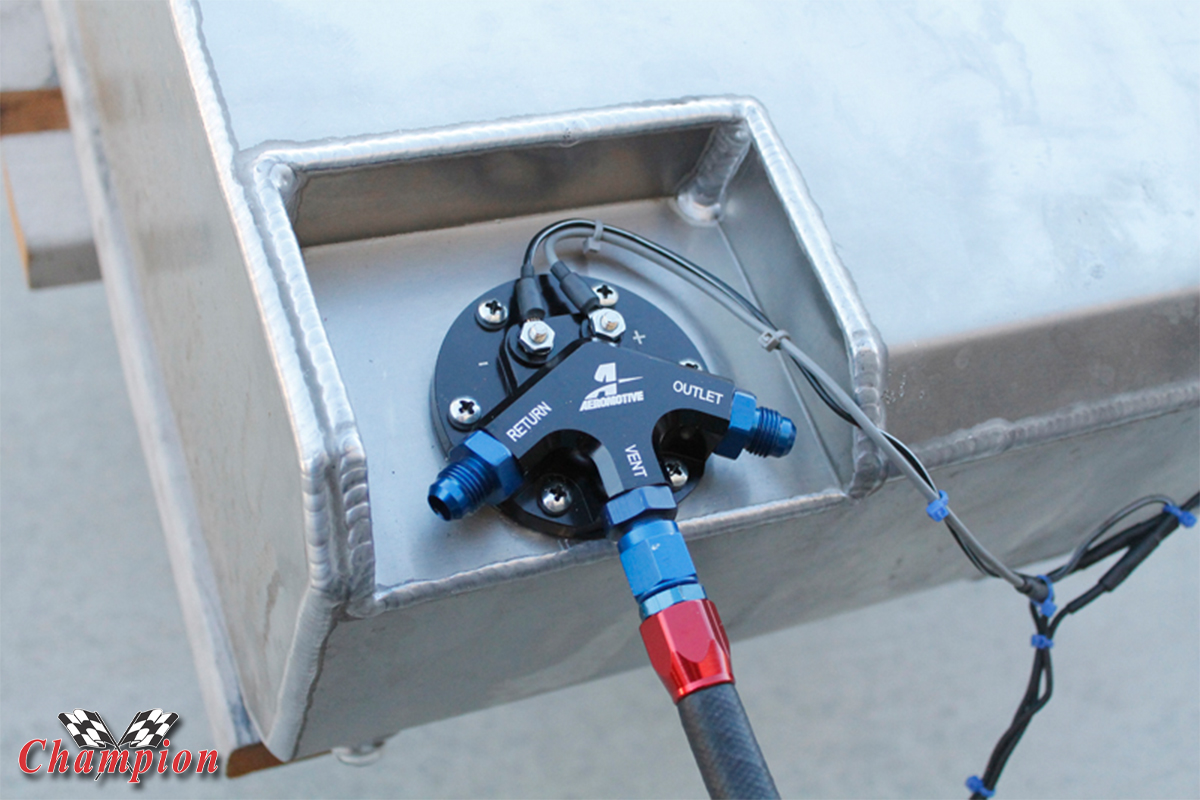
The thick flange for the pump and sending unit were a welcome sight, since our previous tank had a thin flange, and left us concerned that we would strip a couple of the holes. We were confident that the new custom tank wasn’t going to let us down, but we decided to push it to the limit and test out the design. Essentially, we set it up to see if we could get the system to fail, in a somewhat real world situation that most of us have been through at one time or another.
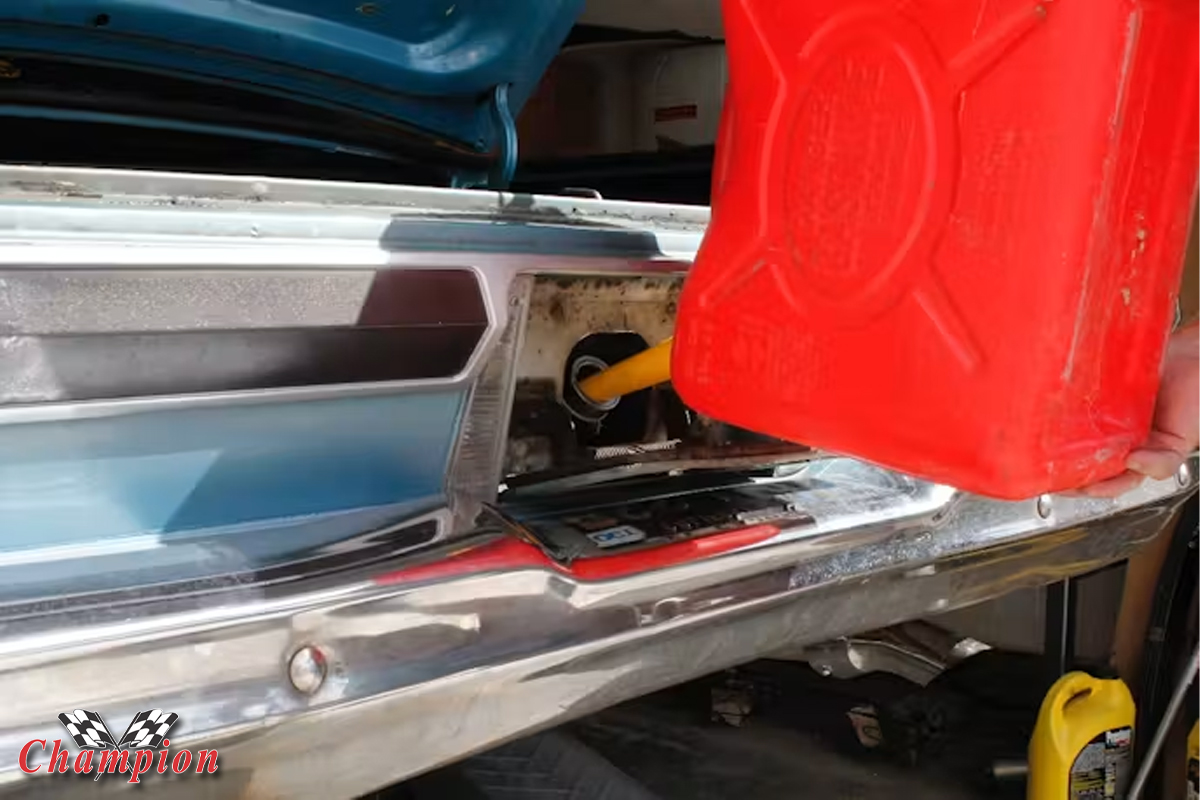
The local gas station was a few miles away, and we started with the empty tank. We brought the five-gallon gas can just in case, but only poured about a half gallon into the tank. Then we set out on the tank’s maiden voyage, going around corners and up and down some small hills. We sat at a traffic light on a small incline, and then nailed it on green. We never even got a sputter out of it, we made it to our destination, and filled up. Success!
Lots of shops can fabricate a nice looking fuel tank for your build, and if all you do is cruise to local events and car shows, it might even work for you. But when you’re snaking your ride between the cones, around hairpin turns, and blasting through fast sweepers, you need a tank that can keep your fuel pump from running dry. That’s why we relied on Rick’s Tanks to get us back to the finish line, every time.