
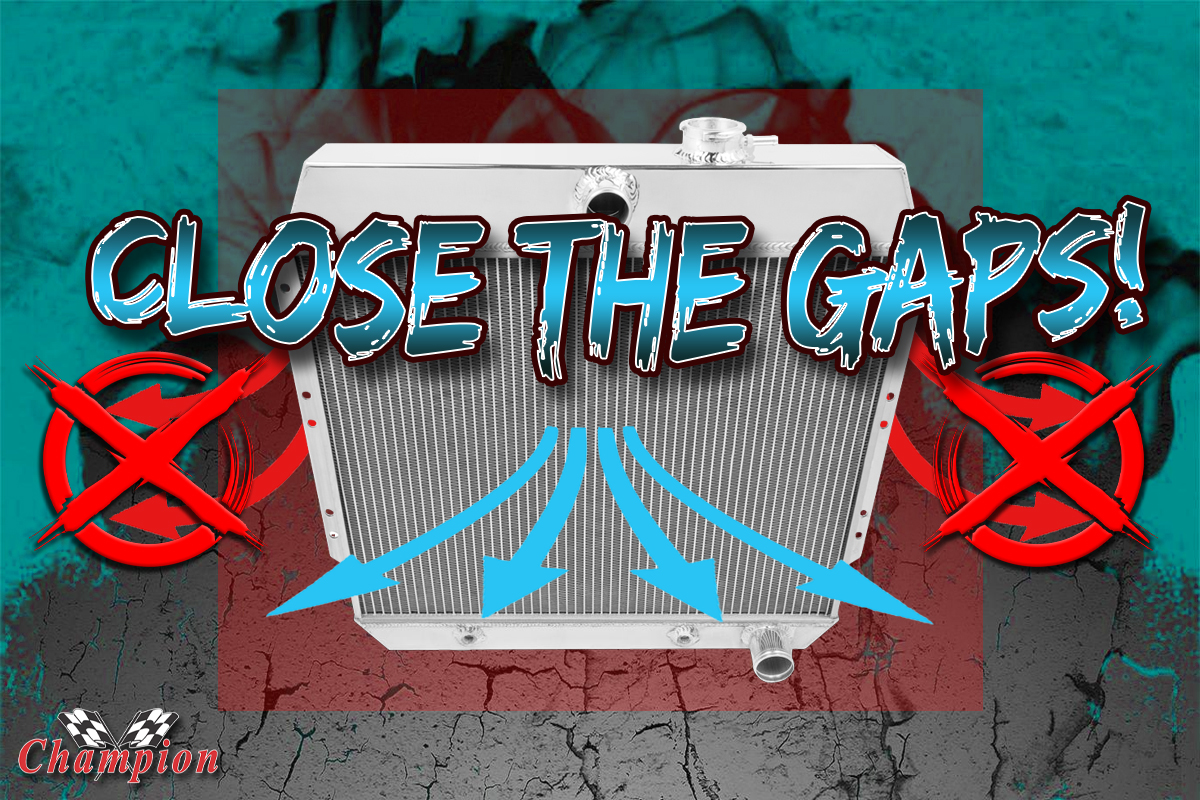
When it comes to vehicles overheating, of course there are a number of valid reasons that could be causing higher temperatures. Those reasons can include a clogged radiator, a stuck thermostat, a poorly running engine, a blown head gasket, dirty ineffective coolant, or even a failed water pump. But for the sake of argument, and this article, let’s say none of those other conditions are met, and your engine is overheating.
This is one of the more common issues that comes up with a new radiator installation. We do hear it occasionally; “I just installed my new radiator and now my engine overheats.” At the risk of sounding ‘defensive,’ it’s not typically the radiator that is causing the problem. We know that our radiators are efficient and effective, and we’ve stood behind them for nearly two decades and pride ourselves on providing the best in cooling performance. There is often another underlying issue that may have been overlooked.
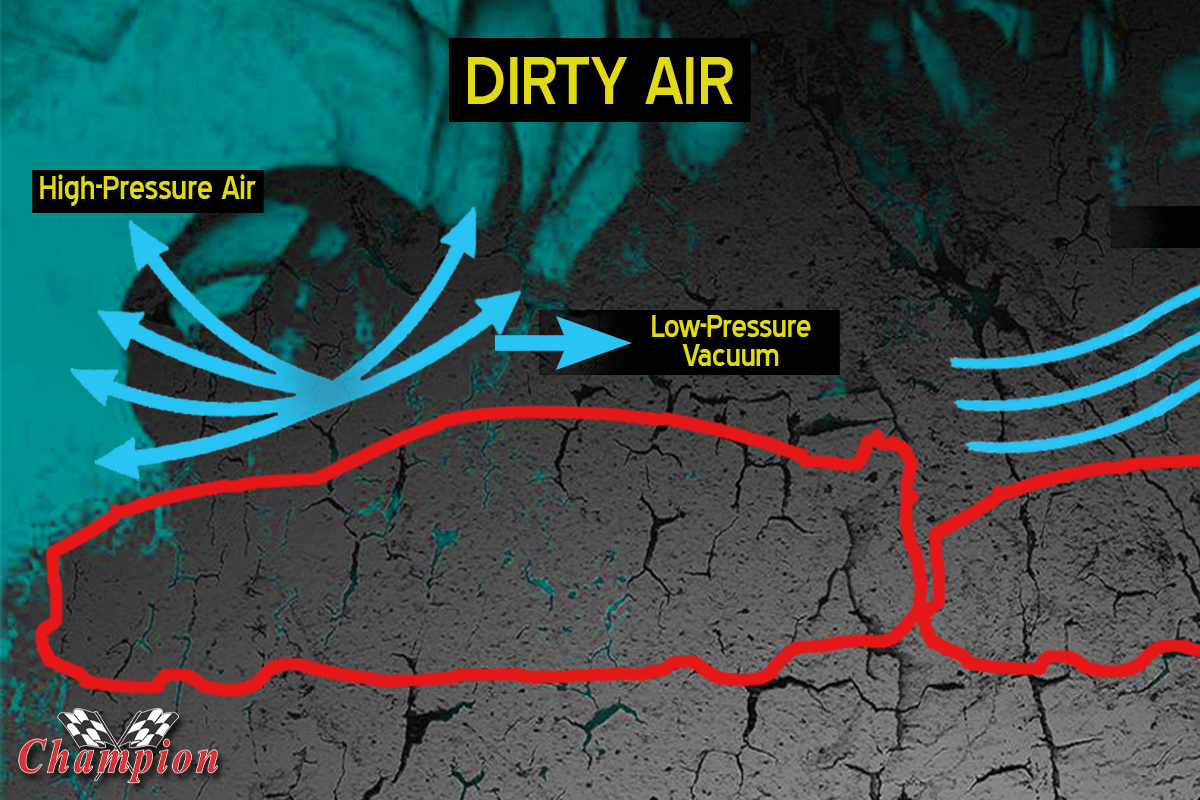
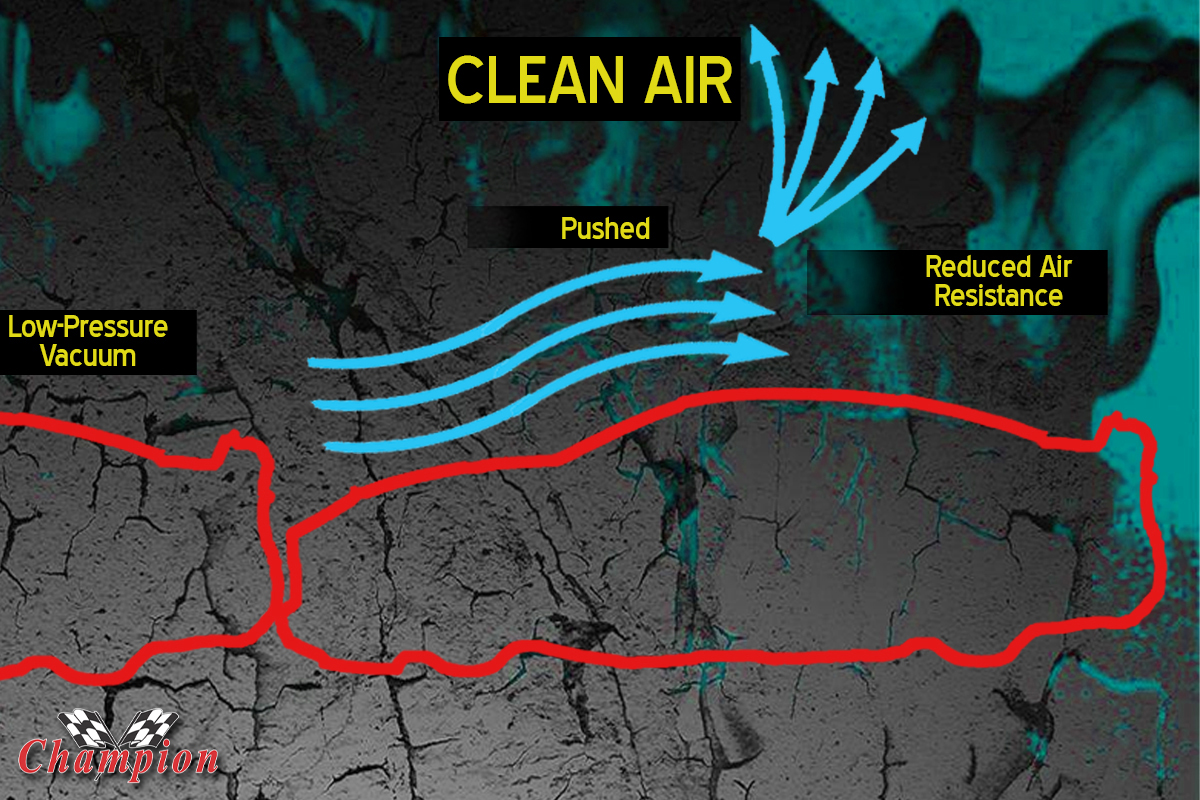
We can learn a lot about airflow from NASCAR: there’s dirty air that comes off of the car in front, but when you close the gap you find yourself in the sweet spot where drafting occurs. This process creates a low-pressure vacuum.
Before addressing airflow issues, first we want to explain something about the air hitting your radiator. Airflow is much like electrical current flow: it will take the path of least resistance. And just like in NASCAR, the reason that drafting works is because the car behind is getting close enough to avoid the ‘dirty’ air that comes off of the car in front of it.
In other words, there’s a low pressure zone that acts as a vacuum to help pull the car behind along, and that’s when the slingshot occurs. That helps the car behind move along a little faster than the car in front, because the car in front still has to push through that high pressure air. As aerodynamic as it is, it’s still a brick trying to slice through air at 160+ mph.
A/C Condenser Spacing
If you’re running air conditioning on your car, then you have another issue that could be generating problems. If your condenser is too far from the radiator, then the low pressure area that is typically between the condenser and the radiator is diminished, and it becomes dirty air. The air swirls after coming off of the fins from the condenser, and if it’s too far from the radiator that air can create a high pressure area forcing the air to find an alternate route.
Your condenser should be within about a half-inch from the radiator, but no more than an inch, if possible. That will allow the air coming through your condenser to continue flowing through the radiator. If the air begins to swirl, then it’s much like mentioned above: it hits the radiator like a brick and it will seek an escape path. And that brings us to the main focus of this article: closing those gaps!
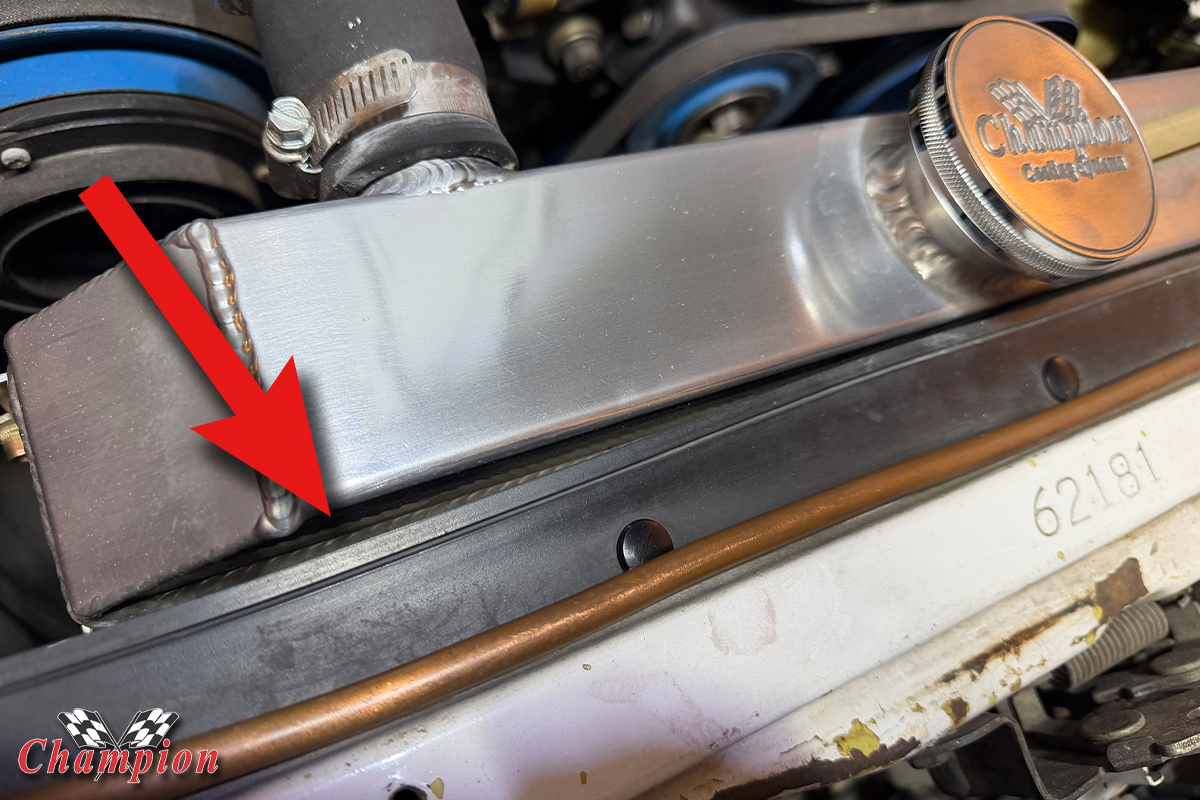
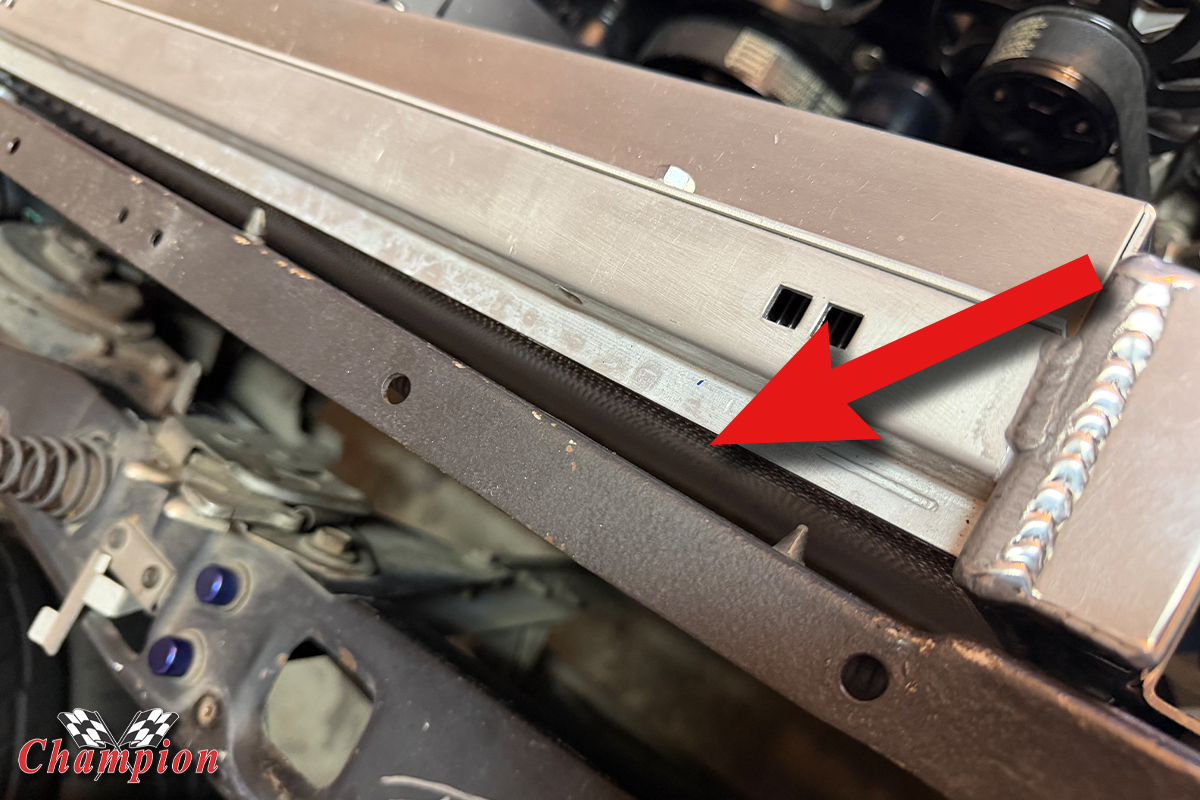
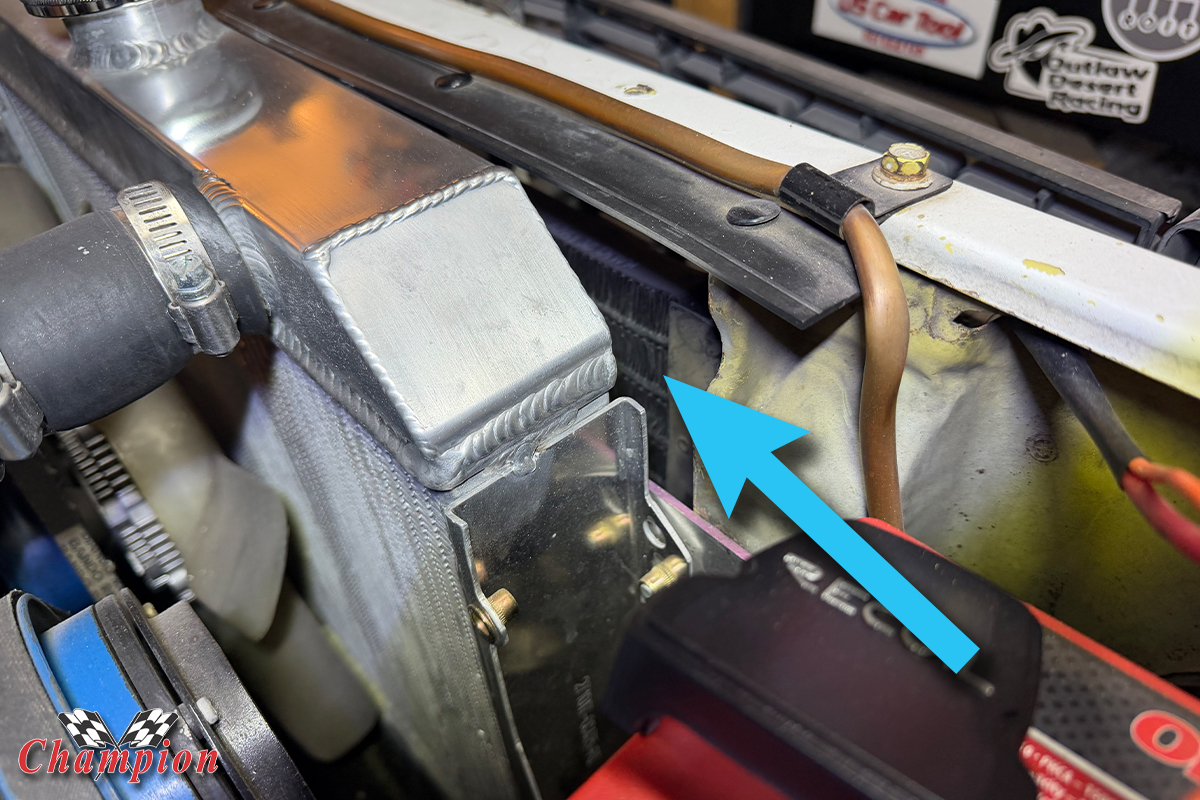
While it isn’t an immediate sign of a potential problem, these gaps between the radiator and the core support are an escape path. If you’re overheating, be sure to seal up those gaps.
It’s not completely detrimental to have small gaps around your radiator that can allow air to flow around the radiator instead of through it. If you’re not experiencing overheating issues, it’s not imperative that you address those slight gaps. If you are overheating – particularly at freeway speeds – then those gaps could be a problem, and should be addressed.
Most home improvement stores have affordable foam and rubber seals that can work great in sealing up these gaps. At any rate, it doesn’t hurt to address those gaps and close them up, primarily for peace of mind, but also because it’s just one box to check off when installing a new radiator.
Custom or Modified Radiator Installations
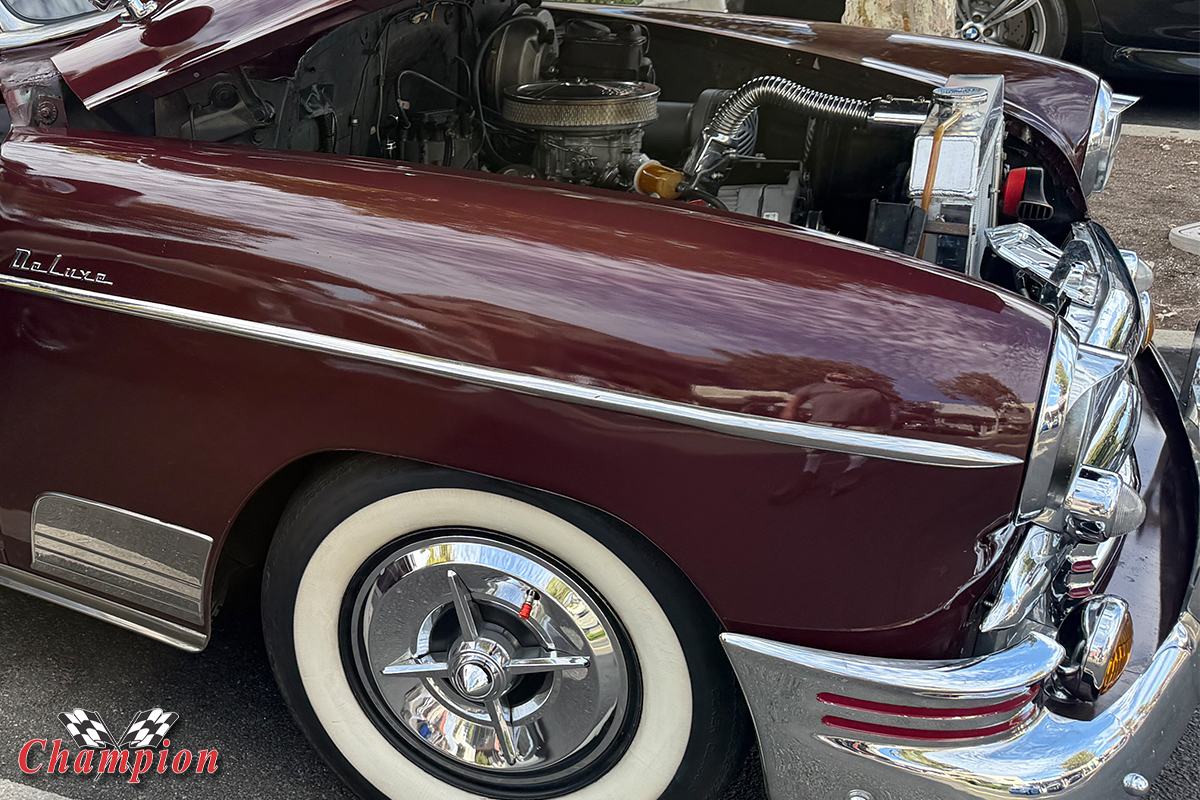
Occasionally, we come across a customer with a classic car that has limited space when installing the radiator along with an electric cooling fan. Such as the case with this late 1940s Chevrolet DeLuxe Coupe. Our radiators are designed to mount in the OE location, and in some instances the original mechanical fan is the recommended application.
In order to accommodate a 16-inch electric fan, while clearing the water pump pulley, the radiator was moved forward a couple of inches. This modified installation might not seem like an issue on the surface, but we already had a bit of a deficit with this application. Since the grille area is only on the lower half of the radiator, and the hood covers the top half, that’s a small window for airflow to get to the radiator.
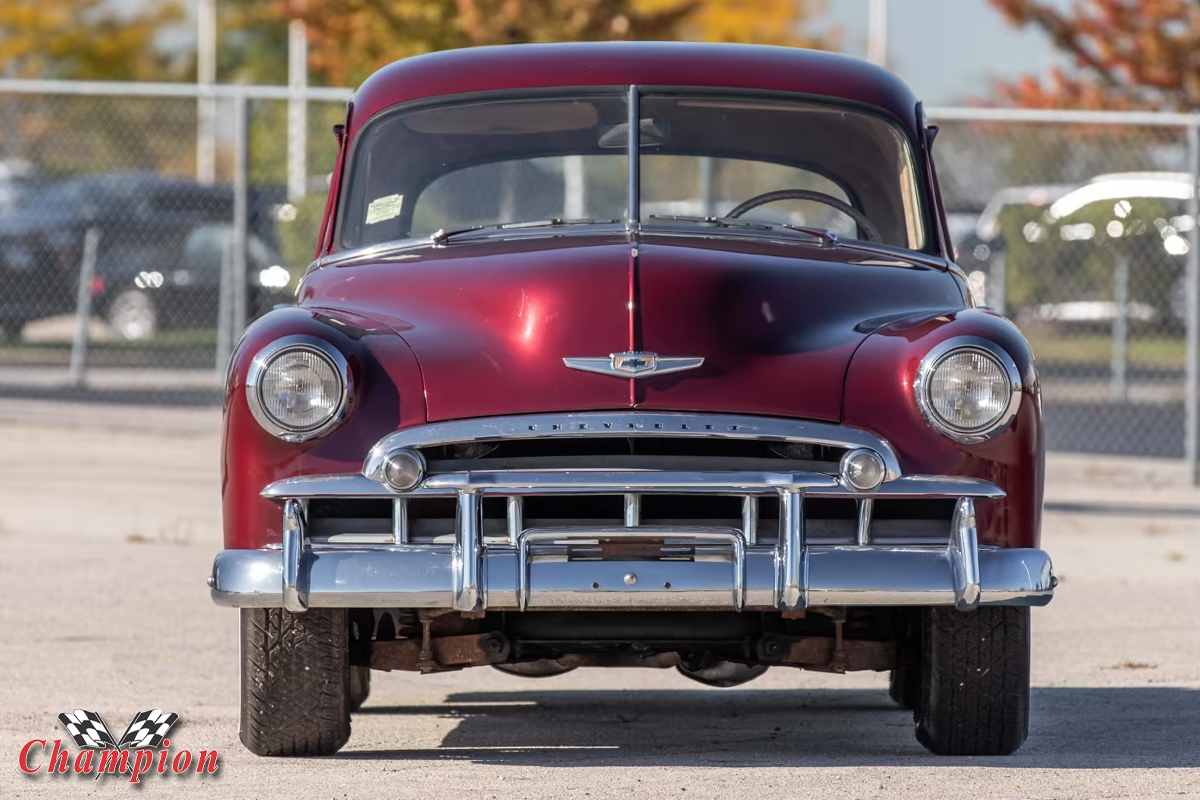
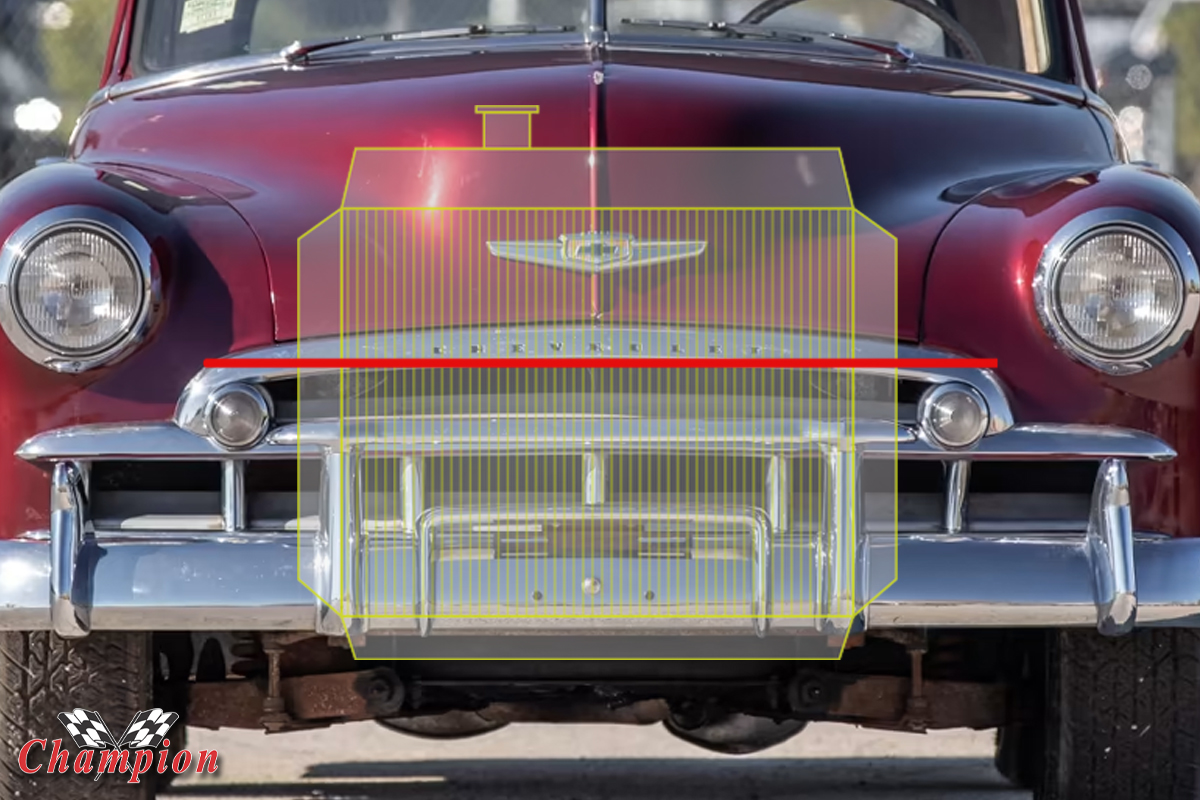
As you can see, the grille opening is limited to the lower half of the radiator, and the upper half is blocked by the hood. Getting as much air as possible through the radiator is paramount, particularly because most modern builds have more than double the the horsepower of the original engine.
Not only is this grille opening only on the lower half of the radiator, when the owner moved the radiator forward for electric fan clearance, he opened up a couple of portals for the air to flow around the radiator, instead of through it. Remember: airflow will take the path of least resistance, and the openings beside the radiator create a bit of a vacuum to pull the air through, bypassing the radiator. That’s the low pressure area we spoke of.
With the limited opening for the grille and half the radiator blocked by the hood, the radiator isn’t getting the cooling benefits from air passing through it. This ends up being similar to sitting at a traffic light with your foot on the throttle; higher RPMs and lower airflow spells trouble, as you watch the needle climb higher and higher.
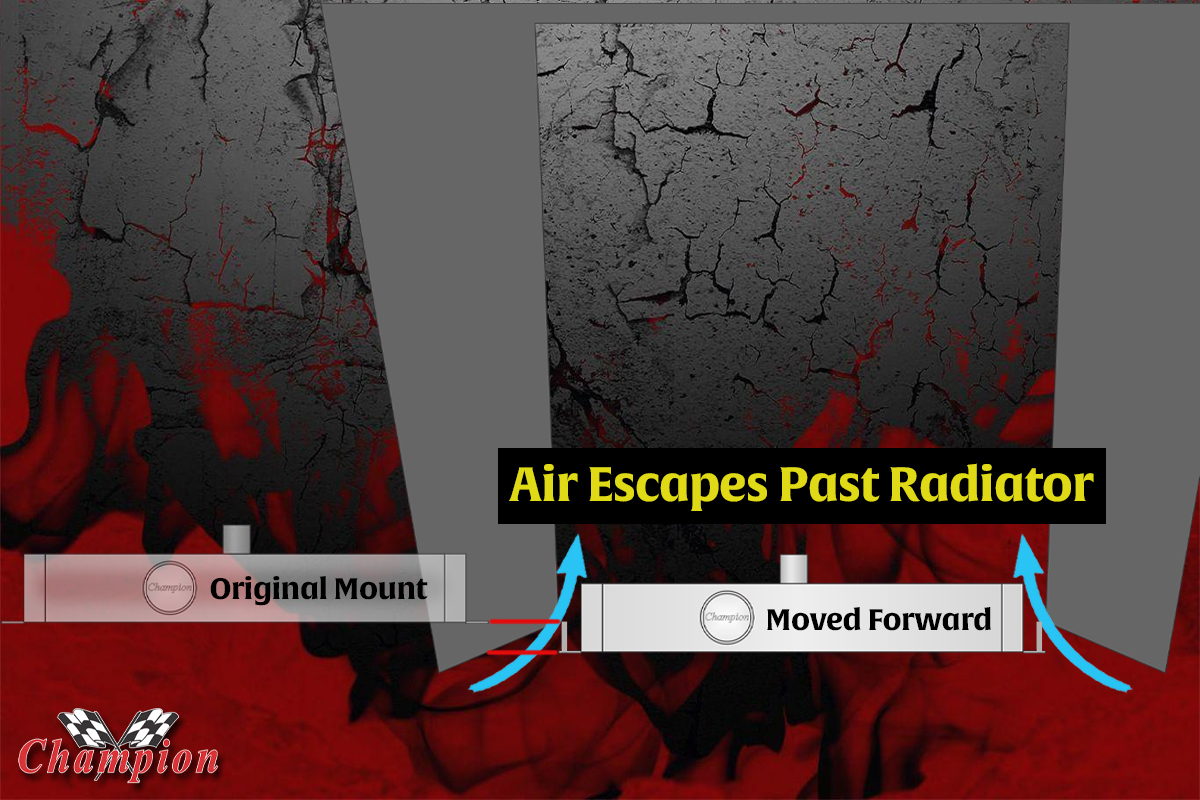
While we can’t promise immediate solutions when presented with an overheating issue, sometimes these matters of getting proper airflow through the radiator, instead of past it, are the first step we can recommend to combat the issue at hand. When overheating occurs, there are typically two issues to address when every other box has been checked: with a proper functioning cooling system, it’s either a coolant flow issue, or an airflow issue – or both.
This is part of the troubleshooting process, and it’s also something you can research for yourself when you’re faced with unexpected temps during these hotter summer months. Sealing up all of the gaps around your radiator, and making sure the air is actually forced through your radiator, is the first step to solving higher-than-normal operating temperatures. And if you’re still running into problems, our professional and friendly staff is standing by M-F.
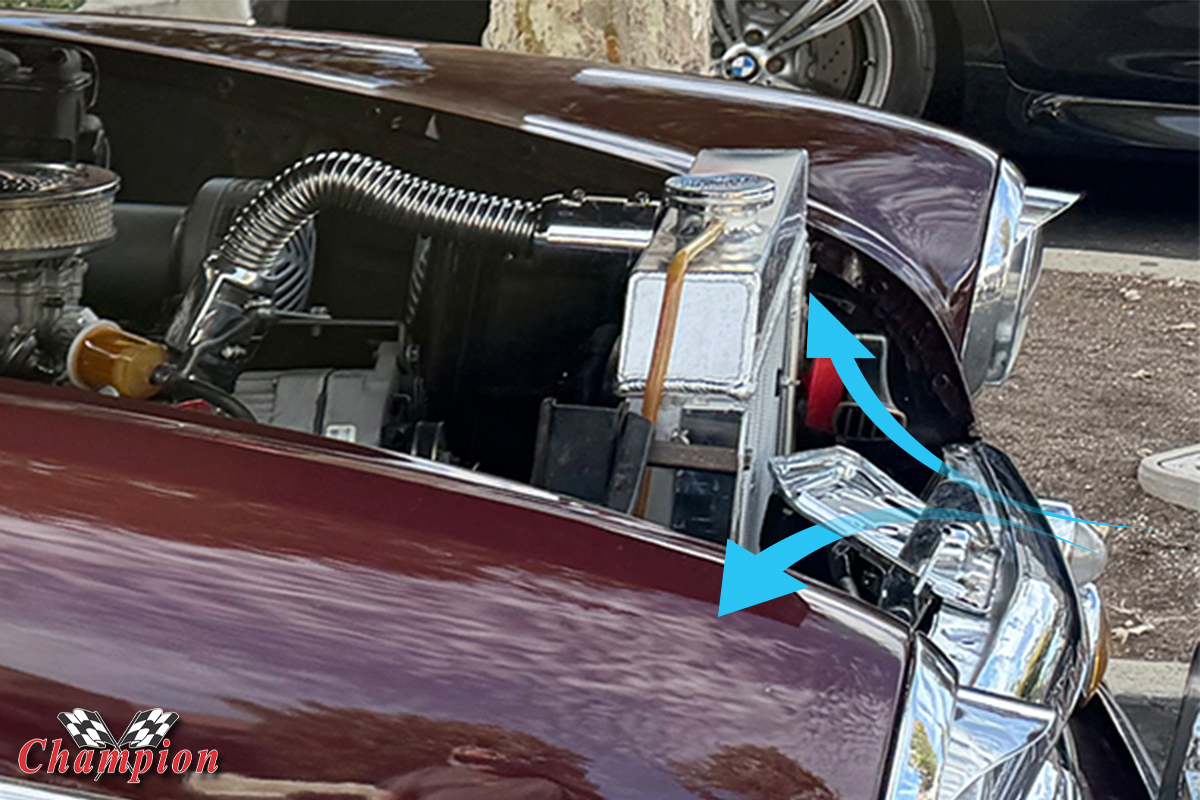
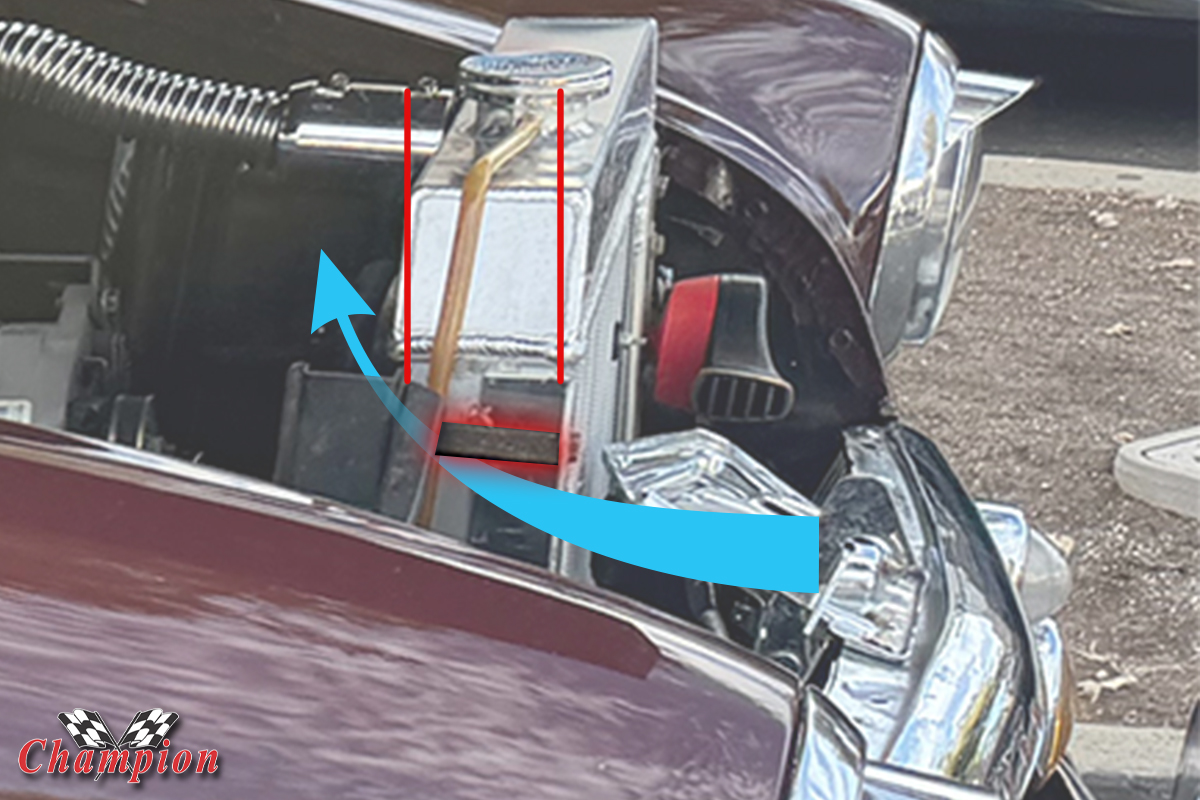
Once the air gets past the grille, it’s hitting your radiator like a brick wall. It will seek a low-pressure way of getting past the radiator instead of through it. Your goal is to close up those gaps and force the air through the radiator.