
Most people in California have undoubtedly heard about the new Replacement Tire Efficiency Program (RTEP) which has been signed into law by Gavin Newsom. While this law is not immediately on the radar of vehicle owners it’s aimed at, it’s become a huge talking point for enthusiasts who have customized their vehicles to reflect their character, whether it’s wider tires for your musclecar, or bigger tires for your lifted truck.
Phase 1 of this law will be implemented in 2029, where the maximum rolling-resistance coefficient (RRC) of 9.0 N/kN. Phase 2 is set for 2033, with the RRC reduced to 7.1 N/kN. If you’re wondering what N/kN is, you’re not alone; we deal in things like Ft/Lbs, horsepower, Lb/Ft, and A/FR. But N/kN is likely a physics lesson you either weren’t privy to, or don’t remember.
In Physics, N stands for newton, and kN stands for kilonewton, which you may have guessed is 1,000 newtons. Sound confusing? You’re probably not alone there, either. In engineering and physics, this dimensionless ratio is used to express force or efficiency factors where a smaller force is compared to a larger force in kilonewtons. Still confused? It’s checking all boxes here, too.
We’ll spare you the lengthy physics lesson and provide the layman’s terms for this, hopefully. It’s based on the rolling resistance of tires on pavement (that’s a given) and it’s how people with busy jobs like to meddle in our automotive activities so they can feel like they’re making a difference in the world. But just like most efforts to limit our activities in California, they look at small numbers per individual and multiply them by the 30 million registered vehicles in California to achieve a number that looks good on paper, but has yet to actually be proven effective.
Where this new law will most impact consumers is when it comes to buying tires they like, or have been buying for years, and they’ll be told that their choices are now limited to what the tire shops can legally sell in this state. While it may be true that there are more people who will simply buy what the tire salesman recommends, when it comes to the automotive enthusiast, many of us are more interested in the tires we like, regardless of what the tire salesman recommends.
But much of the aforementioned is speculation on the author’s part, so we decided to talk to a friend who is not only a tire shop owner, but a fellow gearhead, like us. Mark Ducharm was our “Best in Show” winner at our very first Champion Cooling Car Show, and was a regular supporter for the car shows that followed. He is owner/part owner of two local Tire Pros, and we wanted to get his perspective from the viewpoint of a tire shop owner, and what this means to him.
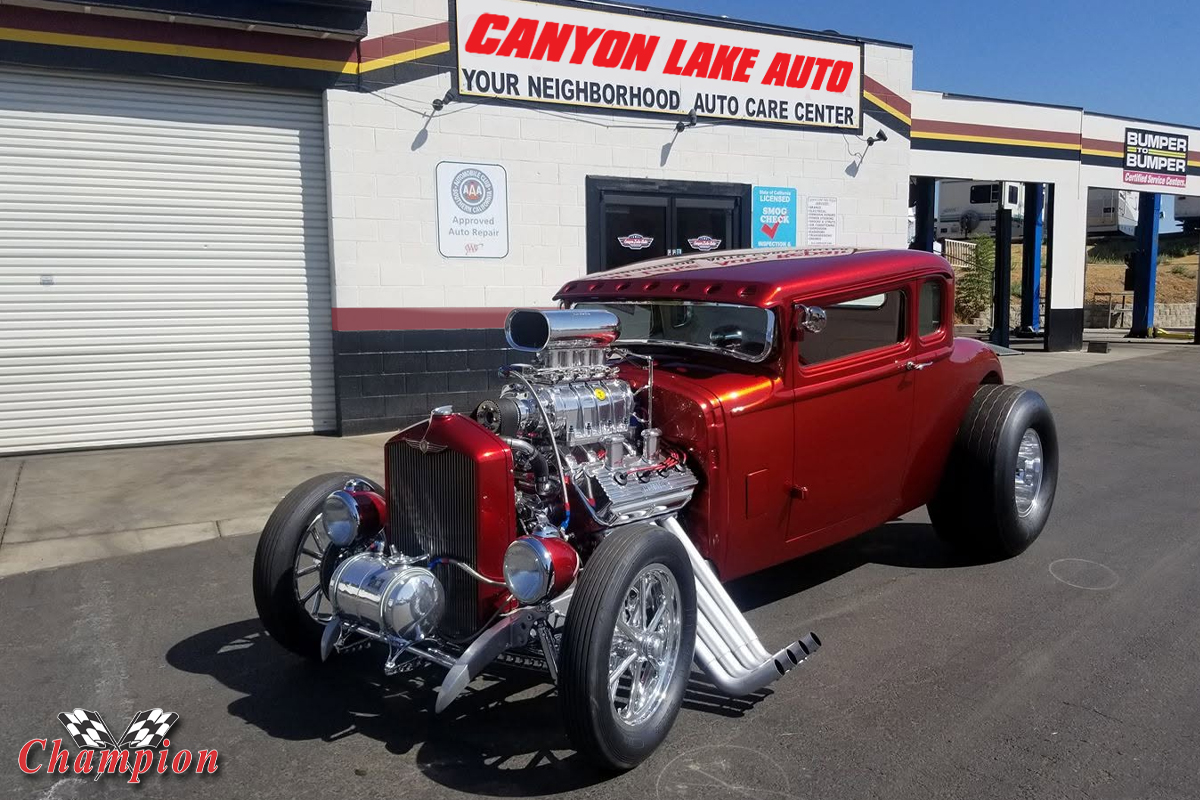
We wanted to talk to a fellow enthusiast because of two reasons: first, he’s more readily accessible being a friend and neighbor, but also because this not only impacts his store, but this law restricts him from purchasing the tires that he wants on his vehicles. In other words, he’s going to tell us what we want to know, not just what the state wants us to hear.
We already know that they’ve tried to remove classic cars from California roadways for years now, with programs like the “Buy-Back” program – Voluntary Accelerated Vehicle Retirement Program (VAVR), offering monetary incentives to scrap your car after it fails emissions testing, then there was the BAR’s Consumer Assistance Program (CAP) offering cash incentives for retiring drivable vehicles. And let’s not forget Newsom’s “Zero-Emission” Executive Order (N-79-20) to go entirely EV with no more ICE vehicles sold in California by 2035. I wonder if he thought ICE stood for something other than Internal Combustion Engine?
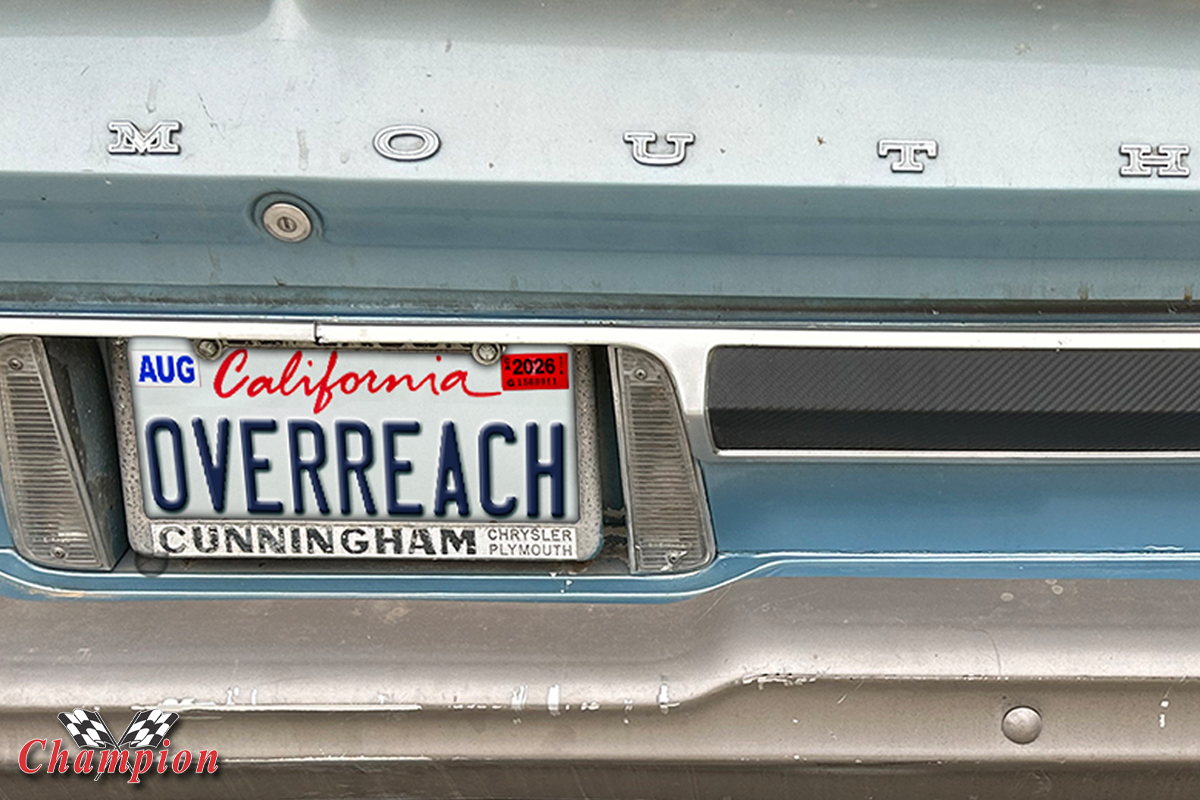
What Does RTEP Mean For Automotive Enthusiasts?
First, some background on the program. The RTEP was authored by Julie Burbridge, who began her political career in the Food and Agriculture Agency at about $18k as an Agricultural Technician. After a few years, she moved into the State Energy Resources Conservation and Development Commission and became an Air Pollution Specialist at just over $102k. Her idea is that by reducing the rolling resistance it will reduce CO2 emissions by 2 million metric tons annually, which equates to – and get this – “removing roughly 400,000 gasoline cars from the road” according to the CEC.
We asked our friend Mark about this program for some clarity. He tells us that it’s hard to say when or if it will affect his tire shops, because it is still a bit early since it was just passed on 8/17/26. We’re also not sure what this will mean for tires manufactured prior to 2029 that will still be in inventory at local shops. However, the program specifies that new replacement tires sold in California for passenger and light-duty trucks will be subject to the RTEP starting in 2029. That means that tire stores, like Marks, cannot legally sell tires that don’t meet program requirements.

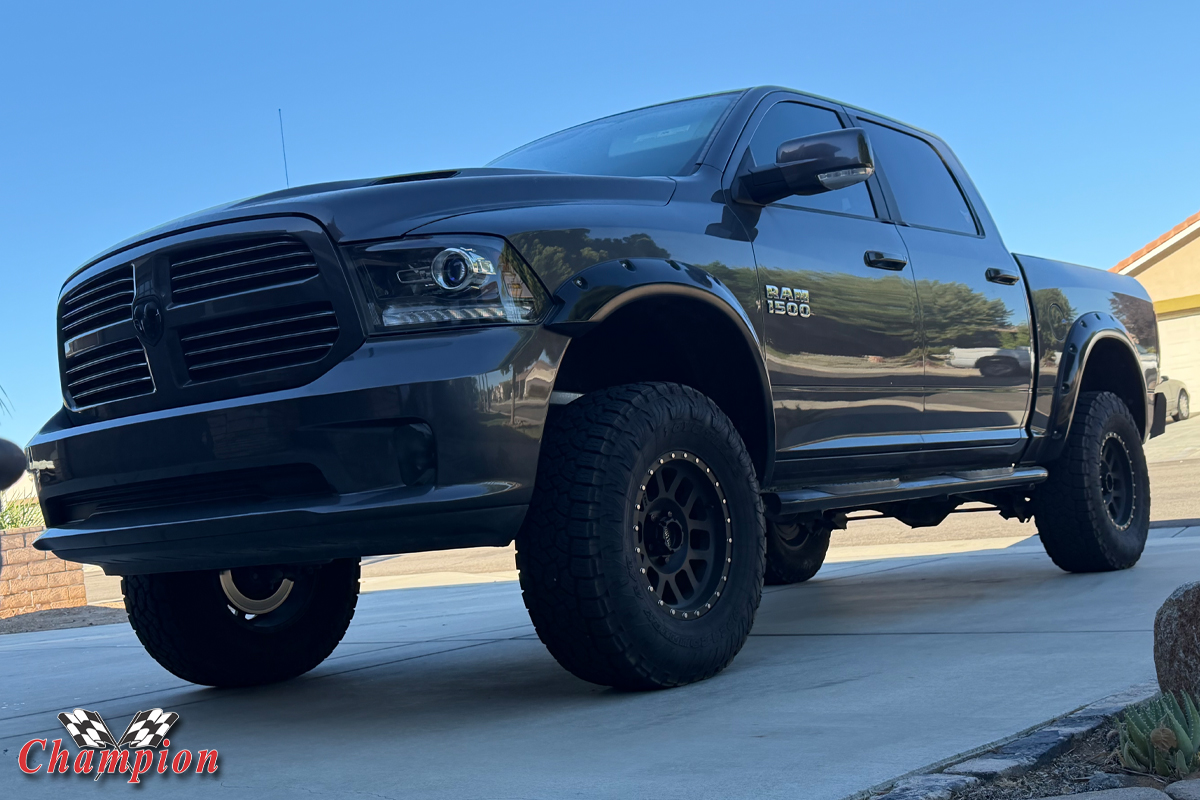
The good news is that there will be exemptions from RTEP, which includes competition tires and off road tires. But we still need more clarity about this, because many of us have “competition” tires on our daily drivers.
This brings us to the costs of tires we’re being told we have to purchase for our vehicles. Clarity will be needed when it comes to our classic cars with wider/bigger tires and what constitutes a “competition” tire. When asked about price increases, Mark said, “There is in my mind no question about it; tires will go up. The manufacturers will not eat the costs to change production.” He met with his American Tire Distributor to ask about this matter, and he was told that some manufacturers are already tooling up for the change.
He also mentioned the fact that he feels the life expectancy would increase due to the harder rubber compound. With that, however, Mark added, “The way I see it is, a low resistance tire uses a harder rubber compound, it makes the tire more rigid. The thought being that the tire stays more rigid over rough roads, thereby lowering resistance from tire flex. So there is no question that type of tire will be less safe as they will have less grip.”

Initial reactions to this news is that many enthusiasts will be traveling to adjacent states to purchase their tires if it becomes illegal to ship them into California, like many non-CARB certified parts. Will enthusiasts find other ways to purchase the tires they want when they can’t buy them in California? Mark tells us, “I don’t believe there will be California-only tires and 49-state tires, so they’ll be sold in other states, no doubt.”
With regards to decreasing the rolling resistance, we asked Mark if better maintenance and attention was spent to our tires and our vehicles in general would achieve the same goal: better MPG. He told us, “Yes, if people maintained their tires better with regular rotates and yearly alignments, as well as double-checking tire pressures instead of relying on the vehicle to do it for you, that could achieve the same or better results than what the RTEP is doing.”
Mark continued, “Another thing that is totally overlooked on this subject is vehicle suspension system maintenance; in other words, shocks and struts. As a multi shop owner, selling shocks and struts is almost impossible unless they are falling off a customers car. Many simply don’t want to spend, in some cases well over a thousand dollars, for struts and/or shocks. But in similar ways to the rigid tire argument, if the vehicle has excess sway up and down or side to side, not only will it possibly create dangerous handling characteristics, it will wear the tire down with increased resistance, thus reducing fuel economy.”
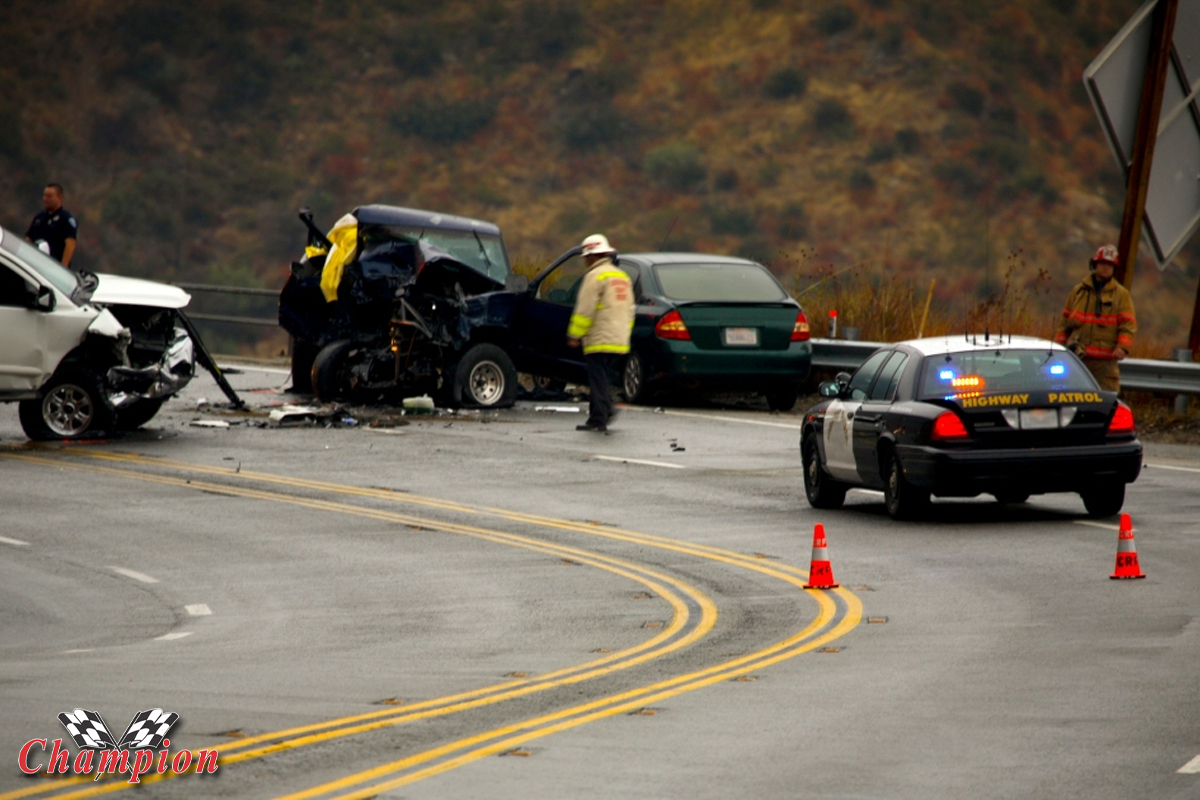
Mark suggests that the state would do better to promote proper vehicle maintenance than to make these drastic changes to tire compounds that could actually reduce the benefits we’ve achieved over the years to make tires handle better than they ever have. Let’s face it: vehicles today are more nimble, handle better, and go faster than cars from 30+ years ago. With those factors, braking systems have had to increase exponentially. Then throw on a set of tires that aren’t really up to par with the rest of the car, and it could cause more accidents.
The California Energy Commission has identified the following categories as not subject to the RTEP’s rolling resistance and efficiency thresholds:
- Competition tires designed for motorsports
- Winter-type snow tires
- All-season winter performance tires
- Used and retreaded tires
- Deep tread tires
- Tires designed for ATVs and other off-road vehicles
- Large off-road tires for use up to 99 mph
- Motorcycle tires
- Temporary-use spare tires
- Small tires with a nominal rim diameter of ≤13 inches
- Limited production tires (annual output <15,000 units)
- Tires sold for use on emergency vehicles
- High load index tires (122 or greater)
- Tires not capable of sustaining speeds over 50 mph
- Space saver tires